Decoding Cocktail Bars: Translating Between Consumer, Bar and Brand | Part 1/2 with Alex Frezza from L' Antiquario (Napoli, Italy) | 020
Summary
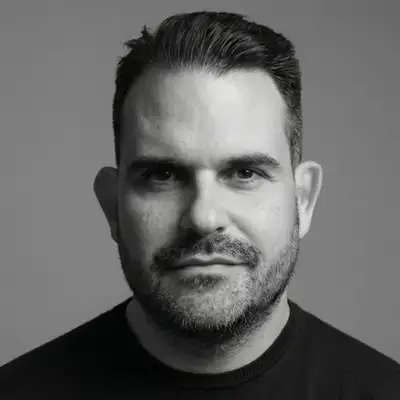
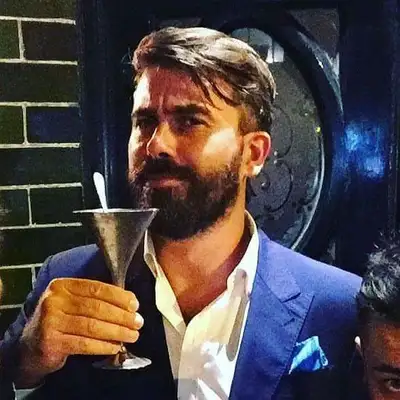
This is the first part of the chat I had the honor of having with Alex Frezza. He is the Owner and Founder of L' Antiquario in Napoli, currently number 46 on the Global list of 50 Best Bars. He is a bar legend in Italy and internationally. I hope you will enjoy our chat. Main topics discussed: From 0 to 1 bottle • Understanding the thought process of a bar owner being pitched to • The Wholesaler Paradox (Why bars have an aversion to brands without a wholesaler) • The Importance of the Target Occasion From 1 bottle to 1 case • What attracts bar owners to a product • Communicating your brand identity to consumers through bartenders • Being approachable to consumers for bars and brands From 1 case to 1 pallet • Big brands vs. Small brands approaches • Localization Failures • Building Distribution Networks About the Host: Chris Maffeo About the Guest: Alex FrezzaHi, and welcome to the Maffeiro Drinks Podcast. I'm Chris Maffeiro, founder of Maffeiro Drinks, where we provide a non nonsense approach to building drinks brands from the bottom up. I will be your host, and in each episode I will interview a drinks builder from the drinks and hospitality ecosystem. In episode twenty and twenty one, I had the pleasure and honor of interviewing Alex Fritza. He is the owner and founder of Lanti Quari Annapoli, currently number 46 on the global list of 50 best bars.
Chris Maffeo:He is a bar legend in Italy and internationally. I hope you will enjoy our chat. Remember that this is a two part episode. So if you liked it, feel free to listen to both part one and two of our chat. Hi, Alex.
Chris Maffeo:How are doing?
Alex Frezza:Hello, Chris. Wonderful in the sunny Naples.
Chris Maffeo:Nice. Now I can see that from the window, so I'm I'm jealous. Actually, here, it's it's actually sunny in Prague as well, but it's it's a little bit too hot and raining every now and then. So it's a it's a bit of a strange one. But so this episode will be fun one because I mean, we've met Atlantiquario, what, like a month ago or something, something like that.
Chris Maffeo:Not even. And of course, we were speaking Italian with trying my old Neapolitan accent from my origins. And and now we speak English to each other. So it's going to be a funny experience, I guess.
Alex Frezza:Some Italian words might slip here and there. Okay. So be prepared.
Chris Maffeo:And there are some Italian listeners. So let's start with First of all, it's a great honor for me to have you here because I mean, you are a name in the bar scene. You are part of the top 50 best bars. And, you know, to get your insights, it's super valuable for me firstly and then for for the listeners from from all around the world to really understand how do we play in this ecosystem of drinks, hospitality, ecosystems that are crossing each other and intertwining and then, you know, and then living sometimes their own life a little bit. No?
Chris Maffeo:So my first question, is there a lot of translation to be made between the, let's say, the corporate world of brands, you know, big names and and so on, and the actual hospitality industry?
Alex Frezza:Well, first of all, thank you very much for inviting me. It's a pure casuality that I'm here because you walked into my bar and I recognized you. So thank you very much. I am exactly the same as I was before I was in the '50 best. Most of the things I will tell you today are relative to things that I learned before I was in the 50 best.
Alex Frezza:Maybe 10% is things I learned in the last year. And I appreciate a lot of the work that you do because nobody does this sort of work and this kind of connection between brands and bartenders and sales. Nobody does this. So bravo piece. Translation.
Alex Frezza:Translation is a good word because it implies language. And the problem is that brands and bartenders and hospitality workers is It's as though they have two kinds of different languages and two types of grammar. There's a difference. And sometimes guests understand one grammar rather than the other and vice versa. And it's all in the translation of how you communicate these things that we lose lots of information sometimes.
Alex Frezza:I think, yes, brands don't speak the language of bartenders, but sometimes brands speak the language of clients better because brands have more resources to understand what clients want sometimes, how clients perceive things, how they see them, how they need to be spoken to. Our bartenders tend to be so with their head in the bucket that they don't have a a wider image of what the business is and how it works and how clients see things. So if you only see the clients that come in your bar, you don't see how clients behave in our bars. So you kind of have only that reference. And after that quite a long time, that becomes very limiting in your way of dealing with clients.
Alex Frezza:The way you speak with them is always the same because it's relative to how you do hospitality in your bar. And so sometimes more than others, think it's bartenders that have to kind of understand why brands want certain things and where they got the information that leads them to want those things and that way of communicating with guests. You can see that in adverts, in supermarkets, how brands communicate with colors and tastes. There's a golden rule for bartenders that if you go in a supermarket and you see that there's a new kind of combination of fruit juice that they're selling, well, maybe if a brand decided to invest in that, there's some sort of trend there, and maybe you should follow it if you don't see it. If in a supermarket, all of a sudden, they're selling banana and apple juice together, Well, maybe that is a combination that some that that that a percentage of clients say like it, and maybe you should follow it or try it at least.
Chris Maffeo:And that's
Alex Frezza:But sometimes we don't see them. But it's what happens in between the communication that is interesting between brands and bartenders.
Chris Maffeo:I love that and it's a bit of a self reflection because we all need to speak a language that ultimately it's simple to understand. Sometimes when I write my newsletter and my post and so on, I use a software that actually takes my text and nothing to do with AI just to make it clear. And it just like gives you a mark on what kind of understandability there is. And then it's like, okay, this is a sixth grader who would understand this. Or like, this is a tenth grader who understands it.
Chris Maffeo:And you know, the more I make it complicated, the more I lose people. So I try to go down to the five or sixth grader to really say, because I've also changed, for example, the way I communicate, because sometimes I was talking about, I don't know, target outlets. And then now I just use bars as because I don't want to say bars, restaurants, pubs, clubs, you know, so I was using outlets to generalize it. But then people are like, what is an outlet? What do you mean by outlets?
Chris Maffeo:Know, like, and, you know, Lantiguario would be an outlet, but there's nothing further from an outlet than Lantiguario.
Alex Frezza:It took me years to get to my head in on trades and off trades.
Chris Maffeo:I can imagine that.
Alex Frezza:Because for me, a bottle of whiskey is a bottle of whiskey. No, a bottle of whiskey on trade is one product, off trade is a different product.
Chris Maffeo:Exactly. The same label. Yeah. And then out of home, at home, and then Horika and, like everybody, you know, here in Prague, they call it gastro, for example. You know, gastro is the entree, which in Italian, it would sound like a very bad thing.
Chris Maffeo:It's like you've got some disease with gastro, but that's the way it is. And how do you combine the kind of like two hats of being the owner of one of the best bars and at the same time representing brands and working with brands and, you know, bigger or smaller brands that you work with?
Alex Frezza:We are in some ways unique because we've always worked that we chose to work always directly with brands, never going through local distributors. Why? Because in Italy, things are changing now. Usually, you could buy if you're a big client directly from the brands or you could go for a local distributor. Obviously, the rules of buying and selling change, quantities, the contracts.
Alex Frezza:But buying directly from the brands gives you the possibility to get known from the brands. If the brand goes through the distributor, it doesn't know where the product goes. So even if I'm doing a very good work with the brands, the brand might never know if the distributor doesn't tell them, doesn't show me the work I do. I might not get access to marketing funds because it's the distributor that moves them and it's not so and it's not the main brand. So we always try to work directly with the brand.
Alex Frezza:We wanted that in some office in Milan or in London or in somewhere else on that next cell file, the name of our brand would come up, know, Lanciquari buys these numbers of bottle, you know. And so even if we were like in a thousand position, they knew that we were buying something from them and that we were doing our work. And through the years, this gave us access to getting known by brands. Because if you do continue a team, do good work, They come to want to do contracts with you. They give you marketing fees.
Alex Frezza:If you're consistent, that rewards you. And so we always did that. And that's the price to pay that you have to pay before you get the bottles. You have to be very good in payments. You always have to be good in following the contract.
Alex Frezza:So it's a bit more complicated to do that, but it rewards you. Not everybody does that. So that kind of gave us access to knowing how brands work Because obviously you speak with people that are in the main offices and they tell you quite openly what they need from you. So you kind of work in the same direction. So I've always had that mentality.
Alex Frezza:I always kind of know what a brand wants. I immediately understand if a brand asks me something, if it comes from a global perspective, if it's a global indication that they're trying to apply in Italy, because, obviously, I see things from an Italian point of view, which is a limited market, and I'm in the South Of Italy in Naples, which has its own markets. Okay? I've tried to translate things in different scales when they tell me, and so you know what I kind of got good at that. Obviously I lose track of maybe new products because some new products I just can't use because maybe they're not distributed well.
Alex Frezza:They might be trendy, but I can't buy them immediately. I won't go and buy them on the internet. I won't go looking for them in a crazy way through very small local distributors or wholesales, you know. So that is a bit more complicated for me. But we resolved that recently, opening an e commerce.
Alex Frezza:And so we would discover that on an e commerce and Amazon, you sell things that you don't sell in a bar. So that gave me the opportunity to buy things that I don't necessarily use at Lantipario, but maybe I can just have one bottle as a reference Wow. And take it from ecommerce. So I kind of can I can cross the channels? And maybe some things that I sell at Antiquario don't sell on Internet at all, but there are obscure products that sell loads on the Internet that I can kind of bring to Antiquario and maybe capture the attention of the of the clients.
Alex Frezza:Because there are some things that people buy from home that they don't drink in bars for very obscure reasons. Maybe the bottle is pretty. It's got a fancy name. There's some sort of trend that I'm not realizing. And so, you know, can that helps me a little bit.
Chris Maffeo:Wow. That's a super interesting things that you're saying there, because it's a totally different perspective. Because I remember when I was at university in Rome, I was selling for an internet startup. It was called tonight. I mean, it still exists.
Chris Maffeo:And basically, we set up the Rome office with some friends from university and we used to run events from the headquarter that would work with big brands, you know, big drinks brands, and we would run events for them. But we would give them a list of outlets, well, bar sorry, to activate in and they didn't know the product was there. And I remember, I mean, I was 21, 22 at that time and I thought like, hang on a minute, mean, how can this big brand that is selling loads of bottles in this bar not know the contact name and the bar owner of this bar? And then after many years I closed the ring said, when I started working in the industry and I said, okay, now I got it. It's about wholesalers.
Chris Maffeo:It's about, you know, there is a gap in communication upwards and downwards because the wholesaler doesn't want to give access to their client list, but also the brand doesn't necessarily want to sell to you as a customer. And then it becomes this kind of short circuit.
Alex Frezza:I'll give you a perfect example of this. Years ago, a brand of Sambuca in Italy, all of a sudden decided to fund the trend of bars and cocktails and want to push Sambuca in cocktails in Italy. Now Sambuca in Italy is a very local product that is used in very local ways, never in cocktails. Let's say, it's not something that has even got that much of a history in cocktails, so you have to really push it. So what they did is they went to the local distributors and they said, we want to do these activities.
Alex Frezza:We have a format that a wonderful communication agency did for us. It's really nice. It's about cocktail bars, bartenders, really cool guys making cocktails. Can you please tell us where you sell the Samuca that they make cocktails? And the distributor said, why are asking me this?
Alex Frezza:You've never been interested in that. All you need to know is that what we're selling. And even the distributors didn't know which bars they were selling or making either coffee or just cocktails, and they had no idea. And they went on trying to to fill this gap, and they realized that, you know, it's very difficult because Sambuca wasn't used in the cocktail bars. So they had to rebuild completely the network, and wholesales haven't got the resources for that.
Alex Frezza:And so nobody knew. And what happened? They abandoned the projects, and now there's a wonderful ad that goes on GTV in Italy where this brand of Sambuca, won't tell you which one. There's all these cool people drinking shots of of Sambuca, and at the end, the caption is brand of Sambuca, a shot of Italy. They've completely abandoned cocktails and they've gone back to what Sambuca was, which was just a shot.
Chris Maffeo:Exactly. This is an incredible example because it's really like what we say about like the target occasion. I always talk about this target occasion or target cocktail, target drink to give the hook for communication to a bar. But I have a take, at least when I work with brands that I never want to be dictatorial. Like I don't want to dictate, you know, this is the drink, this is the brand that goes with this drink.
Chris Maffeo:But very often the issue is that this has been created in ad agencies. You know, it has created, it has been created by people that don't go to bars or have never been to bars or they moved from maybe from a dairy company, know, they were working for, you know, they were selling yogurts or milk or chocolate in supermarkets, and they had a great career, and then they become head of entree. And then all of a sudden, like, they don't know how to work with the with the entree. So in they need education from the bar to actually redirect their focus.
Alex Frezza:But this the way you said it, it seems as though these people, they kind of they're not fit to work in our industry. That is true to a certain level, and I'll give you another example. But it's also true that we in our industry have to understand how marketing works. And marketing works exactly the same if I'm selling a pair of socks, a panettone, a bottle of whiskey, a diaper. It works exactly the same.
Alex Frezza:The base rules are exactly the same because the consumer the the brain of the consumer works in the same way. You just have to kind of forget what you're selling and use the grammar so that people understand. I've worked with people from multinationals that came to direct enormous projects in Italy that the year before they were selling pasta. They did enormous projects. After two years, they went and went to a big brand that sells chocolate.
Alex Frezza:And after a year, they were working for a newspaper. For them, it made no difference at all. Sometimes they do big damage because obviously they come into a market that they don't know. They make wrong decisions. The consequences of those decisions, you maybe can measure after three or four years.
Alex Frezza:Meanwhile, they've moved on.
Chris Maffeo:Absolutely.
Alex Frezza:So, you know, they're lost. Absolutely. But I think it's a it's a double way you're having to see this. You know, I always say that bartenders or who works in our industry has a different kind of training that has nothing to do with marketing or sales. The most close thing that we get to sales is upselling a drink, but that works on completely different human mechanisms and psychological traps that we have that have nothing to do with marketing.
Chris Maffeo:That's right.
Alex Frezza:It's completely different things. So the language that you sell a vodka has nothing to do to the water brand does in advertising. So maybe on our side, we should need more training on knowing, you know, how does an advertising agency build a strategy? Like I remember always years ago, in Italy it's quite common that you get like a global indication from the multinational that maybe has been fought fought for, I don't know, something in England or an Anglo Saxon culture
Chris Maffeo:Yes.
Alex Frezza:Or the state. And they just send the mail to Italy and they say, Apply this. And, obviously, they get the mail in Milan, and they read it and say, right. How am gonna apply this in Italy, which is completely different country? Like, there was a brand of Irish whiskey that had in its presentation the word hipster.
Alex Frezza:Alright? Now applying hipster to Italian culture had no sense. You know, it was all about people with beards, suspenders, with dandy dressing. That had no sense for Italians. There's no way of applying that to Italian culture.
Alex Frezza:And I remember in those years, I would go around everywhere I would travel and I'd say, excuse me, you know, to offend. What can you define the word hipster for me, please? Because, you know, I'm curious to know, you know, because I don't know it either. And the best answer I got is hipsters are those that have not enough money to pay a cocktail, so they only drink coffee and they need to be socially positioned in the world so they ended up working in coffee shops and then they didn't upgrade to bartenders because that gives them instant positioning with very little knowledge. And that I think that was a very crude and realistic definition of them.
Alex Frezza:And you know what hipsters became in Italy? People with motorcycles, with Harley Davidson's. Okay. That's the closest reference, which is completely different than what hipsters do.
Chris Maffeo:Nothing wrong. I don't think you get, you know, hipsters in Williamsburg, in Brooklyn. I don't think they see bikers hanging around.
Alex Frezza:Exactly. They're probably on a bicycle, not on a motorbike, you know. Exactly.
Chris Maffeo:Exactly. You nailed it there because what we were saying before about, you know, the industry tends to be very exclusive. For example, coming from beer for me, you know, I entered the world of spirits like a few years ago. And, and I felt very, like, very much as an outsider, despite I was part of the same industry, because I mean, I was selling an alcoholic brand. And, you know, it felt very like auto referenciale, you know, like self help me on finding your word on
Alex Frezza:self referential.
Chris Maffeo:Yeah, self referential. And, you know, like just talking about yourself and the same group of people. And that becomes a bit of a, you know, I cannot understand them. So I hire an agency to help me understand them instead of actually going to a bar, sitting at the bar and actually like asking you like, what do you think about this?
Alex Frezza:There is a reason for this. You said it. You came from a world of beer, which is much more democratic probably, and has a language that is understood much better. Anybody from anybody in the world can walk into a beer bar, look around and understand immediately what is happening. Where the beer tap is, where the fridge with the bottles are, what people you will look around and they will see, you know, what kind of beers people are drinking, in what glasses, you know, if it's a round glass, if it's a pint of beer.
Alex Frezza:More or less everybody has that kind of education. If you walk into a bar, it's at least 20 different indicators that you might not understand. Bottles, whiskey, cognac, high end cocktails, colored cocktails. A normal person hasn't got that kind of understanding of the language. So they will walk into a bar and don't understand.
Alex Frezza:Bartenders, on the other hand, have 50 kinds of language to express, and they have to kind of funnel them into one small spot, which is very difficult. That's why bartenders it's very difficult for a bartender to be good in all kinds of products. Kind of slowly find your way and it's something that you prefer selling. And so it's more difficult. And that makes us more isolated because the natural thing is to become more technical because we think that if you become more technical and knowledgeable about the products, you're better in communicating them.
Alex Frezza:But as you said, sometimes you have to downgrade your communication to such a basic level that you're nearly ashamed of using because that's not professional. I should use the best words and the best technical adjectives to describe this whiskey. No. Exactly. Sometimes you have to have the humility to explain things at such a basic level and communicate in such a basic level that, you know, people find comfort in coming into your bar.
Chris Maffeo:Absolutely. That is the key thing because otherwise, you know, the industry will never be able to, you know, gain more people interested because I've got friends that don't want to go with me to cocktail bars because they feel like, no, I'm not I'm not a cocktail type. And it's like, man, like, you know, what's a cocktail type? You can have whatever there from a single malt, you know, on the rocks or neat or to add to the fanciest cocktail to a pina colada with a with umbrella in it. There's no such thing as, you know, like a cocktail type of person.
Chris Maffeo:It's just it's just a probably they've conveyed that message to you to make it exclusive, they kinda, like, put you off.
Alex Frezza:I just wanna do an example that happened yesterday at the bar. Now it it's July, and we work a lot with tourists, and we have many more tourists. And it's a kind of tourist that comes to Naples and then comes and visit us just because it finds us on internet. Now there's one thing that happens every now and again at Lanti Quarry. We are a closed door bar.
Alex Frezza:We're kind of a secret bar. We're not a speakeasy. I don't have a password. I'm just in the road where I don't have anything outside. So I I have a closed door.
Alex Frezza:I have to ring a bell to come in. Yesterday about out we did yesterday we did I think 120 people. Out of a 120 people that we did, 10 or 12 groups that came, I opened it well, they rang the bell. I opened the door, and they were frightened when I opened the door. And they asked me, are you open?
Alex Frezza:You know? Because they were so unfamiliar with the concept of a bar having a closed door that they were scared. You know? And I and I have kind of when I see that, I worked out a reaction that I do. You know?
Alex Frezza:I kind of make it fun. It's, ah, am I that horrible that I scared you? You know? And, obviously, imagine being somebody that reads your bar on a guide on Internet, goes to the address on Google, finds it, and finds a closed door. Sometimes yeah.
Alex Frezza:One of clients, you know what I did yesterday? He called us on the number, and I answered from the bar, and I said, you know, hello? I like to inquire. And said, are you open? And I said, yes.
Alex Frezza:We are. Uh-huh. Because we're here, and the door is closed. I said, well, ring the bell. And they rang the bell and I opened and we were full inside.
Alex Frezza:I said, here, come in. And they were completely out of this world because they didn't imagine that there could be so many people in such a secret place. Okay? Now imagine being in the head of that person that has to come in in a place that they didn't imagine would be in that way, as people doing all different things, as somebody dressed in a white jacket that opens your door, before they even manage to their brain, before they even manage to recognize the bottle on your back bar, they're gonna have to elaborate so many things. So the the work that I do in the first twenty minutes is just make putting them in ease, you know, making them feel comfortable at home, And then we can start speaking the language of drinks.
Chris Maffeo:That's the typical, the typical thing that we tend to forget after doing it for a long time. It's so simple yet, you know, we are over complicating it somehow now. And how you say you buy directly from bars, you are in a bit of a different kind of like setup. But imagine like I'm a sales guy and I'm coming into your bars and I want and I'm trying to sell you my products, you know, and you have never heard about this brand, you know, like you being so connected, so connected to the worlds of brands, the worlds of bartending, you know, everybody in the industry. What's your reaction when you have never heard of brands?
Alex Frezza:Well, there are there are many different kinds of agents that walk in to my bar. And I initially I've learned to assess their point of skill in selling. First of all, if they don't do an appointment, bad. You can't walk into the bar at 10:00 in the evening and expect me to speak with you or taste your product. Second, if you walk into a bar and you pretend you're a client and all of a sudden pop up a bottle and wanting me to taste it, that's wrong.
Alex Frezza:And in the past, I was very permissive. If you do that to me now, I will will throw you out to the bar nearly. If I realize that you came in as a client and then you want to sell me something, I'm gonna kick you out. It means that you have no absolute respect for me and my work. You know, so so they're they're very different levels.
Alex Frezza:But sometimes it happens that people come in and obviously maybe they were sent there by the brands and they don't have no knowledge of cocktail bars and they want to sell me something. And even there, you you immediately understand what kind of inputs they had by the brands. Know, I've had people in the past come to me years ago with a new brand that I knew on the global market. I didn't even know it was distributed in Italy. I didn't know the distributor.
Alex Frezza:They came with an appointment. They showed me the product. I knew I never tasted the product, but I knew from our reviews that it was good and what was good about it. And then they said the phrase at the end. They paused a little bit, and then they said with a strange tone, we are also a 50 best sponsor.
Alex Frezza:And I said, what what do you mean by that? I said, no. I'm just saying that we're 50 best ones. And I said, what's that got to do with selling the product here? Have you any idea of the work I do here?
Alex Frezza:I I don't give a shit of who's who you're sponsoring. If you want to come and sell me this, let's speak about the product. And that immediately put me off. Mhmm. And for four years, we didn't buy the product.
Alex Frezza:Now we changed to Subaru Italy and it has a better language of marketing and positioning it, and we started to buy it. I sincerely wanted that product because I saw it drunk abroad and I wanted it and I didn't have it in Italy. But that single phrase put me off and we didn't buy it. When they come and they tell me this product is used by this other bar, do you know it? And maybe it's the best bar in Rome or in Milan or in London.
Alex Frezza:Now if you come to my bar and you think that I don't know my other competitors in Italy, then obviously you haven't done your homework on me.
Chris Maffeo:Exactly.
Alex Frezza:And you can't expect to sell me something with the name of another brand on it or another bar. I will buy it out of respect and because maybe they are friends and I appreciate the product. But that's just the fact that that brand comes from the work done in another bar opens the gate in my bar. And I'll give you an example of this. Years ago, a very important vodka brand, Russian vodka brand, they made the luxury bottle for bottle service in the clubs.
Alex Frezza:And they did a special version with the name of Ushuaia club in an on it. Yeah. And they and they thought that that would position it everywhere. The opposite happens happens. No no clubs wanted to buy it because there was the brand of another club on it.
Chris Maffeo:That's incredible.
Alex Frezza:So they ended up not selling it. And no no no club that had a minimum of self esteem would have a bottle of vodka with the name of another club on it. Had no sense. So sometimes, you know, they have to work and do their homework a bit better and just approach us with a little bit more respect, you know, not thinking that we don't know anything about the rest of the world.
Chris Maffeo:But what happens if you have never heard about the brand? Know, like, do you give it a try or do you basically, like, more rely on your own kind of like sources? Then you say, actually, mean, if not nobody of my peers or nobody of my bartenders have ever has ever heard about this brand, probably, you know, it's not it's not really worth it. How how open you are?
Alex Frezza:Well, it's it's very difficult that a brand is not known at all. It takes me two seconds on Internet to have a little bit of feedback. What happens is that someone will come in and they will present you a bottle of something that you've never seen because simply they have just produced it. It's a local producer. He has no distribution.
Alex Frezza:He is going door to door. You have to buy 12 bottles directly from him. So that is not a good sign. And I always and I have people like that knocking on the door three or four times a week now That they come from with a different gin, an Amaro, a liqueur, you know, things that's a bit simpler to make. It's difficult that someone will walk in with a whiskey and I have never heard of it.
Alex Frezza:Or at least I can't trace where it comes from. It's difficult that someone will walk in with a bottle of gin or of rum, and I can't trace the the where it comes from, unless it's an independent bottler. But even then, in three seconds, I can trace where it comes from. While it's very common that people come in with a bottle of gin, and I have no clue where that comes from, but I know that that person is making it on his own. He's probably producing it in somebody else's distillery.
Alex Frezza:He hasn't got a distribution and he expects me to buy a bottle there at the moment and sign an order. That's not going to happen. So I've learned with these people to have a different kind of conversation and I ask them, right, are you present in any local distributors? Because from local distributors, buy very little. But if you are there, I am willing to give you a chance.
Alex Frezza:I don't want you to leave me the bottle. I don't want to try it. Explain it to me. And if you tell me where you are, I will I will order one bottle from them and and have it at the bar, we can taste it. And that puts them off because that's not what they expect.
Alex Frezza:They expect to sell it on their own. They want to close a six bottle at least deal with you and send you six bottles. While if I know that you've done the work to be in a local distributor, that means that you've done your work better. Mhmm. That you've bought it a level before.
Alex Frezza:You've made it more accessible. A question I do now is, is the bottle on Amazon? Because now the best distributor is Amazon. Okay. We we sell on Amazon.
Alex Frezza:Okay? So I say, right. Is your bottle on is it listed on Amazon? Can I buy one bottle on Amazon? Because on Amazon, I can order and have it tomorrow.
Alex Frezza:And maybe, you know, I think that in the future, we will be all ordering through Amazon. There will be like a business Amazon where I can order day by day products, contract price, and that is the future for me, unfortunately, or in a positive way, I have no idea. And sometimes they say, no, we don't even have the barcode. That is necessary to be listed as a product on the Internet. Okay?
Alex Frezza:That is the easiest way to be bought everywhere. If I want to reorder one bottle from you, if you're not in a local distributor and I can't buy you on Internet, how much hell am I gonna get to you? So I'm I'm willing to try everything Even if I realize that you're a gimmick product that you've just made your way to with, and you immediately want to try a shot with me. Often, ask them, is your product in any bar in the area? And sometimes they say no.
Alex Frezza:Sometimes I'm the first bar they come to in Naples.
Chris Maffeo:And that's that's even crazier. Why would you burn the the cans like we do as a as a first?
Alex Frezza:But, you know, that happens also with major multinationals. I mean when a multinational comes with a new product, sometimes they launch a new product and they come and present it. They say Alex, want you to try it. What do you think? We're launching it in Las Vegas next week.
Alex Frezza:We have the first six bottles in Italy. Here's one. And I said, wonderful, good, I will try it. And then they come back after two months and then maybe I used it a little bit and then I asked them, right, you know, what's happening in the world? Because obviously I'm in Naples, the kinds of things I do and not what they do in Los Angeles.
Alex Frezza:I said, right, can you give me give me two examples of how they're using the product in London maybe? You know, give me something that I can take inspiration from. Give me something that is not your brand format, but give me an example. You know, give me a menu or some other bar that I can look up to, and they have no clue. You know?
Alex Frezza:They have no clue. They can't they can't even say the name of one bar that lists it in the menu in London sometimes.
Chris Maffeo:And that's
Alex Frezza:So it's the opposite. Sometimes they come to me selling it with the name of another bar, and sometimes they have no idea. So, you know, maybe they will come with a weird new liqueur, And I'll say, wonderful. I will work out a way to use it. I will work out the drink cost to see how much I can use in a cocktail.
Alex Frezza:That applies only to my bar. And then I will ask them, right, you know, what's happening with this in Asia? What's happening with this in London, in New York? How are they using it? No response.
Alex Frezza:So, you know, I'm I'm left on my own sometimes. And this brings us to another problem that globalization is a myth. It doesn't exist. Nothing is global. Only local counts.
Chris Maffeo:Absolutely. Absolutely. Ultimately, you know, global brands, they sell 80%, 90% of their sales in a handful of countries anyway, you know, but any brand you can think of, the biggest brands in the world you can think of, they've got, let's call it like five countries where they sell 80 to 90% of everything. And then the rest is small markets. So all these myriad of markets are actually small brands.
Chris Maffeo:So you're actually competing almost with the local players. You're at that level of like one bottle sold per month in a bar. And there is this illusion that, you know, like, oh, I've got like my brand is in 50 markets, you know, like I see pitch decks from brand owners and so on. That's why I always recommend not to do that because try to own your home turf first, you know, and then build it up. Because if it's a gene from Napoli or whatever, or an Amaro from Napoli, and then I call you and you have never heard of it.
Chris Maffeo:Then I go to Napoli and I've never seen it. I cannot drink it anywhere. But then it's huge in London. Just like, of all, doesn't exist. And then it doesn't make any sense because it's just like, if Neapolitans are not drinking a gin from Napoli, why am I supposed to drink it in Prague?
Alex Frezza:I'll give you a perfect example of this. Many years ago, there are there are some local products in Italy that the market is all global. It's not Italian. Okay? There are so many Amaros liqueurs in Italy that some of them have 80%, 90% of sales abroad and they're not sold in all of Italy.
Alex Frezza:Okay? So, you know, there is a global perception of an Italian product made in Italy which is used in all of Italy. It's like Japanese people that come on holiday to Italy and they go to Venice and they expect to eat pizza in Venice, okay? Or they will come to Naples and they expect to find carbonara in an Neapolitan restaurant, okay? That is a perception glitch because obviously they don't know the local products.
Alex Frezza:Okay? And there was a very important multinational that had an Amaro, very good Amaro, which was very, very strong in Germany. Okay? And Germany has a very strong tourism connection with Italy and certain places of Italy. So when the season would come here, you would have the reps going around and giving away the Amaro to the special hotels, to the bars.
Alex Frezza:Because if the German tourists would come and not find that in Italy, they would say it's not a true product because nobody thinks it's in Italy. You know?
Chris Maffeo:So they would set up a German show.
Alex Frezza:Yeah. Exactly. And that happens even in reverse when we are affected with global markets. Like, Naples is very affected by what people drink in the meats up. Okay?
Alex Frezza:Because we go on holiday there.
Chris Maffeo:Of course.
Alex Frezza:So that that bottle with the Ushawaya brand maybe had only value in Naples. And sometimes you spend marketing in a holiday place and that affects another region, okay?
Chris Maffeo:Yes.
Alex Frezza:So like places like Mykonos and Ibiza, they have so much marketing because they're not doing marketing in Spain, they're doing marketing to a global public, okay? And if you go to the Costera Marfittana in Sorrento, there you will drink things that you don't drink in Naples. Why? Because you have all the American tourists there. So some brands that have no markets at all in places like Naples, Rome, Milan, all of a sudden are the most sold products in certain hotels.
Chris Maffeo:That is that's that's insane. That's insane.
Alex Frezza:It happens every year with tequila. Okay? There is not a big quantity of tequila that is given to Italy to sell because Italy is a very small market. Mhmm. But all of a sudden, in the summer, you have thousands of American tourists that want their craft tequilas, their Hollywood star tequila and we simply don't have it here because they don't sell it to us.
Alex Frezza:Maybe some big American comes for his wedding here and he asks for 120 bottles of premium tequila And then maybe the whole assignment for all of Italy is 300 bottles. You know?
Chris Maffeo:I can imagine.
Alex Frezza:So, you know, global and local, it's a very, very different scale problem, you know, and it applies very differently in different places.
Chris Maffeo:Remember that this is a two part episode. So if you liked it, feel free to listen to both part one and two of our chat. That's all for today. I hope you gained valuable insights. If you liked it, please rate it and share it with friends.
Chris Maffeo:Hit the follow button to never miss one. Don't forget that brands are built bottom up.
Creators and Guests