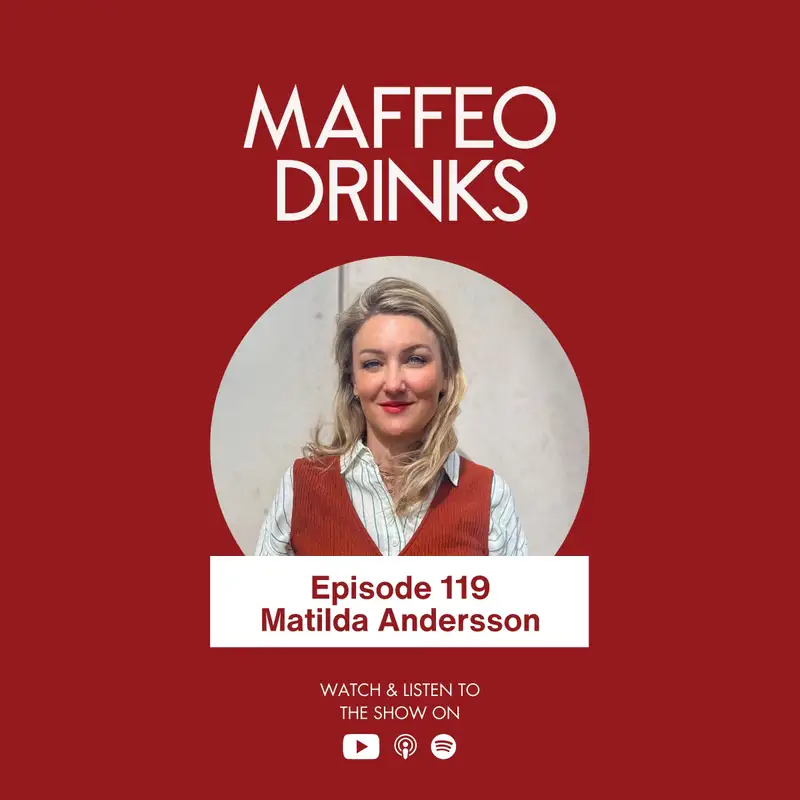
119 | Does Culture Really Eat Strategy for Breakfast? How Matilda Andersson uses the 4Cs Framework to Bridge Gut-Feel Insights with Rigorous Research
How can you make something viable for, you know, newer generations and older generation? You know, like the boomers that we were talking about. You know? Like, how how can we make it relevant for you know, imagine I have a brand, and I want to you know, it's already it's drank by boomers, let's say, but I want to make it relevant and rejuvenate it. How can I do so in a in a way that it's appealing to the new generation but not alienating the older generation?
Dr. Matilda Andersson:Yeah. I mean, that's magic, right? I think focusing on what unites generations over what is different. But I think for example, with low alcohol drinks, like for Gen Z, maybe it is more about health and being fresh the day after. And maybe for a boomer, it's more about that you can explore different flavours and there's a kind of curiosity in ingredients and flavours.
Dr. Matilda Andersson:And so you just kind of need to frame things slightly differently, but you can serve and make sure that you're speaking the language that feels appealing to each generation. And then finding kind of culture moments where you actually, like occasions where you do come together. I think, you know, listened to your podcasts. It's interesting as a researcher to hear you kind of being quite critical of market research and finding myself agreeing like yeah yeah I don't like that either. And I think the mistake often made in market research is focusing on consumers only.
Dr. Matilda Andersson:So of course, consumers are really important, but sort of listening to consumers in a focus group and then taking that back as wisdom. But there are the pieces to the puzzle. So the four Cs is it's consumer, of course, but then it's culture. So understanding what's happening in culture. What are those big cultural shifts that are changing?
Dr. Matilda Andersson:How people are living their lives and how we creating meaning that could be fast, but it could also be how norms and values and rituals are changing. And then it's category. So what's happening in the category and what are the disruptions in the category and what kind of white spaces or opportunities are presenting themselves in the category and importantly, company truths. So what is happening in your company? What's your vision?
Dr. Matilda Andersson:What are your values and where you're going? And those four C's is that's the magic. That's a holistic view thinking about your brand and how you're showing up and kind of missing one of those pieces means that if you're not focusing on where you are, you're gonna be overwhelmed by everything happening. If you're just looking at category, you're gonna miss those kinds of things that are actually driving the category forward. If you're just listening to consumers, you're gonna miss some things consumers can't even articulate because it's not necessarily on their radar yet.
Dr. Matilda Andersson:And I think a kind of a brand strategy weaving those four together, that's where you can be unique. That's where you can have a competitive advantage.
Chris Maffeo:And what is the one that people tend to work with less in your experience?
Dr. Matilda Andersson:I think culture probably because it's something that you don't necessarily understand, or it feels too big and abstract. And it can be difficult to know what, back to the kind of trends conversation, oh God, there's so much going on. What should I be focusing on? So I think it is that kind of identifying what pieces of culture is really important for you to track and grab hold of. But then I also think, company, of course, people are focusing on them and their category and kind of company values, but bringing all the pieces together, I feel sometimes it's missing as well.
Dr. Matilda Andersson:And
Chris Maffeo:it was funny, you know, how we started the conversation now because I think it was maybe the connection was the episode with Paul Thomas sitting at the bar. And and the fact that, you know, that's how we started this whole conversation. And we said, you know, I work in insights, and let's have a conversation about why certain people like me, for example, skeptic about insights. Paul was mentioning that in his episode. But also the fact that, at least for me and my experience, is the fact that insight is treated as kind of like a magic stick to solve things.
Chris Maffeo:You know? It's like this is how you leave the meeting room. Okay. Let's ask consumers or let's ask an agency. Let's brief an agency.
Chris Maffeo:They will tell us what to do. So there is this misconception of this kind of magic stick moment, but there's only so much that you can do with a random brief, right?
Dr. Matilda Andersson:I don't know how many times you kind of have a brief and you're kind of slowly realizing actually you've been brought in to settle an argument. Oh, actually, like you're asking consumers because you're trying to prove a point. So
Chris Maffeo:And the two questions are maybe, you know, the sales director and the marketing director. Each one got to ask one question so that we can Yeah. We can sort it out, and let's see who wins.
Dr. Matilda Andersson:Yeah. Definitely.
Chris Maffeo:And if we talk about the category element that you were just discussing, is there also this kind of, like, meopia, you know, just looking at your category? You don't want to see further on what's happening. You know, whiskey wants to win in whiskey. There is this element that I feel in meeting rooms of let's define our arena so that then we can measure how we're doing. You know?
Chris Maffeo:So I want to be the best selling aperitif brand. And then they just look at each other instead of looking outside the pond. Then it can be another category or another business as well. What's your experience in that?
Dr. Matilda Andersson:Yeah. And I actually think that, I mean, there are lots of categories where brands just focus on their category. But I do think in drinks, that would be the challenge for the drinks industry. You're guilty of looking quite closely in your category. And there's a lot of language in drinks marketing that consumers don't care about at all.
Dr. Matilda Andersson:Like there's like serves and they're supposed to be in a certain way and there's like certain things that are supposed to be mixed in certain ways and there's occasions where you're supposed to drink whiskey or not. People don't care. And I think that's when you do ethnographic researching, you realize that people are just mixing it however they want to, putting in whatever glasses they want. And I think there's a bit of geekery in the drinks world about the language used and the way you kind of ring fence drinks and occasions as well without thinking about the kind of fluidity and how people actually consume products. So I would definitely say that there's a myopia and the risk in that is kind of missing change and opportunities happening because it's too narrow focused.
Chris Maffeo:And yeah, I mean, don't get me started on these SERVs and things, but this is the typical example, no, that when the industry gets a little bit too geeky, you know, this is when, you know, troubles happen. No? But I think that the issue from my angle is is twofold. You know? Because on one end, there is a kinda like a diaspora of non drinks people entering the drinks world, which are creating certain issues, you know, with modern trade and fast growth and deep promos and, you know, thinking that, you know, because you were selling, I don't know, a soda, you think that people buy whiskeys at the same rate as they would buy Fanta.
Chris Maffeo:But then on the other end, there is this kind of like purist and these, you know, the the the Talibans of of of serve that it's like, okay. No. If that bar doesn't serve you the right way, then, you know, you know, you have to send them back to school because they have to learn how to use the garnish and how to use the serve and and and so on. There is this element of, you know, getting, you know, what I call the eco chamber. No?
Chris Maffeo:That's, you know, it kinda like goes back to what we were discussing at the beginning, but it's, you know, how can companies get out of this ego chamber and get some insights from the rest of the world? Yeah.
Dr. Matilda Andersson:And I think that is like when, don't just go and ask, do you like this or do you like this to consumers? Because you're gonna just end up in the same space and actually being open minded, understanding people and their lifestyles and how they're living their lives. Like I remember having a kind of a lunch session, like a kind of ethnographic session with two high net worth individual women. She were talking about, it was about for a premium whiskey brand. And we were talking about status and how their creativity is their status.
Dr. Matilda Andersson:And the more successful they are in their creative careers, the less they kind of pay attention to other markers of status. And then that translates to them, you know, also like seeing creativity of the value in brands and that could show up for rum brand or a whiskey brand. It didn't really matter. They were sort of looking for a fit of their expression. And I think if you're not understanding those women and how they are defining status, you're kind of missing on speaking status in the right way for them.
Chris Maffeo:And because it also goes back to the ethnographic side of things, you know, like understanding the fact that people don't think that way. You know? Like, people want to have a whatever. Like, a full body drink after a meal. You know?
Chris Maffeo:They don't care if it's you know, maybe they want to have it for, you know, as a digestive or maybe they want to have it as a refreshment or they want to change their palate because they just had a certain type of, you know, like, they have a flavor in their mouth and they want to get rid of that flavor with something else. They're tired of the red wine and they want to have something else. So it's not about whiskey on whiskey, rum on rum, or amaro on amaro. You know? It's about what do you have.
Chris Maffeo:You know? And then it could be grappa. It could be anything.
Dr. Matilda Andersson:Yeah.
Chris Maffeo:And then it goes back to that element. So if you are the first in line in your brain, you know, that's how you win. Yeah. You know, we go back to the Aperol Spritz example. You know, like, what I think has made it successful is that it's an easy choice in the moment that, let's say, you and I are going for a drink and we are looking for a table.
Chris Maffeo:We are looking for a place to stand at the bar. You know, like, there is so much going on at that moment that I don't want to look like standing there, like, looking at the menu for fifteen minutes. And, you know, those orange glasses around us make it easy. And maybe you are the first one to say, I love a spritz. And then I was like, oh, yeah.
Chris Maffeo:Make it too. You know? So that is the ease of order, you know, like there's so many elements there. You know? I feel that very often we overcomplicate things in looking at our own little bubble
Dr. Matilda Andersson:Mhmm.
Chris Maffeo:Or being too geeky into make a thing complicated thinking that people will follow, but actually they don't really.
Dr. Matilda Andersson:Yeah. Make it simple. And I think, I mean, it's not like just a drink, you know, I just recently worked with a mobility brand who kind of, and I think, cars, they're like, it's a very sort of, people, it kind of appeals to people are really into cars, like petrol heads who are just like really into the features and the speed, Their whole range of people who don't care that much about cars, who just wants to get from from A to B. Maybe they want it to look good or be comfortable, but they're not going to like stress over like a million choices. They just want like a decent car.
Dr. Matilda Andersson:And I think those are the kind of the magic of kind of actually like just widening your perspective and like, what do people actually want? And I love the Aperol Spritz kind of example for that, because it's like, it's salient, it's there, and it's sort of, it's a good alternative to beer on a sunny day.
Chris Maffeo:Mhmm. And and I mean, like, now talking about cars, you made me think, you know, I was I was checking some cars, like, to I was thinking of buying a new guy in the end. I didn't. But one of the things that was very interesting for me, I went to a mini dealership. And, you know, instead of having all these different extras and options on the car that then you never really know which one is which because you forget to add one and then, you know, one cost estimate looks cheaper, but then you forgot the electric seats or whatever.
Chris Maffeo:They had a very interesting one because they are focusing probably much more on Gen Z, you know, I'm assuming now, like, with mini. And they had packages like small, medium, large, extra large. And in each, you had certain extras and optionals. So if you wanted to have, I don't know, a roof, you know, it was from, I don't know, the medium up or the large up. Or if you wanted to have a very basic one, you would go for the s because you don't really care.
Chris Maffeo:You know, manual seats and no big deal and other components, which is thinking, you know, and despite I was very geeky, you know, I am quite a petrol head. It was alluring for me because I'm like, okay. Now I can really compare offers because now I know that this is an that model large package. So I know that I'm not missing out on a certain dynamic of the car. And this is very interesting from putting yourself in the shoes.
Chris Maffeo:And I was listening now to the uncensored CMO, and then there was Tom Goodwin that was saying, you know, he was sitting in a car company meeting and he said, you know, have you ever gone to a dealer of your brand to buy a car? Because ultimately, it's that simple. Are you doing that very simple thing instead of being here sitting in a meeting room and talking for hours about what consumer wants? Have you ever tried to go in and be treated badly by the salesperson at the store?
Dr. Matilda Andersson:Exactly. I mean, that's just like, and actually I think my kind of, I want research to be people's chance of getting out there. Like to be invited out into the world, to the dealer, to the shop, to the, you know, do shop alongs, you know, sit at the bar, you know, go because like, it's just like, and obviously I'm kind of writing myself out of a job. You don't need an agency to be in the world. I think you need an agency to make sense of it all and help you kind of join the dots for your strategy.
Dr. Matilda Andersson:But everyone at all times and actually running customer closeness programs for brands has been some of the most fun work that I've ever done.
Chris Maffeo:Can you tell me more like what is this?
Dr. Matilda Andersson:Yeah. So I think, so when the brief is less about strategy and more about meeting customers, so, you know, taking a big toy company, their kind of design team out to actually have play dates with kids. Absolute chaos. Realize was
Chris Maffeo:a bartender advocacy program, but we want smaller humans.
Dr. Matilda Andersson:Yeah. I was smaller humans. I mean, they say never work with do research with cats or children. But I think it's, and realizing that those product designers had not met their customers before in their own space, in their home, where they're having Playdates. So that is incredibly powerful, I think.
Dr. Matilda Andersson:And facilitating and taking people out of meeting rooms and meet customers and experience culture or taking people into offices is also really powerful. So you can have a bit of workshop and actually bring participants or people into, like, co creation workshop.
Chris Maffeo:Do you think that there is a passion element issue with companies somehow in the fact that, let's say, without going into very specific companies, it's not that if you don't drink, you shouldn't work in drinks, or if you don't smoke, you shouldn't work in tobacco, or, you know, without being exclusive in that sense, but at least have an interest, something. No? Because sometimes you can have a brand manager that never goes to bars, and maybe it's their first job in spirits. And sometimes I feel like, but is this really right for you? Like, if you're not interested in bars, you're not interested in going out for whatever reason, you may have a family, you may have kids, whatever the reason is.
Chris Maffeo:But let's talk facts. You don't like this category or you are not interested genuinely. So there is an element that I see that it's people that don't really care that much about certain things because that is the first step to go out there before calling an agency and asking them for answers, right?
Dr. Matilda Andersson:Yeah. I think interest could play into it, but it's also like how you kind of, what behaviors are you encouraging as a company? Like, what are you rewarded for? Are you rewarded to say clever things in meetings, you know, in response to PowerPoints or are you rewarded for actually bringing kind of unique insights in interactions with your consumers? I think there's so like little time and there's like KPIs and targets and like attention spans are really low.
Dr. Matilda Andersson:So I think kind of, I would love to see like a brand that generally kind of giving time to people, and kind of encouraging and rewarding them and praising them for showing that curiosity outside the office.
Chris Maffeo:And do you think, like because you mentioned KPIs. Like, do you think that there is this kind of, like, situation where, you know, we because we we we spoke about, you know, we're we're speaking about future probable futures and trends and, you know, future outlooks. And is there kinda like a fear and of the future and then we go back to, okay. Let's track what let's measure what we can measure rather than what we should measure. So I would rather do something that it's quite comfortable for me, and I know that I can put some KPIs and probably it's gonna be green numbers on those KPIs rather than trying something new that I cannot really measure.
Chris Maffeo:So I cannot really justify to the management.
Dr. Matilda Andersson:Yeah, I think there is something in that. I think in times of uncertainty, you go back to tried and tested formulas. I also think it relates to something that you've talked on another podcast about that a lot of people aren't in their jobs for that many years. So brand managers don't necessarily kind of stay in their job for more than two years. Are you gonna bet on something that you might actually not see the fruit of?
Dr. Matilda Andersson:You know, the future, like if we're talking to like two to three years or five to ten years, like are you gonna spend time on that now? Like, what's the reward for doing that? So I think there's also something like an actually kind of a short termist versus long termist culture in companies based on tenure a bit as well.
Chris Maffeo:That's very true. And let me ask you one thing because, I mean, you know, I'm a very hands on, you know, sitting at the bar kind of insights. I realize I'm probably one of these empiricists. I'm from the school of empiricism probably. But, you know, you have a PhD.
Chris Maffeo:So it's it's kinda like we in Italian, we call it the devil and the holy water, you know, like coming together. Together. I'm a very actionable, you know, qualitative and gut feel type of guy. And I'm assuming that you are, you know, grounded in research because otherwise, you wouldn't have a PhD. So how do you manage to bring together these two kinda like sides of the coin in research so that we have certain people like me that are the we don't need the research.
Chris Maffeo:We can go to the bar and find it out ourselves. And then you have someone that has to actually make sense of that mess that we have been experiencing sitting at the bar, so it's a tumor.
Dr. Matilda Andersson:Yes, very good question. This kind of sums up my training challenge with my team and how you get to be a good researcher, I think. Researchers often make the mistake of trying to win arguments with data points and rational arguments and just showing more and more data. That's a temptation. We kind of have this thing that we talk about, like think Goldilocks.
Dr. Matilda Andersson:If a market researcher was telling the story of Goldilocks, they would not just talk about porridge. They would talk about all the possible breakfasts that Goldilocks could eat, like toast, pastries, cereal. But if the answer is porridge, just porridge as a researcher, you have to make sense of the mess. You can't just come back and show lots and lots of data charts, say anything about presenting insights and storytelling, helping people feel close to the data you're showing. Research can be a source of inspiration for thinking in different people think differently with data, providing provocations, showing the tensions rather than just data charts.
Chris Maffeo:And but then they should also really help.
Dr. Matilda Andersson:Yeah. Not just uncovering truths, like driving the change as well. So not hide behind numbers, like actually be bold and say what it means and not be afraid to say what it means.
Chris Maffeo:And this is, I think, it's a fantastic point to, you know, to win over people like me because, you know, very often, you know, I've seen insights kinda like decks. No? And there's like, people are doing this, and people are doing that, and people are doing that. Okay. But then what should I do about
Dr. Matilda Andersson:this misinformation? I
Chris Maffeo:know that there's a lot of people having this kind of thing, but what am I supposed to do with my brand?
Dr. Matilda Andersson:Exactly. And I think sometimes it's about being very directive about what it means. Sometimes it's about actually really pulling back the curtains and showing those kinds of human behaviors that you've observed, because actually just empathizing and feeling those things drives change anyway. Do you know what I mean? So there's a kind of balance between pulling back the curtain and showing what's actually going on to help people who sit in offices feel culture and feel people, but then also providing frameworks or direction, like strategic tools where you you can take action.
Chris Maffeo:So let's wrap this up. Let me ask you what is a question that I missed asking you?
Dr. Matilda Andersson:I was gonna ask you a question.
Chris Maffeo:You want to ask me a question.
Dr. Matilda Andersson:What would it take for you to kind of find market research useful?
Chris Maffeo:That's a good one. I think it would be acknowledging the fact that there must be an acknowledgment of the fact that certain part of the research can be carried out by regular employees, maybe with some guidance, and then, you know, properly asking for guidance in understanding more and diving more into certain things. What I feel is that whenever I've done research or I was asked to brief an agency for research, it has either been, as you said, like a very shitty brief, even written by myself. I'm bad at writing brief, to be honest. Or it was just like to prove something that we thought rather than saying we have certain doubts because it looks like our brand, you know, the strategy of our brand wants to do this, But it looks like that in this market, it doesn't really make sense.
Chris Maffeo:And, you know, like, is an issue, I think, with honesty.
Dr. Matilda Andersson:Mhmm.
Chris Maffeo:And the ecosystem in general is kinda like a life ecosystem. So in the moment that everybody can be honest with each other, you know, agencies with clients, consultants with brands, in that moment, then it makes life easier because then it's not about I'm trying to sell you something or I'm trying to prove something. You know? Then it makes it much easier. Okay.
Chris Maffeo:Let's put, you know, stuff on the table. Yeah. And this is what the challenges are. And then you are gonna tell me, first of all, if you can help me or maybe you cannot help me on this topic, but you can help me on another topic. You know?
Chris Maffeo:And to go out of the transactional element probably with research companies Yeah. I think that would help a lot in, you know, let's say, winning people like me. And Because there is a lot of stuff that can be done for maybe a reasonable amount of money and reasonable amount of time if you have the right people also from the client side.
Dr. Matilda Andersson:Totally. Yeah. Dream. I think dream team. I think that kind of I see like the whole what I wish for the research industry is like participation, like participation with clients, participation with consumers, and that we're participants in creating a future for this brand and that kind of agency and client side like walls need to be broken down because that kind of collaboration and co creation.
Dr. Matilda Andersson:And also recently, you know, we spoke about drinks, people being geeky, like research people are super geeky and purist about how to do research, but that's not really serving anyone particularly well, particularly not when AI is coming in. It's like, what are we like, if we are kind of bearers of like knowledge and access to people, how can we be genuinely kind of useful and co create something wonderful together, I think.
Chris Maffeo:Yes, absolutely. And it's also about the, you know, like you said something I wanted to comment on, it was that's very true. And I think it goes back to this, let's say, closing the circle on bringing research to thanks a lot, Matilda. That was a very interesting conversation. I think we should carry on in, you know, exploring this element of bringing, you know, the world of insights and the world of pragmatic people wanting to do research on their own and the world of people that cannot really think of I got it.
Chris Maffeo:You have two minutes. Now I think it's very true what you're saying in the sense that in my experience, what I see also like working with companies, apart from having research as an answer, you know, as a wannabe answer or looking for answers, there is also an element that research is seen as a chore. So I'm writing the strategy for the brand. It's summer. We are closing the brand planning for next year.
Chris Maffeo:Shit. You know? Like, the managing director told me that my insights are bullshit. We need research. You know?
Chris Maffeo:We need to, you know, call Matilda and let's have a research done in two weeks because, you know, then we need to deliver the final PowerPoint presentation to the board. You know? So I think that one of the, you know, to answer back to your question, there's there is this element of showing up as a client and saying, Okay, you know, we will give you our time for the research to work well. You know, because sometimes it's like, okay, you know, the brand manager can brief the agency And then the marketing director doesn't really know what has been briefed. The managing director, he had just made a comment sometimes and then he gets an invoice for a research that he hasn't asked for.
Chris Maffeo:You know, there's so much mess in what can research do for companies, especially like medium, big companies that in the moment that people really sit down and say, okay, this is what we need and this is a question that, you know, this is an issue that is going to solve our problems probably for the next five years, not for the next meeting with the board.
Dr. Matilda Andersson:Exactly that. And I think then also agencies being like, you know what, we did this other piece of work for you like earlier in the year. And actually some of those insights are still relevant. We can bring that into this conversation. We don't need to start from scratch or we can build on other knowledge that we have.
Dr. Matilda Andersson:I think being kind of truly collaborative in those situations, the worst thing in the world is to get an afterthought brief and you've got like two weeks to do something, but instead of kind of generally being like, what are we trying to do here? Like actually, what do you need? And then like, now that we've done this, how do we build that to a kind of a bigger picture long
Chris Maffeo:term Absolutely. So fantastic. Thanks a lot, Madilda, for your time and for your patience. Let us know how can people find you and get in touch with you and reach out to you.
Dr. Matilda Andersson:Thank you so much, Chris. I really enjoyed that. I thought I was coming on the podcast as the enemy, the market researcher. But you've really opened up my mind and it's been so, so fun.
Chris Maffeo:Fantastic. Thank you so much. So how can people reach out to you? How can they find you?
Dr. Matilda Andersson:So I'm managing director of Troop Consulting. You can find me via Troop in my LinkedIn profile. Do reach out. I'd love to have a chat about anything insights related and why we should be embracing the trend of not following trends.
Chris Maffeo:Fantastic. Thanks a lot, Matilda.
Dr. Matilda Andersson:Thank you.
Chris Maffeo:That's all for today. I hope you enjoyed this episode with Matilda Anderson. We spoke about many interesting aspects, you know, the four Cs framework, ethnographic research, how to combine qualitative and quantitative analysis. We talked about how to observe the reality, how to observe the market and understand the patterns and how to generate relevant insights and actionable insights, more importantly. If you have a couple of people that you think would benefit from listening to this podcast and watching this podcast on Spotify and YouTube, please share it with them.
Chris Maffeo:Remember to follow or subscribe to the channel. If you want to get more insights and a deep dive analysis of this episode, you can do that at mafelldrinks.com. That's for today, and remember that brands are built bottom up.
Creators and Guests