Zebra-Striping Between Categories to Elevate Occasions with Filiberto Amati | 104
Summary
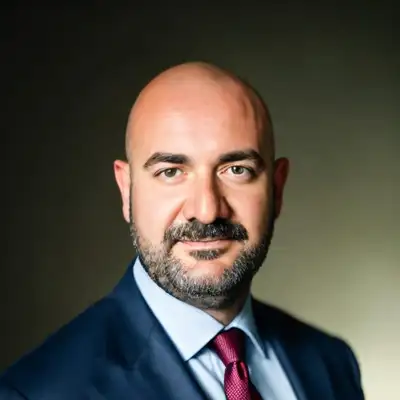
Filiberto Amati, Founder of AmatiAssociates and Head of Partnerships at MAFFEO DRINKS, is a veteran of major spirits companies, including Campari and Di Saronno. He dissects the post-COVID reality facing the spirits industry, revealing how the pandemic created a temporary "shock" that artificially inflated off-trade volumes while disrupting traditional brand-building pathways. Drawing from his deep beverage industry expertise, Filiberto explains how consumption patterns are realigning to pre-pandemic trends—exposing brands that gained artificial traction during lockdowns without building genuine on-trade education or loyalty. The conversation explores how consumers increasingly practice "zebra-striping"—switching between categories within the same occasion—why cultural movements drive successful brand rituals from Aperol's orange visual cue to Corona's lime mythology, and how route-to-market consolidation is reshaping competitive dynamics across the fragmented spirits landscape. Timestamps: 00:00 Introduction and COVID Impact Context 03:45 Post-Pandemic Volume Normalization 09:20 On-Trade Education Crisis Analysis 16:15 Off-Trade vs On-Trade Dynamics 23:30 Category Blurification and Zebra Striping Occasions 28:45 Route-to-Market Consolidation TrendsThis is Maffeo Drinks.
Filiberto Amati:A lot of people put brands they didn't know about during that shock and didn't really learn when and how to use them.
Chris Maffeo:In this episode, Filiberto Amati is back. We talk about what's actually happening in the industry right now. Why are companies not performing at the moment? Is it COVID? Is it the readjustment?
Chris Maffeo:What is it? We talk about why certain brands are doing better than others in this post COVID readjustment. We talk about distribution and what is the trend in many big companies in integrate vertically, so buying distributors or going direct into a market. We've seen a couple of months ago, Braunformand going direct in distribution in Italy, for example. Some companies are going more vertical.
Chris Maffeo:Some other companies prefer a more indirect approach. We also talk about the differences in distribution between beer brands, spirits brands, soft drinks in the intersections between beer and spirits, which is often overlooked.
Filiberto Amati:If you look at the true success stories, and I'm gonna say something which is really you know, probably a lot of people are gonna hate me and unfollow me, but you actually realize the liquid itself plays a totally secondary role to this cultural meaning and movement.
Chris Maffeo:We talk about the big trend of blurring occasions. Consumers are actually zebra striping not only between alcoholic and nonalcoholic or low alcoholic beverages, but also between categories, between rum and whiskey, between beer and, gin. So what's happening? So let's dive in now. Filiberto
Chris Maffeo:Welcome to the Maffeo Drinks podcast. Hi, Chris. If we take LinkedIn as a platform, there's a lot of buzz about the post COVID normalization. Is the drinks industry doing well? Is it doing bad?
Chris Maffeo:There is some pessimism, but then all of a sudden, there are some charts that show some optimism, what you analyzed in the last few months.
Filiberto Amati:So right now, let's say that the spirits industry, it's striving for good news. And so they're trying to get good news everywhere. Lead was a shock for many industries. And this shock created a big change in demand for a shorter period of time, three, four years, without really impacting the long term trends. So what we see right now is that five years after the pandemic, consumption is going back to what the trend before COVID was.
Filiberto Amati:A lot of volume moved off premise because of the closing of the on premise to begin with. There was a big bump in consumption. People were drinking more at home. That, of course, had a huge effect, positive on one end, but it also changed the rules of the games. Juukris, of course, are the master of building brands bottom up, and you know better than anybody else, that most beverage brands start and must start by connecting with consumers and customers on brands.
Filiberto Amati:Of course, for a number of years, that certainty got blurred because of the shock and the movement of volumes from one channel to the other. And the fact that in the quest of premiumization for the industry, a lot of extremely premium brands found their way into modern trade beyond traditional trade. So that's one trend which we have observed. The shock and the shock wave lasted for a few years, but now we're going towards a normalization of that event, so to speak, of that external event to the industry, whereby if you look at the consumption trend now and the consumption trends before COVID, the industry is realigning.
Chris Maffeo:Let me ask you a couple of questions. You mentioned off trade. In my experience, it's interesting that we all know you need on trade to launch brands. During the COVID years, many brands launched in d two c or off trade. If you launch the brand, let's call it a whiskey, let's call it a gin, whatever it is, you know, and you launch it because you have the power in the market, And you manage to get listed in modern trade because you're you already have existing relations with modern trade players.
Chris Maffeo:So you manage to get on shelf, get some traction. Maybe you have some advertising budget to do that. But then the on trade reopens, and then all of a sudden, these brands struggle in the sense that there hasn't really been a liquid on lip kind of example. You bought a bottle, maybe it's still there from five years ago. Could this be why there is this readjustment that a lot of volumes spiked?
Chris Maffeo:But now, like, basically, at some point with all the reopening, with all the new brands launching in the entree, all of a sudden, people don't find them in their basket anymore. Even if you launched it a few years back, you find yourself stagnating, and that creates this kind of bad news, bad sentiment.
Filiberto Amati:I think you have a great insight. So a lot of people bought brands they didn't know about during that shock and didn't really learn when and how to use them. Let's not forget that the on premise, it's really important to get your right, you know, to the lips of the consumers, but it's also fundamentally an educational platform for most brands, for most innovation. There is also a question of shifting occasions back and forth from out of home to back home and out of home again, you lose certain relevance there. But fundamentally, there is a lot of new brands, new categories that are coming back that has impacted the way consumers think about what happened during the pandemic.
Filiberto Amati:So, yes, I agree with you. There is definitely that hype, which wasn't driven by an influencer, but was the byproduct of the events. That hype changed for a certain period of time the rules of the games. Well, now we're back to the traditional rules, and some brands failed to connect with consumers because consumers didn't really learn how to drink the brand, consume it, and fully enjoy it. There was a lot about making cocktails at home during COVID.
Filiberto Amati:A lot of those businesses are dead, and you see how RTDs keep growing. So if people were to do cocktails alone more and more sophisticated, premium RTDs wouldn't be growing as much. Volumes are shifting. I agree with you. But I think that also there is another aspect.
Filiberto Amati:And then, of course, this we need to it's more nuanced country by country. In The US, because of the three tier system, premium on premise knows that their products are going to be found in premium liquor stores. That dichotomy between off premise and on premise doesn't exist. Me and you being Italian and having had experience in many European countries, we know that in Italy, if you find a brand in modern trade, the on premise guys don't wanna see it on their shelf. I was recently talking to a restaurant owner in Italy and was telling me I had to remove this line of ice creams because these are exactly ice creams you can find in the supermarket 150 meters from here.
Filiberto Amati:And I don't wanna compete with carfoure. It's as simple as that. In certain countries, that reality is more nuanced, in others less nuanced, but there is some sort of rejection. In fact, more premium brands are developed exclusively for Durega and they don't really become modern trade brands ever.
Chris Maffeo:Building on this, the other question I had was, do you think that this inflated demand during COVID in off trade has created sentiment and bad news in the off trade because companies haven't readjusted the on off split. If you were selling x amount in off trade in the last few years, you want to show your brand owners or management that you are growing off trade and cannot justify shrinking off trade. So the on trade hasn't readjusted as we wanted for reasons we will talk about later. But I put myself in the shoes of a commercial director or a managing director and say, okay. I cannot show that off trade is declining or is stable.
Chris Maffeo:So I still keep on putting these targets as, plus x percent just to show it. And then those numbers don't really come because you have to catch up. You were five years ahead of where you are now.
Filiberto Amati:So one of the biggest problems, I think, operationally of the industry is this it's a very traditional industry where you do past year plus x percent, and that's your budget, basically. You don't really build it based on what consumption is happening. So it's exactly you paint a picture which is completely true, and it's problematic because there is this idea that from a revenue expectations, oh, last year, plus 3%, 4%. And and what's the average growth in the last year? Suddenly, you know, that shock due to COVID subsidizes, and then, you know, that doesn't happen anymore.
Filiberto Amati:That's one. Two, there is a budget allocation problem because gaining and sustaining velocity in the off premise, it's a completely different game than gaining and sustaining velocity in your premise. One moves the bottles. The other one, you really need to start focusing on the cocktails and the drinks and amplify that beautifully in your from one bottle to one case to one palette. In the off premise, you start with one pallet because the retailers, the problem is that they'll take 20, and if they don't move, they give you back 18.
Chris Maffeo:And and they and they want the promo on the two.
Filiberto Amati:Exactly. And then they they want to do half price. So you need to find a way to always make those other AT move as well. You know? So there is revenue expectations.
Filiberto Amati:There is budget elevation. And, of course, it means that your organization as a distributor needs to have, you know, people with certain budget, more people on the on premise working with merchandisers, making sure that you have the three phasings rather than more people visiting the bars and generating demand or for the wholesalers in the bars with listing with promotional activities, organizing guest shifts, and so on and so forth. Okay. So a difference in business model because the two extremes. So spirits companies that operates 100% off premise, and the spirits companies that operates 100% on premise have two different business models, operational.
Chris Maffeo:And this is true that it's new more nuanced in certain countries. But I I think the the the the big issue is not much on versus off that if I see it in supermarkets, I don't want to list it in my bar. But if it starts to be heavily promoted as it is in most European countries, for example, then it starts to be an issue. Because if I see it every other month for minus 20%, minus 30%, then first of all, consumers wait for the offer because the offer is gonna come at some point. So why should I buy it full price?
Chris Maffeo:I will wait. And then that creates this perception of less premiumness. If I'm a bar owner, then all of a sudden, it's like, are you making drinks with this brand that is actually on offer all the time? And then it starts to be this kind of line for on trade and line for off trade, and it creates this clash.
Filiberto Amati:It's excessive surge of velocity, of rotation, of premise combined with price promotions, very well advertised. Consumers wait for the next promotion and start thinking, okay. Is this guy, if you are in the on premise, buying these products on promotion? Because consumers don't understand how the bottle moves towards a shelf or a back bar. They don't see the difference.
Filiberto Amati:A lot of things start in turf mining, which are not really reality connected. Is the bar owner buying that bottle on promotion, but then he's not giving me part of the value creation. So there is a perception problem which keeps changing.
Chris Maffeo:There is also pretty much like a cannibalization between on and off because if the brand is mainstream and I see it on promotion and I'm a bar owner, I buy one bottle and I don't buy one case. You know? I go to the supermarket and probably one bottle is costing me less than the wholesalers bringing it to me, then my volume is coming from off trade and resell resold in the on trade, which creates another blur image of which volumes goes where.
Filiberto Amati:But look. I hate to go back always to Aperol. The bottom line is it's 90% on premise brand in the countries where it's successful. And for good reasons. You know?
Filiberto Amati:And the the 10%, it's probably a mix of the RTD, apple and soda, the ready to serve apple spritz, which is already premixed, and there is very little purchasing of apple and bottles outside the on premise. What we're saying is that the dichotomy between on premise and off premise sometimes is artificial, but most times it's real. A brand that is successful in one, it's not necessarily successful in the other.
Chris Maffeo:Let's stay on this topic because because this brings a good bridge to one of your dear topics, the blurrification or blurring of categories in the spirits world and beer. Blurring for a reason. So part of this is driven by this from an IWSR perspective categories, but from a consumer perspective, they don't care about categories. They want a certain drink. You know, I'm sitting on a terrace in Warsaw and we're about to go for dinner and we want a drink.
Chris Maffeo:It goes Aperol Spritz, Prosecco, Corona, gin and tonics. It can be anything that fits that occasion, which is sitting on a terrace in the sun before dinner. How are you seeing this development? We've been talking about the blurring in the last few years.
Filiberto Amati:Oh, it's almost fifteen years now. Categories are a byproduct of an industrial manufacturing and retail driven approach. We need categories in a certain way. We need to understand what the vodka is and how it's different from a gin from purely manufacturing point of view. It's as simple as that.
Filiberto Amati:Consumers never really thought from a category point of view. The big change here is the emergence of non alcoholic beverages, zero beer and zero wines. We talked about, you know, me and you studied and did a report on non alcoholic beverages last year and zebra striping was emerging as this phenomenon whereby consumers switch in the same occasion to alcoholic and nonalcoholic. For them, it's indifferent. And that's the main example of what the blatification of categories mean from a consumer point of view.
Filiberto Amati:They don't care if it's a beer, if it's Aperol Spritz, if it's a gin tonic or an RTD, consumers are not that bound to a specific way of drinking in that moment. It needs to be meaningful in a sophistication occasion, in a club with fancy cocktails. You're gonna have a martini glass or something more sophisticated. The dynamic, which is from a consumer point of view changing, is that I love diffusion models. So there is always an early adopting group.
Filiberto Amati:And in spirits traditionally, gender was very revealing in terms of who was the early adopter. Now gender doesn't play a role any longer. Beer, which is a male driven drink, did a fantastic job with the flavored, the low alcohol flavored beer by targeting women. And by the way, by getting men later on in the diffusion model brought in by the women who were targeted as main consumers for those drinks. The same Aperol splits, you know, a drink in a wine glass, it's a girly, quote unquote drink, which found a diffusion model from women to men.
Filiberto Amati:Now you're having more and more whiskies, which are traditionally very male driven. If you look at a lot of Scotch whisky, it's a very traditional, dark, male oriented kind of imagery, so to speak. And they are now targeting women to build a more differentiated consumer base without having that gender role definition any longer. And I think this is where the blurrification is happening. So more ways to build your brand beyond categories boundaries are happening.
Filiberto Amati:People are easily considering wine cocktails, beer based cocktails. They are exploring, experimenting with that. So the big trend of blurrification changes not only what consumers consume, but how brand compete as well in terms of broaden.
Chris Maffeo:What role does route to market play in this game? No? Because very often, like, you come historically more from spirits. I come more from beer. There is an overlap in the the track that brings the goods to the to the entree.
Chris Maffeo:Very often, it's about what the bar can buy from distributors or sailors, suppliers that creates that trend because it's like, I get a good deal on this. I start pushing it to my consumers. They adopt it. That's a good deal.
Filiberto Amati:Absolutely. The route to market is critical, and the route to market is as complex as it gets because if categories don't apply for consumers, look at vertical, hard liquors versus wine versus beer versus waters, of course, they're all marauds from a route to market point of view. So the a bar is not gonna have 15 different type of suppliers. Okay? And if you are, you know, in a bar, beer and water are never gonna miss.
Filiberto Amati:They they always have that frequency of supply. That frequency of visit, basically, the guys that visit the bar the most are also the ones that refill the most for other stuff which they are not supposed to necessarily sell. Before becoming a consultant, was general manager of Disaronno in The Netherlands. The way Disaronno in The Netherlands survives into bars is through Heineken and IBM, mostly, okay, which is the two beer distribution company, which basically sell beer. So, of course, they're not gonna do the education for you.
Filiberto Amati:They're not gonna do the promotional activity for you. They're gonna do the delivery to the bar because they visit the bar two, three times a week. Okay? And so they distribute water, spirits, soft drinks, and so on and so forth and so forth. Now if you do a step back, you know, me and you as Italian, the there is no beverage company in Italy, wine, spirits, soft drinks, mineral water, that can survive without Partesa.
Filiberto Amati:And Partesa Partesa is the current wholesale business of Heineken in Italy. Loreca used to be the Bira Veroni wholesale business and now operates independently. From a route to market point of view, they're intertwined. Strategically, it's getting more intertwined because Carlsberg
Chris Maffeo:Yes, used to work.
Filiberto Amati:No, a little bit. You completed our acquisition of Britvic, which is this soft drink, big operations in The UK. By doing so, now Carlsberg is the biggest Pepsi bottler in Europe. Okay. And then to that, you add that Coca Cola and Leni bought Finlandia from Ramforman, so they distribute vodka.
Filiberto Amati:Placard. Of course. Yeah. Placarda stuff, of course.
Chris Maffeo:Now they own it.
Filiberto Amati:Now they own it. They don't just distribute it. They own it. Brown Forman, Molson Coors, bought bourbon, and have the rights for the distribution of sugar tree in The US. Sometimes it's complicated, but it's very simple.
Filiberto Amati:A bar is not going to have 12 different suppliers for beverages. A lot of the emerging brands have a problem establishing themselves because they go to the wrong supplier. Even if I want your bottles, I'm not going to add another supplier, another order system, another payment term systems and so on and so forth just to have one brand of vodka or whiskey. I need 80% of the time on stock because I forgot whether I remember. I don't remember the number and the guy doesn't visit me.
Filiberto Amati:So I need to look in my database, all these numbers, then other things happen at the same time. And therefore, we basically you're delaying the next bottom.
Chris Maffeo:Let's dive into some trends because there's been some movement on this front. When we last spoke, we were still in the gin boom. Now we have seen in The UK, there is this gene fatigue consumer getting tired of a new gene or an 10 new gene every week entering the market. What's happening by category? The renaissance of vermouth, gin and tonic, the only thing you would drink before dinner together with Aperol Spritz.
Chris Maffeo:Now, you know, it starts with the vermouth and tonic with, you know, like, some other whiskey highballs. There is more competition within the same occasion that has repercussions on different categories.
Filiberto Amati:The origin story has to do with rediscovery and premiumization of gene therapy. Fever three and the whole premium mixer category is born because if you have better gin and tonics with the gin, you're gonna need the better tonic, which is two thirds the same. That was the initial proposition. Two thirds of the beverage, it's the tonic. So why are having a 70 pound gin when then you use a 30¢ tonic, and then think about that that's a better experience?
Filiberto Amati:This has moved the needle, in many directions. You have cycles. Twenty, twenty five years ago, it was the tequila and vodka cycle with gragus and patron. Then you have the Vermouth basically went from being a duopoly, Cinsano and Martini, to becoming basically an industry full of local denomination, vermouth quinato, superior auditorino, you name it. Fantastic rediscovery.
Filiberto Amati:I didn't drink vermouth previously. I didn't really like the Martini Cinsano version of the vermouth. It's much more sophisticated and diverse. I love it. It's one of my go to drinks.
Filiberto Amati:I love Negroni, and I think it improved the Negroni experience as well. But then you also have TDs as the categories come and go in spirits and reemerge. Now much bigger. Gene, this is interesting because it refreshes the craftsmanship on one end, but on the other end, it gives more opportunity for consumers from a consumption point of view. It gives opportunities to the trade, to the on premise, in particular, to differentiate, to play, develop, but distance come and go.
Filiberto Amati:So the hype, it's great. Okay? But then you need to build a business and opportunity out of it, and not everybody can. We discussed a little bit earlier about the m and a activity. We saw that Cinsano, which when I joined Campari 2007 was the third brand together with Campari and Sky vodka.
Filiberto Amati:Cinsano Aperol. Aperol was the Italian exception back then, acquired in 02/2006. Cinzano was one of the top priorities, and Cinzano never really thrived that much under Campari. And so Campari decided now in this shrink shrink to growth evolution to sell the brand and focus it. And now Carrefour, which is this emerging group from the South Of Italy, find themselves with a brand which basically opens an opportunity for them, which is unique because this is a two, three countries brand now has distribution as a brand with distribution in eighty, ninety countries around the world and with businesses in Argentina and Spain, which are really relevant.
Filiberto Amati:They do vermouth, fernet, Victor's, sparkling wines, Prosecco. The opportunity is interesting. But Campari couldn't make it track.
Chris Maffeo:And this one, we will talk more about about this m and a activity later. But if we take a more holistic view on these trends on categories, the king is dead. Long live the king. Categories never really die. They get dormant for a decade, and then they're back.
Chris Maffeo:No? But if you take, you know, like the rays of coffee culture that has pushed palates that started to get more used to bitter flavors. Same thing with, you know, tonic waters, again, bitter flavors. Bitters, you know, the Campari's and the Amaros, bitter flavors versus categories. Because if you can tap on that thing, always bring the example of the race of pepperoni in my old days.
Chris Maffeo:In The UK, it was at the same time with Jamie Oliver, the rediscovery of Italian food, all the Italian chefs on British TV shows. You always have to see what happens in culture to really understand it. It's not only one beer, one vermouth, one and then I remember one of the questions we were asking was the rebirth of Negroni that pushed vermouth or was the rebirth of premium vermouth and vermouth superior to push that we'll never really get an answer but it's like this perfect storm of the stars aligning and getting relevant culturally in a country and then to more countries.
Filiberto Amati:Yeah. On one end, you know, as we say, correlation, it's not necessarily Gaussian. So it's always difficult to understand whether the two things are moving in parallel because they are the effect of the other or because they're just moving parallel. But I think going back to Aperol, Aperol had a huge success like pepperoni abroad because it really meant the dream of Italy, the dream of summer, with sharing a moment together, which goes well beyond the occasion. I really like to talk about rituals.
Filiberto Amati:Why do I like to talk about consumption rituals? Because they're very powerful. Beyond habit, people look forward, like they look planning for rituals. Rituals are powerful because they're self educating mechanism. You literally evangelize others because you're talking about the ritual.
Filiberto Amati:People talking about the Lyme in Corona. The truth is people do talk about that. And that movement, it's really like a switch. And corona became incredibly powerful because of that switching from work to leisure, from work to holiday mode. If you look at the true success stories, and I'm gonna say something which is really, you know, probably a lot of people are gonna hate me and unfollow me, but you realize the liquid itself plays a secondary role to this cultural movement.
Filiberto Amati:Of course, the liquid needs to be good because I'm not gonna drink something I don't like. There are tastes you need to learn. The liquid plays a role, but the cultural moment with whom you are, and that's the powerful occasion, but it also gets amplified. That's how you can build something which is really long lasting. Of course, you know, there is always a hype factor, But the ability of the brand to build for the long run, it's to really go beyond hype and think, now that everybody's talking about it, how do I establish myself?
Filiberto Amati:Now that I have mental and physical availability, how do I build something people want to identify themselves and get attached rather than just the initial hype.
Chris Maffeo:And it goes back to what you were saying about the education of the entree. No? But also to make it simple and relevant, these cocktails or drinks we're talking about, they are also very simple to understand, to replicate. And there is this element of sticky factor. No?
Chris Maffeo:Like, how does it come to mind right away? I was discussing this with, Luke Ansley from Wednesday Domain in a previous episode, and we were talking about making coffee with an espresso machine, for example. No? It's a moment that I step from my chair, go to the kitchen, warm up the cup. I make it.
Chris Maffeo:It's my moment. And he was making the example of Wednesday's domain as a nonalcoholic wine to pop because it's a bottle. You pop the bottle like champagne. It is that element that you can do it without having that alcohol element, but still you don't sacrifice the popping element, which is very interesting because it's such a strong moment. I was smiling now because there was a Wimbledon final.
Chris Maffeo:There was a video that went viral of somebody popping champagne, and the singer got hit by a cork. Even even like the
Filiberto Amati:And the left was, please don't pop your champagnes when the players are not
Chris Maffeo:speaking was saying that's the most Wimbledon announcement ever, which is true. In Wimbledon, it makes sense. Probably would make sense in Roland Garros as well. Maybe it wouldn't make sense at the US Open. So there is always this kind of relevance that Wimbledon champagne, it's such a connotation in that sense.
Chris Maffeo:No? So it's very interesting how this ritual, let's say, have to make sense because very often and too often, we see brands that try to tap into the occasion and start to put lime into another bottle that has nothing to do with corona or soul or, you know, they start to do copycats and gimmicky elements. But also what you were saying before about the gender neutral element of categories. I remember back in the days, pepperoni was the same thing. It was this long glass, more classy than a proper mug of beer or a pint, and it was making it easier for women to show themselves with high heels and well dressed after working in banks, holding a beer in their hands rather than a pint glass.
Chris Maffeo:That's how you multiply the the consumer base. If you make it gender specific, then all of a sudden, you have 50% of the population.
Filiberto Amati:But you see, and it goes back to something I also repeat all the time. What you just said, it's very important. When you try to copycat, okay, you copy a mechanic, mechanic, but you forget the pivotal bing bang that led to the mechanic, which is insight. And first of all, you're not trying to generate an insight, You're trying to follow someone else's insight. So step number one is to have an insight which is yours for the brand and relevant.
Filiberto Amati:That's how rituals travel well abroad or don't. The Aperol insight for Italy is one. For the rest of the world, it's more about Italianity than it is for Italy, probably. Likewise, Peroni abroad, their insight is much more about Italianity than it is for Peroni in Italy.
Chris Maffeo:Corona in Mexico.
Filiberto Amati:Corona in Mexico. Xavier Bomba worked in a number of countries very well, not in all of them. Because in certain countries, the shop culture, it's not really welcome. So it's not about mechanics. It's about the insight, if you think about it.
Filiberto Amati:And the insight is your link to the cultural potential of the brand. It needs to be relevant locally, inside driven.
Chris Maffeo:How can people get in touch with you, Filipeto?
Filiberto Amati:Through LinkedIn or my podcast, Growth Brands and and more on Spotify and whoever follows you all usually can easily find me as well or amati-associates.com. That's where I live.
Chris Maffeo:Thanks a lot, Filipe. It was very insightful. It was a masterclass. I think it will be precious episodes for our listeners. Thank you so much.
Filiberto Amati:Thank you,
Chris Maffeo:That's all for today. I hope you enjoyed the episode. It's, it's quite a lot of information to to take in. I think the biggest takeaways for me are, you know, this blurring of categories, something that I always talk about on this, focusing on target occasion rather than on demographics. The fact that there is this zebra striping not only into non alcohol and alcohol, but also into different categories.
Chris Maffeo:People choose drinks based on occasions rather than on categories. Obviously, we need to keep them as categories because of obvious reasons, accounting and, merciological reasons, but in reality, don't think in categories. There is this readjustment after COVID. The industry is struggling. There will be people, unfortunately, losing their jobs, but they will probably find better ones.
Chris Maffeo:But, nevertheless, we stay positive in the outlook of the industry because people are still going to drink, and people are still going to go out and enjoy a couple of drinks whether they are alcohol free or with alcohol. If you could think of a couple of persons, your colleagues, or friends that would benefit from listening to this episode, please share it with them. This will help improve the knowledge in in our industry, and it will also help more people find the show. If you're not a subscriber, click subscribe, click follow. And if you want, leave a review that helps more people find the show.
Chris Maffeo:That's all for today, and remember that brands are built bottom up.
Creators and Guests