Bootstrapping & Investors | How the founder's role evolves with scale | Part 2/2 with Paul Hletko of FEW Spirits and Goza Tequila (Chicago, IL, USA) | 023
Summary
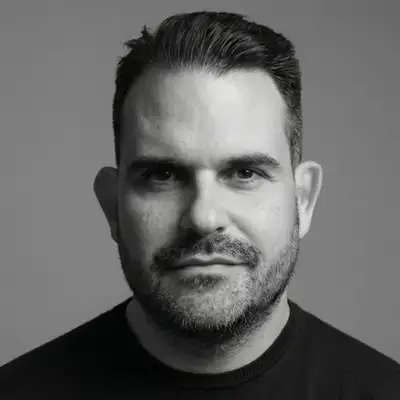
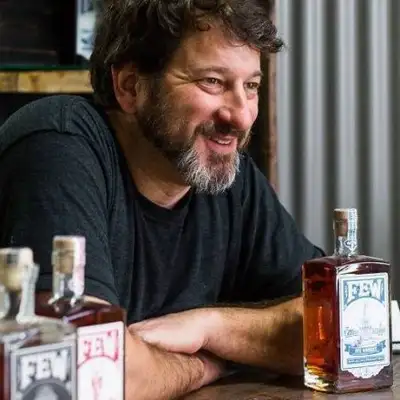
In this episode of the Maffeo Drinks Podcast, we continue interviewing Paul Hletko, Founder of FEW Spirits & Owner of Goza Tequila. FEW was part of the vanguard of the Craft Spirits Movement, with Paul leading the charge. They are a masterclass in building a drinks brand bottom up. I hope you enjoy our chat. Main Topics Discussed: Zero to One Bottle • Finding your target occasion •Bootstrapping Vs Investor Starts One Bottle to One Case • Is your target occasion scalable? • Adapting your drinking occasion • Winning distributors One Case to One Pallet •Advantages of a broad portfolio of drinks • Importance of Founder Field Visits, even when big •Transitioning to Indirect Sales About the Host: Chris Maffeo About the Guest: Paul HletkoHi, and welcome to the Maffeiro Drinks Podcast. I'm Chris Maffeiro, founder of Maffeiro Drinks, where we provide a non nonsense approach to building drinks brands from the bottom up. I will be your host, and in each episode I will interview a drinks builder from the drinks and hospitality ecosystem. In episode twenty two and twenty three, I had the pleasure of interviewing Paul Letko. He is the founder and distiller of few spirits and CEO of Goza Tequila.
Chris Maffeo:He is the former president of the American Craft Spirits Association. He has played a key role in the revival of small batch spirits in The US and brings an incredible experience to the podcast. I hope you will enjoy our chat. Remember that this is a two part episode, so if you liked it, feel free to listen to both part one and two of our chat. We were discussing about managing expectation of growth.
Chris Maffeo:That is a dear topic of mine. And I mean, you having been a founder and then moving on, what's the difference between boot strapping in the beginning and then having investors and manage them in terms of growth? How does it work for a founder? Because I remember we had a lot of talks back then in Clubhouse on the fight that you need to manage the expectation of what you want to do as a brand owner. I mean, do you want to live with a brand forever or do you want to pass it on to the next generation or do you want to sell out, you know?
Chris Maffeo:And there's a lot of confusion there when people start. What's your take?
Paul Hletko:Yeah, I mean, think it's really tough that you can you can have a whole bunch of different goals as an entrepreneur. Your goal could be to sell to a major. Your goal could be to pass it down to your kids. Your goal could be that you're gonna be artistically creative and have a business that is personally satisfying. You could have it be a hobby business.
Paul Hletko:You can say, I just do this for fun. I don't need the money. We just have fun with it. I think those are all very valid ways of doing it. But when you're operating your business, your goal can and should have an effect on the decisions you make.
Paul Hletko:So, you know, if you're trying to sell to a major, well, you're going to need to be selling an awful lot of cases. So you need to understand that your volume and your velocity are your primary drivers and your business strategy should reflect that. If you're trying to be an artistic creator that you're going to hand down, it's just going to be a hobby, then you just do whatever you want to do and you can create what you want and it doesn't matter. Or if you're trying to hand down to your children, well, you better be focusing a lot more on your margins, quite frankly. Make sure that you're operating at a profitable business that can sustain itself.
Paul Hletko:If you're trying to flip and maybe you don't have to sustain quite as well and you can put all your chips in, you you can shove your poker game all in and say, I'm going all in for a sale. And then it goes big as I can, as fast as I can and flip it. But these are all different choices, You could go slow, you can go fast. There are different challenges in certain categories, like say for example, whiskey, where, you know, growing in whiskey is extremely difficult because if you want to grow say 10% a year, but your product is aging for, say, seven years, you need to be producing two or three times what you're selling today so that you could have that 10% growth. But you don't have any, you know, that's true, you probably don't have anywhere near enough money to build the brand at that rate on a COGS basis or on a sales basis, that it's really difficult to thread that needle that you grow fast enough to make sure that you have the revenue, but slow enough that you don't outstrip your supply.
Paul Hletko:Yeah. There's a lot of
Chris Maffeo:challenges. Gin There's different comes in to help.
Paul Hletko:Yeah, gin or vodka or lots of other things, in the beer, right? Beer, for the most part, beer is a ninety to one hundred and eighty day cash flow cycle. Spirits, could be looking at ten years. Absolutely. And these are very different operational challenges for a brand that if you're looking to grow, you're going to run into challenges.
Paul Hletko:Then say, for example, you're in whiskey, if you need more money, but you can't get any more leverage with no more debt, know, where are you going get more money other than equity? Well, yeah, equity very quickly can get really expensive too, because very quickly you as an entrepreneur just bought yourself a job because you don't have more equity left because he gave it all the way to buy more barrels.
Chris Maffeo:That's a very interesting topic because I was reading something I think earlier on LinkedIn. They were talking about some people that sold and how they felt about selling and or how they felt about keeping themselves involved in the role. And you know that there's no right or wrong there. It's just like you need to be able to make a decision. What's your experience on the fact that, for example, I speak to a lot of people that create their brand but then don't actually want to sell themselves.
Chris Maffeo:They go into hiring right away a brand ambassador or a salesperson or however we want to call it. And they haven't really learned from the market before they actually assign the job to someone, right?
Paul Hletko:I think it's tough. If you're the brand owner and the brand creator, and you're not out in the field personally understanding the market's reaction, I think it's really tough because if you don't know what the objections are, how can you expect somebody that doesn't care to overcome them? Like you, as the founderentrepreneur, you will always be the best salesman for your product, always. And the goal as the entrepreneur then is to make it so that somebody who is less than 50% as good as you is good enough because people always wanna talk to the guy. They wanna talk to the girl.
Paul Hletko:They wanna talk to the person that made it. They wanna talk to the person that owns it. That's what they want. And then, you know, we talk about why do customers buy? Well, retailers and buyer owners like talking to the guy.
Paul Hletko:So it's really powerful to be the guy walking in and say, I made this. Because you've got more credibility than the brand ambassador ever will. No matter how good the brand ambassador is, there's a lot of great brand ambassadors, they're never going to be as good as the guy that distills it.
Chris Maffeo:So the first step obviously, I mean, we agree that it's being involved as long as possible to really understand and get feedback from the market and understand what the objections are, why they love it, why they don't like it, is it approachable, is it not and so on. But then the moment that you actually need to step out say okay, now I need to pass the ball onto this new guy or girl. What's your recommendation based on your experience on how you transform that, enable those people to actually do your job?
Paul Hletko:Well, think of the one way you don't. I mean, really what you do is you allow them to do a lot of the, they do a lot of the work, but fundamentally they then bring you in to close the deal.
Chris Maffeo:Okay.
Paul Hletko:And it's a little bit of that transition that, as you grow, if you as the founder are doing your job right, your brand ambassadors and salespeople can do their job better. Like if I'm out there doing things like say, for example, recording podcasts and doing press interviews and talking to people on clubhouse and I'm on Instagram and I am spreading my message that way, allows the sales team and the brand ambassadors, everybody else to kind of come in because in some ways I am the one out there continuing to sell. The people know who I am and they know, Oh, you're from Few. I've heard Paul talk. I saw Paul do the podcast.
Paul Hletko:I saw him do this. I was at a tasting at Whiskey Fest and he was there. So you don't really hand it off. You bring other people in to amplify your message and do it in a way that is just far more efficient than me walking into the store. I make them more efficient.
Paul Hletko:They make me more efficient. And I don't think you ever hand it off.
Chris Maffeo:And that's one of the things. I mean, one of my favorite podcasts, it's called Revenue Vitals is Chris Walker. It's my inspiration, but it's a totally different field is like B2B marketing, SaaS marketing kind of thing. And for example, he always talks about this, that that part, I mean, he's the CEO of a huge company. And he says, you feel like organic reach is free because you're not paying Google ads or Facebook ads But or it's my time here now without being able to do something else.
Chris Maffeo:So actually it's my salary goes into that production costs. And which brings me to the point that you're raising is like, how do you create demand for the brand? This is one of the topics that I'm talking about because, and what actually I learned from him in his podcast is like you said, you want to create demand before your team is able to capture that demand. Right? So you want to enable that.
Chris Maffeo:And back in the day, sales was different because, you know, you were creating the demand and capturing the demand at the same time. I mean, you started FU, you were the guy going out, talking about it and closing the deal.
Paul Hletko:But I still am that guy, right? I'm just doing it in a different way. Like I am, I continue to be out there. Am I the guy who's walking into every single retailer and doing a quick tasting with them? No, but I am in fact out there each and every day selling few.
Paul Hletko:I'm just doing it in a way that's much more scalable, that I can reach more people. There's a thought leader talks about doing things that don't scale at first. And you can't scale me walking into a bar. That doesn't scale, it's just one of me. But if I don't know what happens when I walk into a bar, and if I don't understand the challenges and the opportunities that the salespeople have, I'm not going to be very effective helping them out.
Chris Maffeo:Absolutely.
Paul Hletko:What are the objections you're getting? It's like we just had a few spirits training with 60 or 70 reps from our distributor. That's awesome. And yeah, we talked about the brand and we talked about this, we talked about that, but fundamentally my overall value proposition to them was, tell me the objections you're getting because I guarantee you I've gotten them. Are you getting the objection that it's too expensive?
Paul Hletko:Are you getting the objection that it's too cheap? Are you getting the objection that you don't like it? Are you getting the objection that it's not good? Are you getting the objection that you tried it before and people didn't like it? If you're not selling, you're getting an objection.
Paul Hletko:So what's the objection? And I don't care what your objection is. I've had it and I can help you get over it.
Chris Maffeo:That's a great way of putting it. You basically have to start doing unscalable things. But then as soon as possible, I would say, you know, it's the time to enable other people to continue to do that while you do that at scale. And then it becomes more of a podcast interview, talking to the media, talking, you know, doing a training to a 100 sales reps, like doing stuff that, you know, you can really benefit from and enable other people to take on from you.
Paul Hletko:Yeah, as a founder, when you start the company, at least like when you start the company like I did with virtually no money, you have to do everything yourself. And so when I started FU, I was production, sales, marketing, advertising, finance, janitorial, AR, AP. It was a one man company when I first started it. And here's the thing about people and I'm no different is that I'm not good at all of those things. I'm not good at AR, I'm not good at AP, I'm not good at sales, I'm not good at marketing, I'm not good at financing.
Paul Hletko:Nobody is good at all of these things together and so your job, your number one job as an entrepreneur is to fire yourself from every single role in the company that you are not the single best person on the planet for. And so that is my job and always has been, is to fire myself. And when I interview people to bring them into the company, I always tell them your job is to fire yourself because you're going to be so good at what you're doing, we're going to replace you with three people and you're going to manage them. That's your number one job. It's not if I hire a sales rep, your job is not to sell.
Paul Hletko:Your job is to be so good at selling it that we have to hire three people to replace you and you run them. That's your job.
Chris Maffeo:Love
Paul Hletko:that. And so transferring these things that you're not the world's best at onto other people, that's your fundamental job as an entrepreneur. And at least with FU, I think I've kind of done that. My only real job after Fu to be the guy that started Fu right now. And there's not one single other person on the planet that can do that job.
Paul Hletko:That's the reality. But that's my fundamental job is to be the guy that started what I started. No one else can. I'm the world's best at it.
Chris Maffeo:When you started, like one of the things that we were talking about earlier is the fact that brands are built bottom up, but actually, you know, the flow is actually top down, right? Know, like you start being an importer, distributor, wholesalers and you name it, to the bar.
Paul Hletko:The brand is built bottom up. The business is built top down.
Chris Maffeo:I remember we spoke about it like back in the days. How was it for you? I mean, I know a lot of brands, for example, The US, I mean, because of the three tier system, you cannot market your own product to yourself, but you need a distributor to do that. But you can do it with a box mover. Can have somebody that does it for you and it's an enabler of that, you know, that makes it three tier compliant.
Chris Maffeo:Right? When you start to do that, what would be your suggestion? Imagine like I launch my own brand in The US now. We discuss about the three steps like to get, you know, to get calls from distributors back in the days. Now it won't happen because at this stage, you know, with the oversaturation of craft brands in The US, no distributor would ever call me.
Chris Maffeo:What would be your suggestion for me to start selling? I've got pallets in the warehouse, the product is ready, I just miss selling it.
Paul Hletko:I think I get it. Understanding your brand and who it's going to appeal to. Is your brand going to appeal to the shot occasion or is your brand going to appeal to the whiskey snobs? Is your brand going to be appealing at Italian restaurants or is it going to be appealing at Japanese restaurants? Is your brand going to be appealing at college bars or at cocktail bars?
Paul Hletko:And yes, there are brands that could be appealing at all of them, but that's really expensive. And if trying to launch a brand being all things to all people, you better have a big marketing and sales budget. Whereas if you want to be a brand that lives and say for example you are the Mastija for Italian restaurants. Cool. Now I know I can go to a distributor and say, Hey look, I've got the Mestiha for Italian restaurants in The US.
Paul Hletko:And distributors could go, Okay, got it. I sell to 50 Italian restaurants. I can go drop this Mestija into 50 Italian restaurants and you are gonna go market it and have those Italian restaurants drive volume. Now, how much Mestija can you sell at 50 Italian restaurants? Well, you probably can't sell a 100,000 cases in 50 restaurants, but can you sell 500 cases a year in 50 restaurants?
Paul Hletko:Yeah, you probably can. It's aggressive, but you can. And that could goal. Be You're gonna start off selling 50 cases into those 50 restaurants, but inside of three years, maybe you're selling 500. How That's your goal.
Paul Hletko:That's your focus. And that you understand what your customer is, who they are, where they live, why they buy, what the occasion is. Now you've provided value to your customer that goes beyond solving an intoxication problem.
Chris Maffeo:Absolutely. And by focusing on that occasion, you've made your brand sticky in the mind of consumer because they know when to drink it. So when, you know, no matter how small that occasion is, it's replicable at scale. And then there will be a lot of people having an amaro after dinner in Italian restaurants around the world. You know, even only I
Paul Hletko:know to drink fernet branca after I have an Italian meal. Now if I'm Fernet Branca, I can extend that. Oh, I also drink Fernet after I eat steak. So I could have Fernet Branca at steak restaurants.
Chris Maffeo:Exactly.
Paul Hletko:Now I can go and I can do, Oh, and I drink Fernet Coke when I'm in an Argentinian restaurant. Now I can have that. But now I've got all these drinky occasions that are created because I know as a brand owner when my drinking occasion is. Why do people drink few spirits? Why do people drink few over Elijah Craig?
Paul Hletko:There's a reason why people drink few over Elijah Craig. And if I don't know what that is, I'm probably in trouble.
Chris Maffeo:How do you bring on that distributor that wants to sell, you know, that you want him to sell to the 50 restaurant? Like when is the right moment? Is it right to use like a three tier compliance system in the meantime until you actually get to a certain leverage that you can bring in to those clients?
Paul Hletko:It depends on the brand. Like if you could show success, but like every distributor on the planet, if you could bring a distributor a package that they can instantly understand, instantly understand how to execute, instantly understand that they can hit your goals, that you're not gonna be yelling at them every week, That, Oh, how we not selling more? How could we not sell more of this thousand dollar bottle gin? And I sold five bottles of it. That's a thousand lot dollar bottle gin.
Paul Hletko:Yeah, but I thought you were going to sell 25,000 cases. Oh, I can't sell 25,000 cases of that. You know, if you could bring a distributor a package that can win, they're going to pick you up, right? Distributors distribute. So if you can come to them with your sales and marketing plan and your finance and your boots on the street and show them how you are, if the brand can show the distributor how the brand solves a problem the distributor has, they're gonna pick you up every day of the week.
Paul Hletko:You as the brand just have to be better prepared because you have to understand all these things. You have to have the sales plan. You have to have a marketing plan. You have to have the incentives. You have to have the reason why a distributor cares.
Paul Hletko:And they only care if you're solving a problem for them. Whether it's a, I'm not making enough money problem, that's a really important problem to solve for distributors making them money. It can be a strategic problem. I don't currently have a Amaro from Sicily in my book. Maybe I need an Amaro from Sicily.
Paul Hletko:Maybe I don't. But I can now understand, okay, this brand solves a problem for me that other brands don't solve. Got it. Now I need that brand and I can go win with it. But, oh yeah, I've got a vodka from Korn.
Paul Hletko:I've got 30 vodkas from Korn. What problem does that solve for me? Well, it's really good. All my other ones are really good too. Oh, but it's $25.
Paul Hletko:Okay, well, I've got 15 corn vodkas that are $25 already. Why do I carry yours? Oh, well, I'm coming in with, we're doing TV spend, we're doing ad campaigns, we've got five people in market, we've got all these reasons. Oh, okay, yeah. I will make more money selling your product than I do otherwise.
Paul Hletko:Oh, I've got a, you know, I'm a aperitivo from Carlo Vivari. Oh, I understand where I can sell an aperitivo from Carlo Vivari. Now I understand how I can do this.
Chris Maffeo:That's the thing with bringing something to the table because I get a lot of calls and messages on, oh, hey, can you recommend us a distributor for Czech Republic? And it's just like, yeah man, I could, but basically I'm just name dropping and it doesn't make any sense to you because you will call them and they will never answer to you and you will actually kind of like burned by name. That is another of these things that I think I feel brand owners often do not understand is that there is an importer thing that takes the brand horizontally, you know, at national level. And then there are wholesalers that do it at city level or at state level, city level, neighborhood level, if it's a big city. And, you know, their network is their net worth.
Chris Maffeo:You cannot burn their name on a brand that it's gonna be there like six months and then it's gonna run out of money and it's gonna disappear because all of a sudden their clientele is gonna ask, okay, I want to order that brand and it's like, no, sorry, it left the market. I mean, they went bust. There is a matter of managing expectations that it's really, really needed in understanding, okay, what are the players in the ecosystem and how do we navigate importers, distributors, bartenders, bar owners, brand owners and so on?
Paul Hletko:Like with Goza, I've talked to a few friends in Europe trying to find distributors in Europe. It's never, do you know who's a good distributor? It's always, do you know a distributor that needs to have a tequila in their book around €30 retail? That's a different question than can you recommend a distributor to me? Yes.
Paul Hletko:It's a question of this is the product, this is where it's gonna fit, do you happen to know somebody?
Chris Maffeo:Exactly.
Paul Hletko:And that's a start. Like obviously that's not the end all be all, but that's a different question. Hey, I recommend a distributor for an RTD. No. Recommend a distributor for a RTD that is a vodka soda that has fruit flavors and packaged in a 16 ounce can.
Paul Hletko:Oh, well maybe that was for cure.
Chris Maffeo:And at the same time, it's so simple to understand. Mean, is the same thing when somebody asked me like, Oh, I've got a friend that is coming to Prague. Do you have any tips? I'm like Dude, don't know. Go to the castle.
Chris Maffeo:Do you mean? He wants some restaurants. And I was like Yeah, but is he coming with his wife? Is he coming with five guys? Is like a stag night?
Chris Maffeo:Is it like a romantic dinner? Is he gonna propose his wife? You know, tell me something. You know, what what do they want? Like a Czech traditional pub?
Paul Hletko:I need I need some goulash, my friend. I'm gonna tell them want some goulash, and I wanna have some really good beer.
Chris Maffeo:And I
Paul Hletko:don't want fancy. I just want a nice little neighborhood joint. Yeah. But I wanna eat some really good goulash or have some really good beer.
Chris Maffeo:Yeah. When
Paul Hletko:Cool. Here's five places for you.
Chris Maffeo:Yeah. And I'm still I'm I'm still waiting for you over here. Like, I I can't wait to have you and visit some breweries as well.
Paul Hletko:Yep. I still miss I really miss my grandma's gula.
Chris Maffeo:I can imagine. I can imagine. Fantastic. So I don't want to steal more of your time, Paul. It has been a really great experience, lots of interesting points and great tips I'm going to reuse, if you allow me.
Chris Maffeo:And I want to leave you some space to advertise your product, the older ones and the newer ones. Where can people find you and find more about your products?
Paul Hletko:Sure. So beyond FUSpirits, you can find us fuspirits.com fuspirits across all your social medias. We're sold in 50 states and about 40 countries all over the world. So wherever you happen to be listening, you can probably find FUSpirits across Europe, Master Malt or the Whiskey Exchange, across The US, major retailers everywhere. And then on top of that, I also own a tequila brand called Goza Tequila.
Paul Hletko:That's available online in The US at shopgozatequila.com. You can also find us in Illinois, Maryland, Delaware, DC, South Carolina, and launching soon in about four or five other states. Nice. Also at goesatequila across all your socials.
Chris Maffeo:Fantastic, Paul. So thanks so much for your time and Thanks, Chris. And speak soon.
Paul Hletko:Be well, my friend.
Chris Maffeo:Take care. Remember that this is a two part episode. So if you liked it, feel free to listen to both part one and two of our chat. That's all for today. I hope you gained valuable insights.
Chris Maffeo:If you liked it, please rate it and share it with friends. Hit the follow button to never miss one. Don't forget that brands are built bottom up.
Creators and Guests