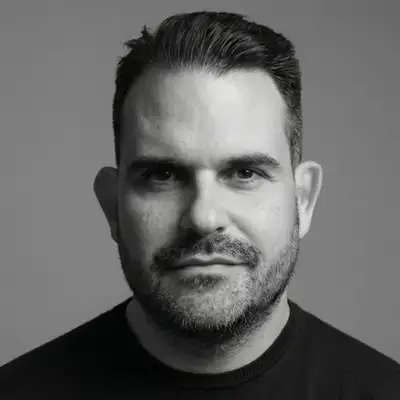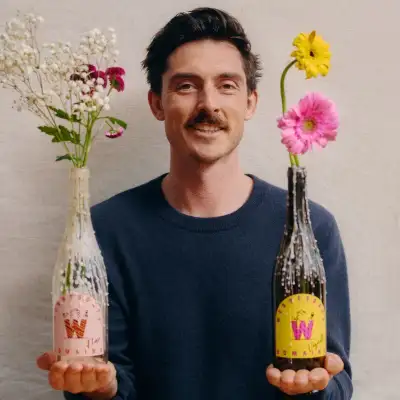
Luke Hemsley | Targeting Midweek Drinking Occasions With Wednesday's Domaine's Alcohol-Free Wine | 099
Summary
In this Episode, Host Chris Maffeo talks to Luke Hemsley, founder of Wednesday's Domaine, who discusses how his alcohol-free wine brand addresses the twin challenges of awareness and appreciation in an emerging category. Unlike beer and spirits, which have made significant inroads in the alcohol-free space, wine has lagged due to historical quality issues and consumer skepticism. Rather than positioning against alcohol, Wednesday's Domaine focuses on creating a midweek wine alternative for food and drink lovers who might occasionally want the ritual of wine without its effects. Luke shares insights on their strategic focus on the off-trade (particularly independent retailers), creating a geographic concentration in specific neighborhoods, and making their product stand out on shelves without sacrificing sophistication. The conversation explores how on-trade and off-trade create a circular relationship that builds category credibility, the pricing psychology of alcohol-free alternatives, and the founder's journey of knowing when to delegate versus when personal passion is irreplaceable. Timestamps: 00:00 Introduction and welcome 01:25 Initial connections and origin story 03:10 Awareness and appreciation challenges 07:40 Positioning as midweek alternative 11:05 Consumers' relationship with alcohol-free options 15:30 Psychology of non-alcoholic choices 20:45 On-trade vs. off-trade strategy 26:20 Pricing and value perception 30:10 Independent retail and geographic focus 35:05 Product visibility challenges 38:40 Founder's journey and scaling 42:30 Final thoughts and contact informationWelcome to the Maffeo drinks podcast where brands are built bottom up. I'm Chris Maffeo. And in each episode, me and a new guest crack how drinks go from one bottle to one case to one pallet. Hit follow and leave a review to help new drinks builders find it. Now let's break it down together.
Chris Maffeo:Hi, Luke. Welcome to the Maffei Drinks podcast.
Luke Hemsley:Hi, Chris. Good afternoon. Thank you very much for having me.
Chris Maffeo:It's an honor to have you. I was just telling you that I realized we've been in touch by email since three years. And back then, you were telling me that you were starting or you had just started. Right?
Luke Hemsley:Yeah. Exactly. And it is slightly terrifying to think where three years has gone. But as I was saying to you that, you know, your podcast or newsletter has been hugely influential in in terms of how we've gone about building Wednesday's domain over the last few years. So it's a real honor to be here as a guest.
Chris Maffeo:That's great to hear and well done. I I see what you have achieved in the last three years and what you're working on and it's fantastic to see the development.
Luke Hemsley:Thank you. That's very kind of you to say.
Chris Maffeo:So let's start. I want to quote you on something that I really like going through your posts on LinkedIn. Wrote anyone who knows me or the business knows that I'm obsessed with these two notions, awareness and appreciation. A lack of awareness and a lack of appreciation risk holding back the alcohol free wine category and it's our job to help change that.
Luke Hemsley:When I think about two things that risk stopping a business from ours growing, it is those two things, awareness and appreciation. The awareness comes down to do people have an understanding of the broader category? Does it already fit into their lives? When I talk about a lack of awareness is, alcohol free wine. I didn't even realize a thing.
Luke Hemsley:That that's quite interesting. And appreciation tends to sound like, isn't that just grape juice? Or I had some of that a while ago. Isn't it all terrible? So whatever we do at Wenzies Domain is often viewed through the lens of trying to combat or tackle those two things.
Luke Hemsley:How do we get more people interested in and engaged with the category of alcohol free wine? And then once we've done that, slightly lower down the funnel, you might call it, how do we challenge that idea that it's all terrible? How do we educate them around the fact that things are changing and there has been a significant step change in quality within the alcohol free wine space? So how do we develop that appreciation of what businesses like us at Wenzer's Domain are now doing?
Chris Maffeo:Last week, I was telling that I was about to have a discussion with you on the podcast and some friends of mine were like, what? They were Italians, obviously. So alcohol free wine, what are talking about? I was putting my hat on defending alcohol free in general mentioning, you know, Bozivo and other players that are in the space now. Yeah.
Chris Maffeo:It's interesting because this awareness as such, like everybody that listens to the podcast knows my hate for the word awareness. I like to call it demand. But in this particular case, it is an awareness issue because most people don't even know that alcohol free wine actually is a thing and and exists. So they don't even consider it into their repertoire of occasions.
Luke Hemsley:Exactly. Awareness is much earlier than demand. People aren't at the point of purchase. They're not deciding whether they have one lager or another at a tap in a pub. They need to know that these products, the suite of products, whether that's Wamsi's domain or otherwise, even exist.
Luke Hemsley:And so that it's really important to remember that. As an alcohol free wine brand, we do exist in a niche. We're lucky that nonalcoholic beer and nonalcoholic spirits have gone before us. Nonalcoholic beer is actually a much more relevant example than nonalcoholic spirits. The reason being there was a time where nonalcoholic beer was a laughable concept.
Luke Hemsley:You know, you mentioned speaking to your Italian friends, and they weren't sure about alcohol free wine. Because, actually, that was the same with nonalcoholic beer. If you speak to people at a certain age, they'll nudge each other or laugh, smile, and talk about caliber. And everyone will just say, god, that was a terrible product. And as you look at alcohol free beer now, you know, it's gone fully mainstream.
Luke Hemsley:Awareness of it is super high. You have brands like Peyronie sponsoring Formula One. You have Heineken sponsoring the Champions League. You have Guinness zero zero sponsoring the rugby. Awareness is massive, And appreciation of it or acceptance, you might say, is also really high.
Luke Hemsley:People now consume these products regularly. They fit into their lives. Not only are they having them at home on their off moments, but they're consuming alcohol free beer when they're out with their friends on a Thursday night or a Saturday afternoon. That's a story we can tell people, and I think the story is really important because that's how you get people to buy into the category. One of the elements that is really important in the alcohol free wine story is acknowledging that at one point, it wasn't very good.
Luke Hemsley:Then you can speak to people about why that was and how that's changed now.
Chris Maffeo:Mhmm. That's one of the key elements. When I was thinking of how to ask you these questions, I was mindful in a way because I was was like, I don't want to sound bad to say quotes that I've heard, you know, it's your baby, your category as such. You are an ambassador of the alcohol free category. I heard these things like I hate it and so on, but I love to hear that you acknowledge that you're not in denial of these things.
Chris Maffeo:Probably I'm assuming part of your selling story in kind of like acknowledging that elements of who's against the category in order for you to make them change their mind.
Luke Hemsley:That's absolutely spot on. And I think another thing to acknowledge here, Chris, is the fact that we don't demonize alcohol. We're not anti booze. We don't criticize wine. I myself drink alcohol.
Luke Hemsley:I love wine. I drink beer. I drink spirits. Alcohol has as much of a role in my life as nonalcoholic or alcohol free products, and that's in our brand name as we have this domain. We want to be the midweek wine alternative for for food and drink lovers.
Luke Hemsley:We're not anti any of these things. And acknowledging that, all of a sudden, people are aligned with your story. That sounds a bit cynical, but in saying that, all of a sudden, people's heads start nodding, and they're like, oh, yeah. That's true. Actually, I didn't want to drink wine every day.
Luke Hemsley:I love wine, but I don't want to drink it every day because I may have work to do later. I may have to be up early for the kids or I'm training for a marathon or whatever it is. Or it might just be as simple as I don't want to feel a bit fuzzy the next morning. I want to be able to jump out of bed. And so in saying that, all of a sudden, can help people to understand where these products fit into their lives.
Chris Maffeo:And in fact, I want you to get to this. I want you to get to the occasion element, you the needs day, the occasion. Yeah. I'm always talking about this target occasion, but you know, it's quite clear that you can be flexible in the occasion, but there are certain occasions in which people don't even realise that it would fit perfectly for a non alcoholic wine in this example. I remember you writing on LinkedIn, you said, I firmly believe that there are thousands of unwanted glasses of warm Sauvignon Blanc consumed every night at events around the country.
Chris Maffeo:We drink them because we feel we should not because we want them. And I love that quote because it's exactly spot on how many times have I done it or gone home after an event saying I've been drinking shit all night just because that was the thing available that night. Can you articulate your thoughts on that?
Luke Hemsley:Yeah. And I think the first thing to say, Chris, is as the founder of a nonalcoholic drinks brand, I'm regularly there myself. I'll be meeting someone and I'll be thinking, really I don't wanna have a drink tonight, but maybe I'll have to because I didn't want them to feel awkward. And then I turn up, and they're like, by the way, I'm not drinking tonight. And I just feel this wave of relief.
Luke Hemsley:Or there are other times when I think I'm not going to be drinking, and I turn up and someone's bought me a pint, and I'm like, that's great. That's exactly what I wanted. And I think it all comes down to intentionality and being conscious with our choices. And I think that's what's really exciting about the way the drinks industry is evolving both with alcoholic and nonalcoholic options. You can choose a liquid that suits the mood, suits your occasion, suits what you want from that moment.
Luke Hemsley:And and I think that's what I'm getting at with that point. You know, the number of times that we've turned up at events and someone says, right, beer or wine. It's not even type of beer or type of wine. It's just beer or wine. And you're you're like, I don't know.
Luke Hemsley:I'll I'll take the wine. And it's terrible quality. You don't like it. As you said, we've both been there. You drink it because you feel you should.
Luke Hemsley:Particularly as British people, we're quite awkward. We're quite standoffish, and we're not very good at introducing ourselves to one another. And so a glass of wine acts as a crutch. You know? The moment that if I see a glass of wine in your hand while I have one, I know that we're on a certain level.
Luke Hemsley:It's a signal which says, okay. In this moment, we're both relaxing. And then there's a physiological element of the alcohol does, you know, briefly relax you as well. And what's really interesting about the nonalcoholic space is that in creating that signal, you're relaxing because we've all kind of developed these these tics or these habits where we associate a glass of wine or a beer with relaxation. Even before we've consumed it, we've seen it, we've ordered it, we've relaxed.
Luke Hemsley:And creating those cues, you can do a lot of that work without the alcohol. To your point, certain moments that are perfect for it, midweek events, there's so much to be said for going to these events where often we're going for a professional reason rather than a personal reason. So you don't want to be thinking, god. I've had three glasses. Really didn't need that.
Luke Hemsley:There are so many other occasions like that that alcohol free products can fit into very nicely. And what's exciting about that as a brand builder is that you then have the opportunity to play in less competitive spaces. A lot of what you talk about is in the on trade and how everyone wants to be in the world's coolest bars. And the problem with that is everyone wants to be in the world's coolest bars. Whereas if you're talking to a law firm or an advertising agency or a wedding planner or a spa, there's a lot less people competing for their attention and for the dollars or pounds they have to spend on drinks.
Chris Maffeo:Big time. I was just thinking like adults standing at the kids party, like dads and moms just waiting and you don't want to drink, you want to stay there. For example, that's a perfect occasion where you could have a non alcoholic wine and still socialize, but without having the feel for booze and alcohol.
Luke Hemsley:And what's exciting is that you can have both. Those two things can coexist. You could have a beer or a glass of wine and then say, I've had a couple. Actually gonna move to nonalcoholic now. I did that the other day, and it was so nice.
Luke Hemsley:You have a couple of beers, mute your nonalcoholic, still have a lovely evening, and you're good to go the next day.
Chris Maffeo:Absolutely. When I'm working from home, I do the same with my coffee. I've got mine espresso machine stocked up with regular coffee and decaf. Sometimes I start with decaf before lunch and then I go into caffeine after lunch, or maybe I loaded myself already have three in the morning and then I drink another two decaf coffee in the afternoon. So whenever you are mindful about this kind of free or non free drinks, you can play around it.
Chris Maffeo:I was thinking of the element of quality versus non quality as well. Because we discussed the kind of like the warm Sauvignon Blanc example. I remember the time I discovered Brooklyn special effects, for example, on beer. It until then, alcohol free beer for me was like a kind of like very watery lager. And then I got this hoppy lager.
Chris Maffeo:It felt like an IPA. They didn't tell me, I didn't even notice it was alcohol free. And I ended up drinking all the Christmas party, alcohol free beer. You know? And people were like, why are not drinking?
Chris Maffeo:I was like, I am drinking. My brain wasn't into I'm drinking. I'm not drinking. I had a stout, then I had an alcohol free beer. Sometimes you can play based on what you have available at that time.
Luke Hemsley:And there's something really interesting there because if we think about alcohol and why we like it, predominantly comes down to a few things, taste and impact, the fact that it makes us feel a certain way, relaxes. Actually, you've just touched upon there, Chris, is there's also a satisfaction that comes from being social, being around other people, and not drinking and feeling like you are. And it's almost like you're in on a secret because you're like, everyone here is gonna feel terrible tomorrow. So I'm gonna feel great. I'm gonna have a great night sleep, and I'm gonna wake up tomorrow morning good to go.
Luke Hemsley:As I touched upon earlier, there are times where you're not worried about that, and that's fine. But in that example, it's almost as if you're part of a secret club, and that can be incredibly satisfying and strangely intoxicating. You know? It's interesting to use that word intoxicate. It can be intoxicating to not have had a drink in certain moments.
Chris Maffeo:Absolutely. Many times I had business meetings and then the morning after I'm traveling and they go to the gym at seven. People are all wasted at breakfast and I'm like, oh, I went to the gym. I was like, what did you do? I went to the gym.
Chris Maffeo:They look at me like I've superpowers now.
Luke Hemsley:Yeah. I
Chris Maffeo:said, okay. You didn't notice. Yes. I wasn't drinking. I managed to play it smartly in a way that you haven't even noticed.
Luke Hemsley:And I think so much of this exists in our own minds in the way that we've been conditioned in terms of if I'm not drinking, there will be a level of judgment. And, actually, you've got what looks like a beer. It's just an alcohol free beer in your hand, so you're instantly blending in. Just going back to your coffee example, the the caffeinated and the decaf example, there's also something there, again around ritual and the power of ritual. When you're stopping in your workday to make a coffee, you're saying, look.
Luke Hemsley:I'm gonna give myself this moment, and I enjoy the creating of a coffee. Some of it just happens to have caffeine and some doesn't. And it's the same with what we do at Wednesday's Domain. That's one of the reasons that I was really keen when we produced our wines that they had a cork because there's something beautiful about opening a cupboard, deciding which wine you want, uncorking it, pouring a glass, sensing the aromas, having a taste. That's all part of the ritual that can exist, whether there's alcohol or not.
Chris Maffeo:What have you noticed when you are the only alternative, let's say, or where you are together with the alcohol version of wine. Have you noticed differences in terms of how consumers perceive it or how the consumption happens?
Luke Hemsley:I think it all speaks to the way that it's presented, and presentation can take many forms. That might be how it's laid out. That might be how it's introduced. That might be how it sits on a list. And I think, you know, what you're touching upon there, Chris, is an example that I gave recently whereby our wines were the only drink option at an event.
Luke Hemsley:When the organizers told me that they were going to do that, I was nervous. I was thinking, maybe you should have some alcoholic wine and people might kick off and be a bit funny about this. And they were quite steadfast in the fact that, no, they want it to be an alcohol free event, and Wednesday's name was a good product choice there. And they the feedback they got was amazing. It's really interesting because in that moment, you're removing the element of choice and saying to people, this is what we have available.
Luke Hemsley:We think it's a quality option. There are two different you know, we had two of our six wines there. So there is choice. All of those choices just happen to be alcohol free. It removes a lot of that dilemma that we've spoken about, you know, do I drink?
Luke Hemsley:Don't I drink? Why would I actually be drinking? Is it because I want to or because I feel I should? And in doing that, there were some really positive outcomes. I think that's slightly different to if you take an on trade example, when you're on a list, it's about how do you present what the product is.
Luke Hemsley:And what I always say to people is with something like Wednesday's domain, ideally, you want to have it on by the glass rather than just by the bottle. And, obviously, there are concerns there around wastage and throughput, but that again is engaging people with it. But, also, you want to try and give it equivalent to its alcoholic counterpart. So if you have a by the glass list, have Wenzies Domain on the by the glass list and just add a prefix which says zero zero. And so you're saying this is a product of equivalent quality, it just doesn't happen to have alcohol.
Luke Hemsley:When I launched the business two, three years ago, the conversation was around, sorry. We don't stock a nonalcoholic wine. We don't have demand for it. Whereas now the conversation is, sorry. We already have a nonalcoholic wine.
Luke Hemsley:Yeah. As I'll say to people, but you only have one and you've got four nonalcoholic beers. So having one product on a list is an afterthought or it's a bit of an excuse, whereas having two is a selection. So let's create a selection and because by the way, you've got 50 alcoholic wines, 40 of which you probably don't sell very much of. So let's create these different opportunities for customers to engage with these products and to create that incremental revenue for you as a venue.
Luke Hemsley:Mhmm. Mhmm.
Chris Maffeo:When I've got one particular beer, like an alcohol free beer, for example, then I'm always skeptical. I was like, okay, that's basically that house of beers you have a contract with. That's the version they are pushing. Like you have a contract with Heineken or with whatever plate. That's what you get as an alcohol free alternative because portfolio wise, they have decided that's the one they're pushing as an alcohol free.
Chris Maffeo:It is changing now because all the big players are having basically like all sorts of alcohol free versions. Now what is very interesting is what you were saying. There is a cocktail bar here in Prague that recently opened. They created four blocks of cocktail themes. So imagine in each section there is like five cocktails.
Chris Maffeo:And then in one of them, the last one is always alcohol free. So rather than creating an alcohol free section as such, they've blended in the alcohol free cocktails. So of course we can discuss how you can explain it or how can you make sure that people catch that is a nonalcoholic drink rather than getting like, oh, shit. I ordered this one because I liked it and I didn't notice it was alcohol free.
Luke Hemsley:That's such an interesting example, Chris, because there's kind of two ways you could look at that. One is, which I think is what you're suggesting, that really elevates the nonalcoholic option. That thing, we're a cocktail bar. We take cocktails very seriously, and we take our nonalcoholic cocktails as seriously as we take our alcoholic cocktails. The flip side of that is one of the most hated terms in the alcohol free space or drinks industry generally is mocktails.
Luke Hemsley:People despise that term and with good reason to a certain degree. The flip side of that is 90% of consumers probably call them mocktails. Do you be stubborn about it and say, no. We are a serious cocktail bar? Or do you call them mocktails because that's what most of your visitors are looking for?
Luke Hemsley:I think the answer is probably a bit of both or you find a way to usher out the mocktail phrase and and signal to people what this is. There's a real balance around setting the tone and using language that your consumers use.
Chris Maffeo:You're spot on on the elevation piece because for me, when you put them into a kinda like relegation, then automatically you squeeze it into this territory, no man's land between the carbonated soft drinks and the cocktails or beers or whatever. So automatically my brain goes into pricing elements. A Coke is like €5 and then a cocktail with no alcohol in it, it's 15. Yeah. You know, and then I would default to the Coke.
Chris Maffeo:While if I'm in cocktail mode, then everything is €15. I'm not paying for the alcohol. I'm paying for the craft that the bartenders have put into creating there. And by the way, there could be more craft in actually creating an alcohol free because they didn't have alcohol to play with.
Luke Hemsley:And that's absolutely spot on. Your reference points in a list are exactly that. As a consumer, where do you find it? Which is what we're talking about, but also as an operator, how do we create the right margin structure for our business and placing it alongside those products rather than the soft drinks, you're more likely to get people who are willing to pay for the quality and the craft that goes into creating a delicious alcohol free option that doesn't have the punch of alcohol. So you have to do something else to create a delicious liquid.
Chris Maffeo:And if we build on this one, like the on trade piece, growing through on trade, I want to ask you, we were discussing earlier about on versus off now. How do you build on that conversation that you were saying initially now about not having space for alcohol free wine or being already taken. Like, the fact that you are quite outspoken out there, I see you on LinkedIn, on Instagram, and so on. So how do you balance that?
Luke Hemsley:Yeah. It's a really interesting one. And I think ultimately, it comes down to where you place your bets, where you focus your energies. And I think the first thing to say is that as a brand, we have focused more on the off trade than the on trade. And the reason for that is when I started the business, I came from outside of drinks.
Luke Hemsley:You know, one of the things that I was told by several people with gray hair in the drinks industry is drinks brands are built in the on trade. That's how it's always worked. That's how it will always work. And the great example of that that people always use is Fever Tree. They took a category which was pretty dusty, didn't have a lot of love.
Luke Hemsley:They got stocked in some of the world's best bars, and all of a sudden, everyone wants to buy Fever Tree to have at home because it elevates their gin and tonic. And what I noticed very early on when I had the backpack on going around, a lot of them fundamentally hated the concept of alcohol free wine. If you think back to your conversations with friends, they would just be like, nah, not interested. Don't get it. It's terrible.
Luke Hemsley:That's that appreciation piece we spoke about earlier. They were aware of it because they work in the industry, but from an appreciation perspective, just didn't get it. The flip side of that is when you do find people who do get it or willing to give it a go, that's where you really go all in on that because they can become your lighthouse accounts, your beacon accounts, shining examples. When you find those people who are willing to speak to customers about it, who are willing to put it on lists, who are willing to advocate for you, you've really got to make the most of that. And what that looks like is checking in on them regularly, providing regular training, giving updates on the brand, really engaging them as extensions of your brand.
Luke Hemsley:That absolutely doesn't scale over the short or medium term, but it is well worth it. And then I think the next thing to say there is around this intersection of on and off trade. And actually, we spend more time focusing on the off trade. In the early days of Wednesday's domain, we're talking about bottle shops, delis, farm shops. The people who work in restaurants on their days off go to those bottle shops and they will buy wine and they will speak to the people in there and they'll say what's interesting.
Luke Hemsley:And equally the people who work in the bottle shops on their days off will go into local restaurants and eat there. If you can create this circularity, you really start to build awareness amongst a certain demographic. And actually they're all the same people. It's just the context in which you first engage with them.
Chris Maffeo:I love that. And does geography also play a role into that? I'm a big fan geography in terms of, you know, being relevant in a neighbourhood so that in the same neighbourhood, you've got your three restaurants and two bars that stock you. Then those five bottle shops, because people are most likely to leave and work in the vicinity, and there is this kind of contamination between what I call the bottom up trade, the on and off where you can have those kind of conversation.
Luke Hemsley:Yeah. It's exactly that. And this is where I took a lot of inspiration from from your writing, Chris, is, you know, you want to be hyper local. You want to show up consistently in several places. And, actually, as a small brand with very few resources, one of the best ways to do that is to be very focused.
Luke Hemsley:So early on, I would get feedback from people saying, you know, it seems like it's going really well. You're everywhere. And I'm like, we're not everywhere at all. You just happen to live near where we are, which in the early days was a Peckham or a Hackney or a Shortage or a Dulwich or that is where we felt there were pockets of relevant customers that the the brand would really resonate with.
Chris Maffeo:When you said off trade, was it kinda like independent off trade, or you also went into retail?
Luke Hemsley:No. No. No. I clarified that in terms of independent off trade. So we're talking bottle shops, Delis, France, really, really focusing there to begin with.
Chris Maffeo:No. That's great. Because what I've noticed is that it depends on the country. You know, when you take Italy, France, UK, shop play a really big role in the independence like retail. But for example, Prague, I live, that's kind of like a handful.
Chris Maffeo:I mean, there's five, ten of these places. So especially when it comes to spirits, it's either on trade or retail supermarkets. So there is always this element that you jumping is like zero one kind of thing. While in markets like The UK where you can play, that's where that link creates such a great situation because you can have the alcohol free wine in a restaurant. And then because you've tried it, you go to the shop to actually get it, and it can even be the other way around.
Luke Hemsley:It is. And I I anyone who has the discipline to say, no, we are just on trade or we are just off trade. And I'm sure people who do that have their reasons. But you as a consumer or as a customer show up in multiple places, in multiple contexts. And actually in our example, it goes the other way, which is that people might be looking for a nonalcoholic wine for whatever reason.
Luke Hemsley:So they go to their local bottle shop, they ask them about it, and let's say they recommend a bottle of Wednesday's domain. That will cost them £15. The reality is that if you're buying a glass of Wednesday's Domain in a restaurant, you are going to be paying 7 or £8 a glass. For the same price as two glasses, you can have a whole bottle at home and consume that over an evening or two evenings or a week. Given that the category has a bad legacy, you know, that awareness and appreciation piece, what we're doing by being off trade focused and allowing people to consume it at home is we're derisking that choice for them.
Luke Hemsley:Because going out is really expensive at you know, it's become ever more expensive, and the price of everything is accelerating at a terrifying rate. If you're now if you're going out and having a meal here in The UK, once it would cost £50 a now it would cost 75 or £100 a head, the reality is that you're probably not going to take a risk on a glass of nonalcoholic wine you haven't heard of. You're probably just gonna have a drink because you're like, I'm out. I don't go out as often as I used to. Therefore, I'm going to treat myself to an alcoholic drink.
Luke Hemsley:But if someone has had a nice nonalcoholic wine setting at home or with friends, then they're more likely to choose that when they're out. So it's actually influencing the other way, which I find really interesting.
Chris Maffeo:What you're saying brings me back to what I was discussing with David Gluckman a couple of episodes ago on Baileys. Yeah. We were talking about the bottom up mentality or philosophy. And he said what Baileys did was kind of going against it because it was built in off trade in supermarkets. It was raising the fact that it's built on tastings and on a price point is more affordable than a whiskey, obviously, as a Bailey's.
Chris Maffeo:But what you are saying brings me back to that because one of the elements why the entree is so successful in building brands, it's because it's the other way around of what you were saying. So it's the de risking element of buying a bottle because you don't want to buy a 100 pounds bottle of whiskey. You're gonna have a drum. And if you like it, then you're gonna buy the bottle because it's so much more expensive to buy the bottle in the bottle shop than to have a drum recommended by a bartender. While what you're saying is the other way around, because technically they can buy a bottle for the price of two or three glasses.
Chris Maffeo:It's very interesting. The element, the risk factor that plays psychologically into trying categories that you are not used to as it would be with a whiskey, gin or regular wine.
Luke Hemsley:Yeah, exactly. I think those three examples, Wenzies, Maine, Baileys and the whiskey one are so interesting because they all have slight differences and reasons behind each of what we discussed.
Chris Maffeo:Talking about retailers in an off trade specifically, we discussed the fact that where you should place Wednesday Domain. If to place it in alcohol free section or among the regular wines and so on. I remember you mentioned something on LinkedIn about there was some specific element that she used to make it stand out, like with neck hangers or something like that. Correct me if I'm wrong.
Luke Hemsley:Yes. Spot on. And that is a great example of something you only learn when you get out and about in the trade. So so just to give a summary of what what was happening, Chris. So when we, when we talk about Wednesday's Domain, one of the things I've touched upon today is that we don't shout about the fact that it's alcohol free.
Luke Hemsley:It doesn't have a big zero on the front. We're not anti alcohol. We're not demonizing booze, all of that sort of stuff that that I've already said. And so what we want to do is create a product that people would be proud to carry into a friend's house. We wanted to create a product that people were proud to have sitting by their table in a restaurant.
Luke Hemsley:And we took a lot of cues from the natural wine space, which is really interesting because when natural wine first became big kind of ten, fifteen years ago here in The UK, they were doing things in a very different way. The bustles were very colorful. There was a lot of illustration. They were they didn't have, you know, white labels with red writing and picture of chateaus. And so we wanted to kind of take from that, which is really important.
Luke Hemsley:So when we were then working with the independent off trade, and we had our wine on shelf, it was sitting next to all these beautiful natural wine bottles and regular wine bottles. It very much felt at home, but it was blending in. So when we were going out and go revisiting customers and saying, how's it going? The same you know, the people who are looking for it love it, but a lot of people miss it because they assume that it's just another wine. They pick one that they maybe know already or people are picking it up, bringing it to the counter, and then not buying it because they discover that it's alcohol free.
Luke Hemsley:So what we did was say, right. How can we attempt to solve this in a relatively easy, cost effective way that we can test it with small scales? We've got some neck tags made, which hung over the top of the bottle and they just said, I'm alcohol free, ends with an illustration of a wine glass on the front. In terms of rate of sale, you saw an immediate uptick in rate of sale because those bottles were still blending in, but they had something subtle which was saying to people, okay, what's this? Most wine shops doesn't have necktags, so if you see one you're automatically drawn towards it.
Luke Hemsley:People were really on board with it because it helps them to sell more products and then create discussions with them as the shopper and all the person working in the shop on that particular day.
Chris Maffeo:Wow. Wow. Have you ever tried to give it to someone, like, not saying it's alcohol free and then see their reaction?
Luke Hemsley:It's so funny you say this. I actually sent a message to a marketing agency that we work with on doing this. So yes, there have been moments where people have tasted it and then come up to me and said, if I didn't know that there was no alcohol in this, I wouldn't have thought otherwise. We haven't done a kind of full on Pepsi taste test in terms of, you know, the historic thing where Pepsi and Coke both tasted products and it turns out most people preferred Pepsi in that example. We haven't done anything like that, albeit I'm very keen to do something like that.
Luke Hemsley:I think we're at the point where we could begin to try something like that with the product. It's a risk. One of the reasons I think it's a risk is not because I don't have confidence in it as an alcohol free wine. It's because, you know, I do believe that alcoholic and non alcoholic products do have a taste difference. The key example you hear a lot is Guinness zero zero, where people say it's basically the same product.
Luke Hemsley:I don't think it is, in the same way that I don't think a lucky saint tastes exactly like an alcoholic lager. And that's completely okay because they have their own flavor profiles and they're enjoyable in their own respects, and I like them for different reasons in different moments. Our products as Wendy's Domain, you know, we think about them matching up to wine in terms of sensory characteristics. They have an aroma. They have flavor.
Luke Hemsley:They have weight. They have length. They have texture. And so in that respect they are exactly like wine, but in terms of the flavor profile there will always be a slight difference because you're missing 12 to 15% of ABV. And so that's a very long winded way of saying, no, we haven't done any side by side taste tests, but we are absolutely considering that because it feeds back into this idea of how do you develop appreciation of the product.
Chris Maffeo:Yeah. I love that because I forgot to ask it to you earlier when you were saying about that event that wanted to have only Wednesday domain. I think that could be an opportunity where people are also sort of distracted and not that much into what they're drinking. They'll just go to the counter and the steward of the hostess will hand them over a glass. Then they'll start chatting and sipping.
Chris Maffeo:You could inform them by the way, or maybe when they go into the counter and say like, no, actually I'm not drinking. Do you have anything alcohol free? It would be more like a non scientific study because some people would know, some people would not know, but I think that could be very interesting because surely you would get so many insights out of that.
Luke Hemsley:You would. And it touches upon something really interesting, Chris, which is that the moment you tell someone something is nonalcoholic or alcohol free, they're already looking for faults. They're assuming that it's a less than product. There's a great example on the tube here in London at the minute with oatly, the oat milk, saying they've got their taste testers and they've got blindfolds on, they've got hats over their heads, they've got ties tied around their eyes, And they're saying that these people love oatly when they don't know it's oatly. And and and it speaks to that, this whole notion exactly, which is that these liquids are different from their counterpoints, which in this case is milk and alcoholic wine, but they have their own unique flavor profiles and roles.
Luke Hemsley:There's a place for both, and I think that that Oatly example really sticks with me. When I saw it, I was just like, this is what I've spent my whole time talking about and thinking about, it really resonated.
Chris Maffeo:Yeah. I know. That's true. So let's talk about the founder's journey. Yes.
Chris Maffeo:I remember reading something on your profile that you said the founder is simultaneously the most and the least important person in scaling. I don't know if you said that, but can you explain how do you bring people with you on the journey? Paul Letko from Fuse Perrys was saying fire yourself from being the founder, from being the most important person in the business.
Luke Hemsley:Yeah. Interesting. And I'm not sure if I had said that or written that, but there's definitely things around that which are super interesting, Chris. My background is a tech startups. I understand or have a sense of the mechanics of building a business and doing things step by step.
Luke Hemsley:But the drinks piece, it it it is new to me. So the reason I share that example is there are absolutely times where you have to put your founder hat on. There are certain things that I think you have to lean into, and I think a lot of founders for whatever reason, will try and outsource sales as quickly as possible. What people underestimate is that you as the founder have a certain level of passion and certain level of knowledge that can be hard to replicate. You often end up doing more of something than you might otherwise have intended or taking time away from other parts of business to focus on selling.
Luke Hemsley:That's been a massive realization for me because I've basically spent my entire career to date trying to avoid being in sales and and, you know, claiming I'm in commercial or partnership or whatever, the reality is that you're selling. And actually, since I've embraced that and since I've begun selling something that I'm really proud of and really passionate about, the results begin to come. And, actually, there's a big learning there, which is just lean into what you're good at and outsource or seek advice or hire people better than you in the elements that you're not. And I think the final thing that I'll say there is one of the greatest joys I get from Running Wednesday's domain is seeing people who are very good at things do their job. When you have a brilliant designer do something, you're I'm just in awe of it because I cannot do that in the same way that I can't play a single instrument.
Luke Hemsley:So when I see someone strum a guitar or play the drums or play a saxophone, it just blaze my mind because I cannot even begin to understand how I reproduce that sound.
Chris Maffeo:And also this element of knowing what you're good at, then firing yourself at the right time, but then also not firing yourself too early in the process. Like going to your sales example, because that is a mistake that I see more and more founders do into, but I'm the creator. I'm the founder, but I'm the creator of this. You should sell it. Not me.
Chris Maffeo:I just created it. I'm the baker. I give it to you, but you are at the counter and now you sell my bread.
Luke Hemsley:Yeah, exactly. And also I think, what I've learned is that the traditional definition of creative isn't as relevant in in business or growing a business because actually, you know, you can find creative solutions to commercial problems, and that in itself is flexing some kind of creative muscle, which can be really interesting, rewarding, and beneficial to the business. I think the other thing as well, Chris, that you touched upon is not firing yourself too soon. One of the things that I've learned is when I've outsourced something that I can do, let's say the commercial side of the business, when I've outsourced that to someone else, it it it often doesn't work because that person or those people, their understanding around your particular element of the business may not be as strong as yours or they may not have the interest or the passion to keep going because they're not invested in it in the same way. So actually being comfortable in backing yourself, and that's really hard, and that's a daily struggle that most founders experience.
Luke Hemsley:But really pushing yourself to constantly keep trying, keep growing is definitely, again, one of the most rewarding elements building Wednesdays to me, and I want to keep doing that for as long as possible. I'm sure there will come a time where someone taps me on my shoulder and says, Luke, it's time it's time to you know, you're going out of the back some. But but until that happens, I'll I'll keep pushing and learning, developing, and enjoying it along the way.
Chris Maffeo:Fantastic, Luke. Thanks a lot. I'm aware of your time. I want to wrap it up. If you have any final thoughts and then also let us know how can people find you and get in touch with you and find Wednesday Domain.
Luke Hemsley:Yeah. Of course. I think my final thought would just be to say thank you so much for having me on and giving me the platform to to come and have a conversation, Chris. As I said, I have read your newsletter, listened to your podcast from the very foundation of Wednesdays Domain before the first bottle rolled off the bottling line. I was reading what you were writing, so it really is such a pleasure to be here.
Luke Hemsley:In terms of finding our wines, the best place is wednesdaysdomain.com. You can either purchase them online or you get in touch with us to find out stockists that we have around the country in a small and growing global footprint. But wenziesdomain.com is the best place to go, and just a big thank you once again, Chris.
Chris Maffeo:Thank you so much, Luke. And, hopefully, we'll get together soon and share a glass of Wednesday domain.
Luke Hemsley:Share a bottle at home in the post trade environment. Exactly.
Ben Branson:Fantastic. Thanks a
Chris Maffeo:lot, Luke. Thanks for listening to the Maffei drinks podcast. If you enjoyed it, please hit the subscribe button. Also a small ask, please leave a review wherever you listen. Reviews make such a big impact and help other drinks builders discover the show.
Chris Maffeo:Feel free to contact me for feedback on LinkedIn at chrismafeo or on Instagram at mafeodrinks or at mafeodrinks.com. And remember that brands are built bottom up.
Creators and Guests