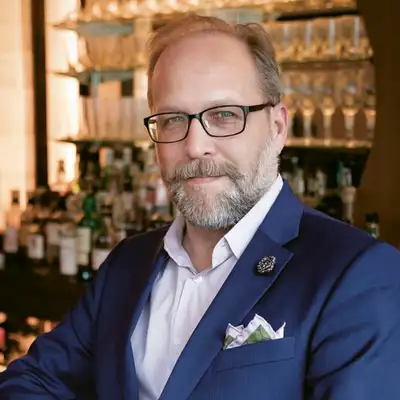
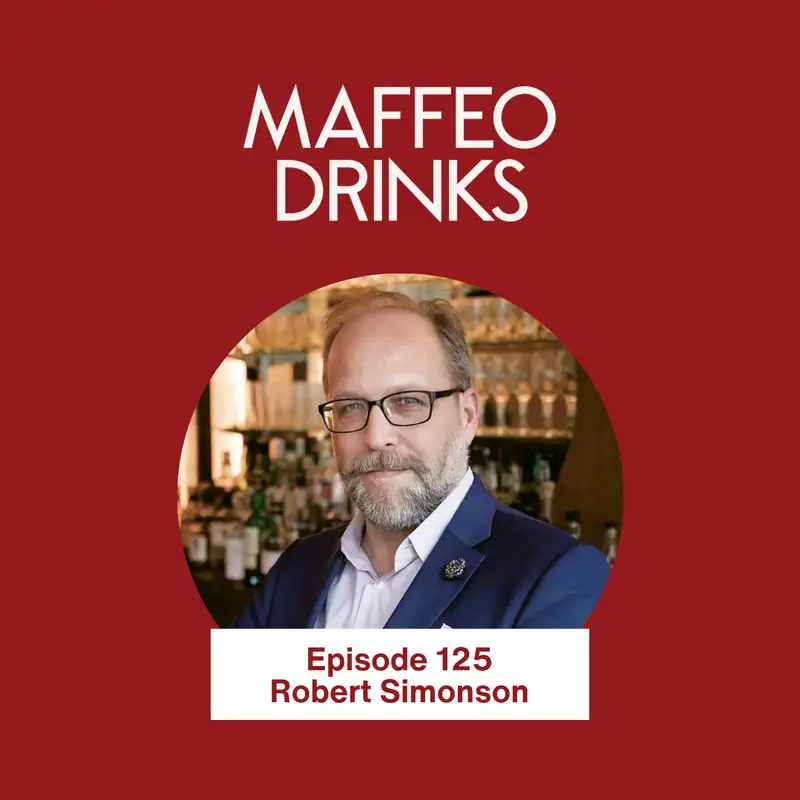
125 | Why Modern Classic Cocktails Stopped After 2012 and Why You Should Care Now with Robert Simonson
Hi, Robert. Welcome to MAFFEO DRINKS.
Robert Simonson:Thank you. Happy to be here.
Chris Maffeo:So let's start with a few questions. Let's talk about these the way cocktails were born. No? Because this is one of the things that are really fascinating for me. I mean, you wrote another book called Modern Cocktail, which
Robert Simonson:Modern classic cocktails.
Chris Maffeo:Modern classic cocktail where Yeah. When and which is actually the first one that I bought from you after recommendation from Philip Draft, by the way.
Robert Simonson:Thank you, Philip.
Chris Maffeo:What is fascinating for me is really seeing how certain trends grow within a country and then maybe they stay country specific, but then some other manage to travel. No? But also the, you know, the modern classic cocktails, it's so fascinating because we tend to always think of all the very old kind of classics. But then there is a modern era of all the, you know, like the penicillin, the Basil Gin Smash, the
Billy Abbott:Mhmm.
Chris Maffeo:One star martini, the breakfast martini. You know, all this that I'm sure that if you talk to younger bartenders, they may think they were invented, like, you know, a hundred years ago, but actually they were not. You know?
Robert Simonson:No. I mean, the porn star martini is, what, about 30 years old now. Breakfast martini, 35. They are becoming older, you know, but yeah, a lot of these young bartenders or, or young consumers, you know, bar enthusiasts, drinkers, they think they're pre prohibition cocktails, which is, I guess, a testimony to the success, you know, that people think they've been around forever. People think the penicillin's been around forever.
Robert Simonson:Yes. And so that's why the book's important, you know, part of the book, a proper drink has recipes. So anything, you know, the modern classics all have recipes. And then I just kind of furthered that argument with modern classic cocktails because, you know, it's become a kind of a particular study of mine. There are certain things.
Robert Simonson:I mean, you mentioned David Wondrich, the historian, and he's a friend and he used to live near me in Brooklyn. But he tends to concentrate on the past dealing with bars that don't exist and people who are no longer with us. I have concentrated on the modern history, you know, what's been happening since 1990 and trying to get that down because one of the problems when we were collecting all this history of cocktail history from the nineteenth century is not a lot of people had written the history down. So it was very difficult to piece it all together. So I thought, well, we shouldn't have to go through that again.
Robert Simonson:Everyone's here, everyone's alive, let's talk to them. We have the internet, we have books, let's write it down and then people in fifty years from now are saying, what the hell were they doing in the early twenty first century? All they have to do is like pick up a few books and then they find out everything that's going on that went on there. Unfortunately, I have discovered that that is actually too much to ask of people And they don't pick up the books and they still don't know what went on. And it's very frustrating.
Chris Maffeo:Tell me, maybe I'm totally wrong, but why does it look like, at least for me, that modern cocktails don't come up anymore. You know? Like, there's no new inventions for it.
Robert Simonson:Be because at the beginning of the cocktail revival in the nineties and odds, nobody had been trying to invent new cocktails for a long time. They gave up on that. Cottails weren't very big in the seventies and eighties and early nineties. It was enough of a struggle to get people to make the old ones and make them correctly. I mean, maybe there were some, you know, silly shots and disco drinks that were created in the seventies and eighties.
Robert Simonson:And, you know, some of them are still with us, you know, like kamikaze and, you know, dumb stuff like that. But nothing, shall we say, more dignified. So in the Kato revival, first, there was the part where all the bartenders were trying to make the classics correct because we didn't know how to make the Sazerac right. We didn't know how to make the old fashioned right. We had to learn all over again.
Robert Simonson:Once we got to that point, a few industrious people said, well, why can't we just invent original cocktails? Which was actually kind of a radical notion around 2005, 2006. So what you have there is you have a blank slate. Nobody's been it's, it's, it's like nobody's painted an oil painting for fifty years. It's like, oh, let's try this.
Robert Simonson:And so you come up with new ideas and you take all these. And also we had all these products come back. A lot of liqueurs and certain spirits had disappeared, absinthe had disappeared, certain bitters like orange bitters had disappeared, critical ingredients that were in past cocktails. Now they were back. So you could, you had all these tools to create a new cocktail very, easily.
Robert Simonson:So like for instance, we were talking about the Red Hook. So what Enzo did was he took two Italian products, Maraschino Liqueur and Punta Mess, which were not well known in The United States and were not used a lot. Most people I don't even know if you could get Punta Mes. You know? Probably you could at that point, but not for many years.
Robert Simonson:And then he added rye whiskey. Rye whiskey had disappeared, but that was starting to come back with, like, Rittenhouse whiskey. So you got these ingredients that nobody was thinking about and you put them together and you get a new cocktail and everyone likes it. So it was relatively easy to do that. And all these drinks like the penicillin and the paper plane and, Greenpoint and the Little Italy, they're like lots of modern classics.
Robert Simonson:We're all simple drinks. Three ingredients are four ingredients. So once you have this cocktail and people like it and people maybe write about it and maybe it's on the Internet, then other bars can make it because it's simple. So the the era where you came up with a lot of modern classics is basically from like 2000 until, I don't know, like 2012. And then it becomes harder because in order to come up with something original, you have to use six ingredients or seven ingredients.
Robert Simonson:And some of them are infusions and some of them are special syrups. And so you come up with the original cocktail, but nobody's gonna make that cocktail at another bar because it's too hard. And that's why you don't see any new modern classics in like the last ten years.
Chris Maffeo:Wow. I've never thought about it this way.
Robert Simonson:I mean, if you're gonna make a modern class, I also have an app that I created with Martin Doudoroff called Modern Classics of the Cottel Renaissance. And in it, there are like five rules on how to be a modern classic. And one of them is it has to be you have to be able to replicate it at other bars easily. If it's not easily made, it's not going to travel and it's gonna stay at the bar where it was invented. It's not gonna go anywhere.
Robert Simonson:The espresso martini is a classic because I mean, we used to be you had to have fresh espresso to make it. Now people just make it with, you know, coffee liqueur, but it's relatively easy. You got you get vodka. You get coffee liqueur. You get simple syrup.
Robert Simonson:You get some espresso. You got an espresso martini. Same with the breakfast martini. You get some gin, you get some marmalade, you get some Cointreau and lemon juice. You got one.
Robert Simonson:Anyone can do this. Porn star martini is a little more ornate. It's fascinating how the porn star martini continues to march on to immortality because it's easy enough. Go to your cocktail bar, your leading craft cocktail bar in your city and look at their menu. And those drinks are complicated.
Robert Simonson:I hope we get more modern classics, but I think what will have to happen is we'll have to get like some great new ingredient, you know, like an ingredient that never came along before, like when Saint Germain came around and, you know, everyone was making things with Saint Germain. So like imagine, I don't know, like somebody comes up with a liqueur made from a fruit that you never heard of and it's fantastic and this product is everywhere, then maybe you can make another modern classic. People ask me this all the time because I wrote the book on it and I have an app on it and they say, how come there are no more new ones? What's the problem? And it's like, it's hard.
Chris Maffeo:It's hard. You know, what was the role of brands in doing that? Because I mean, if it's a, I don't know, the Penicillin or the Pit Monster or Yeah. We mentioned Cointreau that was kinda like playing a role as a liquor in many of these from the Margarita, Cosmopolitan and all the other. So were they actually taking advantage of it, you know, and putting the accelerator on it or they kind of like even missed it?
Robert Simonson:No, they helped it depend. I mean, the smart corporations realized something was happened. And there was a lot of hand in hand cooperation between the cocktail bartenders and brands for a while there in the arts and in the twenty tens. And so the bartenders would say, we need this. We need this ingredient that you used to make.
Robert Simonson:Can you bring it back? Sometimes the corporations and the brands would listen. There was a company, there is a company in Minnesota called House El Ponds. They're an importing company and they were small. And so they were in the habit of going to New York bartenders or San Francisco bartenders and saying, what are the products that you want?
Robert Simonson:And they'd say stuff like we want creme de violette because we want to make aviations or we want all spice drab because we want to make this particular tiki drink. And you know, we can't find this, we can't find that, we can't find the other thing. We want better vermouth. We want this. And, House Halpounds would just say, okay, we're gonna go get that stuff.
Robert Simonson:And, suddenly they have the stuff and so these new drinks are created. So the brands really did benefit from this. Eventually the brands took over. I mean, especially the big corporations, you know, where there are huge liquor corporations, there's Pernod Ricard, there's Diageo, there's Campari, there's Satori. And then the tail ends up like wagging the dog.
Robert Simonson:The brands are calling the shots. All you have to do is look at Tales of the Cottail and see how it became more brand focused and more controlled by the spirit industry as opposed to the beginning. It was really controlled by a bunch of oddball bartenders who had some ideas and loved history and loved to geek out about stuff. It's not really like that now, unfortunately, but corporations ruin everything.
Chris Maffeo:Yeah. And let me ask you another question. So building on that, you mentioned the three ingredients, like the rule of three, so to say. You know?
Robert Simonson:Yeah. I have another book called three ingredient cocktails. Wrote that one because things were getting too complicated and I wanted to make sure that people knew that it was not difficult to make great cocktails at home.
Chris Maffeo:Yeah. This is where I'm trying to get to. So Yeah. Is that is that the reason why cocktail culture is not scaling at a pace that we would like to?
Robert Simonson:There are a lot of reasons, I suppose. I mean, in certain ways, is scaling. During COVID the ready to drink category exploded. So I guess that's a form of scaling. Certainly a lot of bars now batch cocktails and they have cocktails that come out of the gun.
Robert Simonson:I don't think that necessarily leads to better cocktails. These days you read all kinds of stories about how people aren't drinking as much. The younger generation is not drinking as much, and we've got CBD and all this stuff, you know, the other things that people opt for. This is probably something that you could talk to about more because you deal with that kind of market phenomenon. What do you think?
Chris Maffeo:No. I mean, me, based on what I think, but also what you were saying, I think that could be one of the best explanations actually. Because I feel that a lot of people I discussed it in some other episodes that a lot of people feel kinda like intimidated by cocktail. I mean, I come from beer. I've never been a big cocktail drinker myself.
Chris Maffeo:And I remember going to bars and having to study what's happening here. You know, there's a huge back bar, tons of bottles, cool guys and girls looking at me like they know it all, and I don't know anything. You know? Like, there is an intimidation factor in. So the moment that I can can as an average Joe kind of consumer, I can start to pick up your language fast enough.
Chris Maffeo:Then it's not intimidating for me. It's not embarrassing for me. It's easy to reorder another one, to remember the name of a cocktail, to remember the ingredients, and Mhmm. Make it at home and, you know, do it for my wife or my friends coming over for dinner. And it and it creates this kind of, like, upward spiral.
Chris Maffeo:You know? Be like a like a virtuous circle. But then the moment that, you know, and that's where I feel many bars are going to, which I wanna talk about now with you, you know, it becomes too much of a let me teach you how to drink, you know, because you don't know anything about it kind
Robert Simonson:of thing.
Chris Maffeo:And that that began so intimidating. And because I see myself with my friends, you know, working with spirits brands now, you know, whenever I have somebody over, can I want to make a cocktail? I know. I'm not really, you know. Most of the times I get a no as an answer.
Chris Maffeo:But then when I try to get them as you like an Negroni or let me give you an Americano. Let me do a Milano Torino. Let me do a vermouth and tonic. Let me do a simple one. Then all of a sudden, picks up.
Chris Maffeo:The typical story that I bring up is when a friend of mine came over to see me here in Prague and they she brought me a bottle of Hendrix gin. We went to buy cucumber. She made it for me at home. And she said, no. No.
Chris Maffeo:Everybody knows how to do this. And I was like, yeah. But the cucumber, do they get it? You know, like, I said, let's go and let's go and try. And we went to actually Traders, and I said, can I have a gin and toni with Hendrix?
Chris Maffeo:I said, yeah. Sure. You know? Put the cucumber in. And and since then, I saw all my friends picking up because I became they were they became my drink.
Chris Maffeo:You know? Like, when I was going back to the guys, they were saying the usual, and they were giving me that. You know? And then all my friends were seeing me, and they were saying, oh, what's that? Ah, okay.
Chris Maffeo:I'll have the same. Make it two. Make it three. Make it four. You know?
Chris Maffeo:Because it was so easy to kinda like imitate. You know? And it was easy to travel. So what I feel now is that there is too much complication. There is too much Rodevap and lacto fermented and all this kind of stuff that people don't even understand what they're drinking anymore.
Chris Maffeo:No. It's kinda like this Michelin star experience. Yeah. And then all of a sudden, it's like, you know what? Get me a beer.
Robert Simonson:Yeah. Well, I think both is happening at the same time. Those places with the RotoVaps and, you know, the fancy stuff and the liquid nitrogen. I mean, there's a place for them. There are occasion bars.
Robert Simonson:You go there and you drink their drinks. You know, you can't make them at home. That's why you're there because you can drink something that you can't have anywhere else. It's made with, you know, processes and techniques that you can't master. You're not going to go there all the time, you know, otherwise you'll go to a simpler bar and another time when you want something that is familiar or you just want a beer in a shot or something like that.
Robert Simonson:We have all kinds of bars. People did start to drink simpler after COVID. They were inside. They had to make their own drinks. And what are you gonna do?
Robert Simonson:You're gonna make simple drinks. Yes. When they got back into the bars, life was too complex. Life was hard enough. Why does drinking have to be complex too?
Robert Simonson:So they sort of fell back on spritzes and martinis, which are huge. Both are huge right now. And that's fine too. Although most of the bars that are opening in New York and in America these days are pretty high end affairs. Their drinks are getting more and more complicated, more and more expensive too.
Chris Maffeo:Yes. And which also doesn't help. But what, No. You know, do you feel that, you know, one of the discussion that I was having with other guests was the kind of like missing middle, I call it.
Robert Simonson:Oh, the middle.
Chris Maffeo:Yeah. It feels like there is this top 50 best Michelin star kind of experience.
Robert Simonson:Yes.
Chris Maffeo:And then there is the dive bar or the very basic bar if we go back to Italy. The bar that would make you know, they don't even know how to make a gin and tonic kind of thing. Do you feel that that middle is missing and that maybe that would be the enabler of making cocktails for the masses.
Robert Simonson:Yeah. The middle is missing all the all the 50 best bars. I mean, there are wonderful bars, you know, wonderful people, but these they they wanna be on that list. And so these are stunt bars. They're very theatrical.
Robert Simonson:Everything they're doing is over the top. The presentation, the techniques, the garnishes, it's all to serve a certain purpose, become an internationally famous bar. And those are fun to go to, but, I'm I'm not sure they're in service of the people as so much as a recognition and awards and prestige. And then you have the normal bars, but yeah, in the middle in Brooklyn, one of my favorite bars is called Long Island Bar, and this is a bar that has veteran bartenders. Everyone behind the bar has been bartending for, like, twenty five years, which is unusual because usually you see young bartenders in New York.
Robert Simonson:You don't see older bartenders. And they've got a menu of classics and any classic or modern classic that you order, can make. And these are all fairly reasonably priced by New York standards. And so that's kind of the middle. So that's a bar like that that can do anything that you want.
Robert Simonson:And there are no bells and whistles. It's just good drinks. And there's a wonderful bar that just opened in Chicago called Gus's Sip and Dip, which I hope there will be more of these. Now this was designed to be like a classic mid century American bar. It's got this wraparound bar and it's got this list of 50 drinks and these are all classics.
Robert Simonson:Every drink you will recognize its name and every drink is $12 So you can have a great daiquiri, you can have a Jack Rose, you can have a Hemingway daiquiri, it's all $12 It's all gonna be well made. These these are not gonna be the best version of these cocktails you've ever had, but these are gonna be very good versions of these cocktails. And the owner created the bar because he realized the young generation was stopping drinking cocktails because they couldn't afford it anymore. He thought we're in danger of losing this entire generation to beer and wine and other things if we don't fix this. So I hope more people follow his model.
Chris Maffeo:That's very true. Yesterday night, there was a Michelin star ceremony here in Czech Republic. It was the first time that went outside of Prague.
Robert Simonson:Some of
Chris Maffeo:the venues were awarded there. And but I feel that if it's not communicated well enough by, honestly, by people like us that are talking about this topic, it can get very misleading. You That I can imagine a young bartender coming in is not really focusing on doing the bar back, working the floor, and then doing their career. They cannot rush it into a I must do this kind of thing. I must get my social media fixed.
Chris Maffeo:Must get my image up and going. I think that there is a layer missing there on saying slow down, focus on the fundamentals, and then fame will be the byproduct of the great work you're doing.
Robert Simonson:Yeah. I agree. What I would like to see on those lists is a more normal bars to land on those lists. Ones that aren't actually chasing the attention, chasing the fame. And then like, if they end up on the list anyway, you know, like a bar like Satan's Whiskers in London.
Robert Simonson:I don't think Satan Whiskers actually does a lot of popups. I think they do the circuit. They just do a hell of a good job and they're very popular with bartenders and it's the same kind of deal where they're doing classic cocktails at a reasonable price, but now they're starting to appear on lists. So maybe people will look at that and say, you know, maybe I don't have to do like 52 pop ups in 52 countries every year, you know, in order to get on these lists, maybe if I just work at what I'm doing and believe in it, you know, it will happen and the attention will come to me.
Chris Maffeo:That's very true. And what is your take on, you know, guest shifts and pop ups and this kind of thing?
Robert Simonson:I think back in the day when we were trying to build information, build a community, I may not be able to go to let's get an example like Rome and go to the Jerry Thomas Speakeasy. So if they come to New York and they give me a facsimile of what they do and they serve a collection of drinks that they serve, then I have some new knowledge. It's like, okay, that's what it's like to visit there, you know, until I get there. And that was very helpful at the beginning. I don't think pop ups these days are meant to serve knowledge.
Robert Simonson:They're not, they're not meant to make us all learn something. They're meant to be publicity machines. And like, you know, look at, you know, XYZ bar from Mexico City or Barcelona. They're everywhere. They're hot.
Robert Simonson:They're interesting. Let's all talk about them and, you know, and then they'll get some awards. It's not really they want to show you what they're doing. It's just part of a business plan. It's a business plan.
Robert Simonson:It's a marketing plan. And, I've been to enough of these. I don't go to the pop ups much anymore because I don't learn anything. And also I've learned that the pop ups are very poor copies of the original. It's not, you're not getting the experience.
Robert Simonson:Not really. So I think they're I don't know who they're for. I think I think they're for the bars.
Chris Maffeo:Mhmm. And this is the this is a topic that I'm work with, like, all the time because I have my own ways of making them work, so to say. Yeah. But Yeah. There must be a bit of a reset, I think, that, you know, there must be the enabler, for example, of the guest shift is a brand.
Chris Maffeo:So let's showcase the brand, for example Right. By using the experience and experiential aspect of that bar, for example. But very often, there's a lot of trial of doing too many things, and then nothing gets done right. You know?
Robert Simonson:There's Right.
Ben Branson:You know,
Chris Maffeo:brand is not visible. The experience, as you said, is is kinda like a copycat of the real experience. Maybe, you know, like a lesser known bartenders are actually the one coming to the country instead of the big name. I've been to many, and they are all different in in what they conveyed. But also what I think for me is the important thing is how does this have a spillover effect of the on the normal people?
Chris Maffeo:Because you need to explain that to the regulars. Otherwise, they just see a bunch of people with fun hats on and they're like, what the hell are these guys doing here?
Robert Simonson:Well, one thing I've always thought for a long time with pop ups even at the beginning, I think, okay. You guys are here. Who's running the shop back at the bar? And you have to think if there are too many popups for a particular bar, the original bar is probably suffering. The consumers are not getting the full experience there.
Robert Simonson:They're not getting a quality experience. They're not getting they're not seeing their favorite bartenders. They're not seeing the owner, which is a thing that people like. And, yeah, I have to think it's bad for the original product.
Chris Maffeo:And it's a very thin line in what do we want to focus on.
Robert Simonson:Yeah. And I also think if I was working at that bar and I saw that, you know, my boss was always traveling around the world, maybe I wouldn't feel so good about working there anymore because who's having the fun?
Chris Maffeo:Yeah. So let's wrap this up. I'm aware of your time. I don't want to take more of your time. But what are some final thoughts from you on bridging the history of this cocktail renaissance and what's happening now?
Robert Simonson:Well, I'm just going to keep chronicling it. I think that's part of my job to like keep chronicling this history and keep reminding people of the recent history. One problem that I've encountered in recent years is it's become more difficult to find publications, to find editors who will let you write about cocktail culture. Cause there was a time there where everywhere was very trendy, you know, for about fifteen or twenty years and editors wanted articles about the latest cocktail bar, the latest cocktail trends, etcetera. And that's not the case anymore.
Robert Simonson:So four years ago, I started a Substack newsletter called The Mix with Robert Simonson, and I started it so that I could continue to write this stuff. Like if I saw a story that I thought was important, having to do with cocktails and none of my editors would take it, then it has a home. I can still write about it. And I have enough of a following, you know, that people will actually come to the newsletter and read about it. So that's really where I concentrate most of my energies these days.
Robert Simonson:I mean, it is my goal eventually just to write for myself and write books and not to be dependent on mainstream media anymore because as we see mainstream media is collapsing and failing us in myriad ways.
Chris Maffeo:Yeah. Yeah. Yeah. No. It's very, it's very true.
Chris Maffeo:I mean, I'm a subscriber of your publication of The Mix.
Robert Simonson:Thank you.
Chris Maffeo:And I share the same philosophy, to be honest, with what I'm doing on my website, mafveldrinks.com. I think, like, firstly, I'm doing this for myself. I'm building my own kind of Wikipedia of knowledge for myself. And I don't want to write about certain things just because they are trendy or because someone would buy them. It's important to maintain them and bring them to the next generation.
Chris Maffeo:Yeah. Then, obviously, we all need to make money somehow and Yeah. You know, hopefully, people get it. But it's super important and that's why I'm a big advocate of sharing your knowledge with this because it's it's stuff that, you know, some it's like the I don't know. It's like the old monk monks.
Chris Maffeo:You know? Like, they were just, like, keeping and writing and leaving it to the next
Billy Abbott:to the next generation.
Chris Maffeo:You know? Like, we we need to keep talking about it and writing about it because it's the only way to learn. Because, honestly, you really realize certain things that I mean, many, for example, many theories that I had were confirmed by your book.
Robert Simonson:Oh, interesting. I think it's important that the people out there who are interested in cocktails and spirits and they're going online to find out about things, they have to understand that, I mean, I wrote during this period of this lucky period of time, you know, when newspapers and magazines were actually interested in the stories, the stories of these new bars, these new bartenders, these new cocktails, and why this was all happening. Most of the cocktail stories that you're gonna see published like in the last few years, they weren't published because somebody thought that was a good story. They were published because someone thought that would bring a lot of internet traffic, a lot of views, a lot of clicks. That's why there are a lot of listicles.
Robert Simonson:The motivation is not journalism. The motivation is business and advertising and that's driven by clicks. So that's one of the reasons why I have had trouble in the past few years selling the stories that I want to write, which are basically historical and repertorial and they're newsworthy because they could see that nobody would click on that. So on my newsletter, I don't care if people click on it. I need to get the news out there.
Robert Simonson:Do I worry that bartenders, you know, they they're getting a lot of their information from the internet and quite frankly, 75% of that is wrong. And now we have AI, so it's only gonna get worse. I just learned the other day. So I write most of my books for Ten Speed Press, which is part of Penguin Random House, which is a huge company. And we all know that AI basically is a plagiarism machine and they steal all their information from books and things that are already out there.
Robert Simonson:So I guess, I don't know. I'm not sure because my fellow writer told me about this. I guess there was a lawsuit and the lawsuit was won. And so all the writers whose books were stolen from by AI are due a settlement. I have to look into this and make a claim.
Robert Simonson:So maybe I'll get some money back from AI. Who knows? I don't know. We all gotta do our best to fight the good fight. I would encourage anyone listening to this podcast, research what you're reading, make sure it's actually coming from a human being, that it was actually written and not gathered from a bunch of data and read books.
Robert Simonson:Just read books by real people.
Chris Maffeo:Yeah. I agree.
Robert Simonson:That's what's great about cocktails. You go into a bar, you go to a bartender, you see them make your cocktail. There's no fakery. I don't think robot bartenders will ever happen. Nobody wants that.
Robert Simonson:People want a human bartender. So, you know, if it's reputable place, everything in that glass is real and authentic. So we should want that from cocktail journalism as well.
Chris Maffeo:A 100%. Yeah. So thanks thanks a lot, Robert. It was a great chat. I hope to
Robert Simonson:This has been a
Chris Maffeo:lot of Oh,
Robert Simonson:yeah. When you come to New York, I recently actually relocated to the Midwest. So if you come to Chicago, let me know too.
Chris Maffeo:Oh, fantastic. Okay. I'll, it's on the list because I want to come and see Paul Letko from Few Spirits.
Robert Simonson:So Oh, okay. Oh, I see. Yeah. Great.
Chris Maffeo:So I'll I'll I have to go there. Like, I I still haven't managed to be then to to come over to Chicago, so it's it's overdue.
Robert Simonson:Well, look forward to it. Fantastic. You're welcome.
Creators and Guests