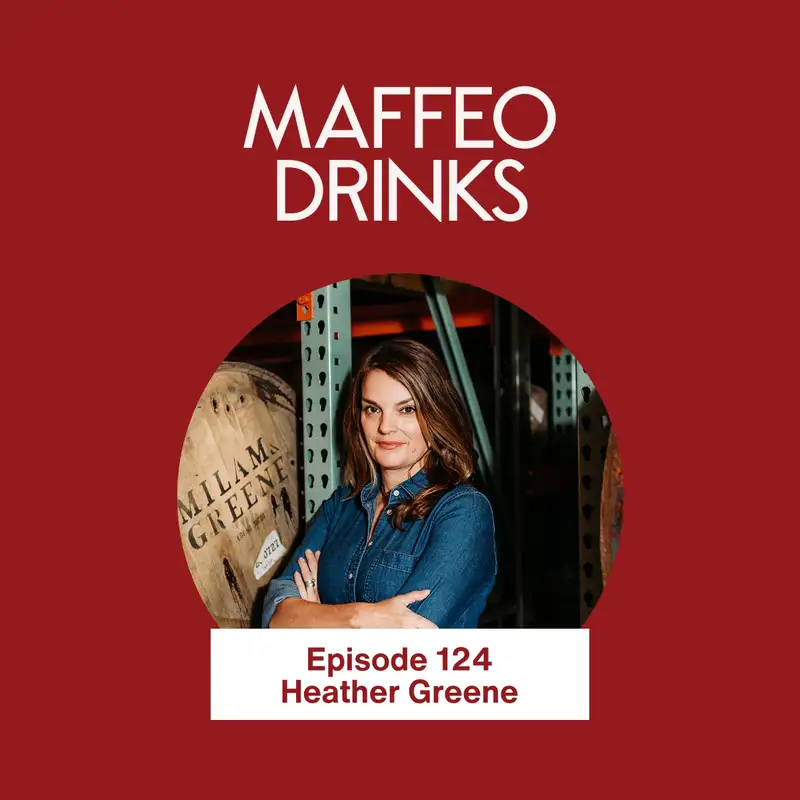
124 | More Than Blending: Social Terroir, No Playbook, Consumer Intention and the Making of Milam & Greene with Heather Greene
Hi, Heather. Welcome to MAFFEO DRINKS.
Heather Greene:Thank you. Thank you for having me. I'm excited. I'm a fan.
Chris Maffeo:Fantastic. That's that's great to hear. Thank you for listening. It's always nice to get a new face to the one listen from Texas. Now I finally know who it is.
Heather Greene:Yes. I love your podcast.
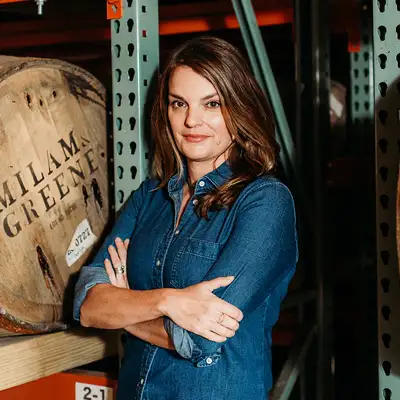
Chris Maffeo:Fantastic. So let's start with a broad question that I want to ask you about, you know, like, you're based in Texas. So, Aben, first of all, let's have a bit of an intro about you because you wear different hats and you have a long history in the industry. So we will not hear from you only about the founder, but also from the other multiple hats that you have been wearing or wear in the industry.
Heather Greene:Yes. I have worn many hats since my early days in Scotland in Edinburgh, where I worked at the Scotch Malt Whiskey Society. Also was working at William Grant and Sons for five years, and started my own advisory service for about five or six years after that. Wrote a book on whiskey. Just kept meandering and brought me to Texas through some of that advisory work.
Heather Greene:I had an opportunity that I couldn't refuse.
Chris Maffeo:So tell me more about this opportunity that you couldn't refuse.
Heather Greene:Well, I'd spent a lot of time in what you call the godfather of whiskey states, right? So Kentucky, Tennessee, back in Scotland. I spent time in Japan. I had studied cognac and armaignac in France. So it's not whiskey, but dark spirits that are aged.
Heather Greene:I got a certificate in Cognac and Armeniac. We kind of know what's happening in those places because they've been going on for hundreds of years, but we don't know what's happening in Texas with whiskey. And it was an opportunity to go to a place that felt right for bourbon and rye, but we hadn't really studied it or seen what aging can do to whiskey. And there was an opportunity to come down here. There were some ragtag group of cowboys that bought some barrels and had some dreams and said, Do you want to do this?
Heather Greene:And I said, Yep, let's do it. Let's try to make this happen. And I'll bring as much knowledge as I can knowing about whiskey history and aging and distilling and all of that stuff. And yeah, curiosity got the best of me. Here I am in Texas seven years This
Chris Maffeo:sounds as a pretty much like an offer you're gonna refuse. I mean, I would be up for it as well. It's something that must be so fascinating. Like, it's such a beautiful project.
Heather Greene:It was it is a beautiful project and it's like really fascinating. It's been a really amazing journey going from, Northeast to packing up everything in a car with my husband and my dog and a big collection of whiskey and just moving to another state like this. As you know, Texas is huge and it's really different and it's far away from everything I ever known. I'd moved abroad before, lived in different places in the world, but honestly, Texas is its own place too. And it's really amazing to be here.
Chris Maffeo:Let's dive back into a bit of a kind of like a history of when you started this. How have you seen the development of the whiskey world, especially in The US when you started?
Heather Greene:I'll talk about some of the things that are consistent and then some things that are different. So let's talk about what's different, even though there's this doom and gloom in the industry and the overproduction of whiskey and the glut in the warehouses that everybody talks about. That to me is not really It's like, I'm just not gonna focus on that because from what I've seen, there's an incredible opportunity to communicate with new people and new whiskey drinkers, new demographics, new psychographics, new states, just all sorts of people that feel a little bit more welcome in the world of whiskey. When I first started, you didn't have as much of a cross section of consumer segments. And that to me is what's changed the most.
Heather Greene:With that, some consistency. One of the things that I thought was interesting is every new consumer kind of group that come of whiskey drinking age, they ask the same questions. There's waves of influencers or writers who are the it people at the time that everybody wants to woo into their spheres so that they can build their brands. When I started, there was a group of writers that were really important and we had to reach them and they would write about cask strength whiskey or what is bourbon versus scotch? And the next group in the mid 2000s would do the same thing, a whole another group of writers that became the writers du jour, and now we've got influencers.
Heather Greene:The same questions, I thought is really interesting, keep popping up over twenty years about, like the same questions, what is a cask strength whiskey? Or like I said, can bourbon be made anywhere? Or what is the difference between a single malt scotch and an American single malt? So, you know, there's still a thirst for hunger and there's always going to be new people who want to come in and learn about the category. The questions kind of stay the same.
Heather Greene:So in a lot of ways, at first it used to really irritate me that like, God, we're still talking about this. But then I realized, of course we are. There's always gonna be whiskey 101 for all the new people. And so I would say that has been consistent that we need to communicate with new groups. Gosh, I have so many things.
Heather Greene:I wanna stop for a minute. So let's see
Chris Maffeo:changes. It's super, you know, fascinating what you're saying because it's one of the things that gets the most overlooked, would say. No? Like, I always bring the example of you know, I love Hendrix as a as a as an example because the gin and tonic with cucumber. No?
Chris Maffeo:Yeah. You know, you never stop talking about the cucumber because there's always new people coming
Heather Greene:in with people, where there's
Chris Maffeo:new consumer, there's a new market, there's new and it's very easy to get trapped into the kind of like the echo chamber and say, I mean, you know, I know, my wife knows. So Yeah. Why why are we still talking about this? Because there's always, you know, there's always new people that enter the category. And the moment you stop doing that, that's the moment where a new entrant comes in and steals that place from you.
Heather Greene:Wow, that's interesting. I've been thinking about this a lot too lately because I do as a whiskey expert, and I get really geeky and I get into things and I have to remember, but we want it to feel like a welcome place for new people. And one of the things that I also found, I don't know if you found this, but for new entrants coming into Whiskey in America, you know, one of the things, and we have a new product out to help this, is to make it feel welcome and warm for new audiences. And it's been something that we've been working on for a while at Milam Greene. It's our new Provisions Bourbon.
Heather Greene:The blog not the blogs, for the influencers, they started getting kind of mean. You know, like somebody would say, Oh, I love this whiskey. And they'd Well, that's not cask strength. That's terrible. And you know, just make them feel terrible about it.
Heather Greene:And I'm like, Well, how does that help any of us? You're trying to be an influencer. You want a bigger audience. Why are you alienating people? Right?
Heather Greene:So we're all in this together. Let's celebrate it. And everybody's at a different level. So yeah, I think it got to be a little bit hostile too for some new people. And I'd seen that with scotch, right?
Heather Greene:There were rules, and how do you drink that? And how do you are you supposed to add two drops of water or not two drops of water? Ice is blasphemy. You know, there all these rules for scotch, And ultimately, I think that was part of scotch's downturn and bourbon's upturn because it became unfun. And bourbon came along in, I'd say, like, 02/2008 September, and it was like, oh, it's like fun whiskey.
Heather Greene:We can do a cocktail with it. I can put it on the ice. I can make it in mint julep. I can put it in a blender and do something weird with it. I can make an old fashioned.
Heather Greene:There wasn't anything like that in bourbon. Now it's starting to be like that. Like, oh, you have to some crazy stuff like the neck pour, which means, like, pouring it right at the top of the neck is tasting different than the bottom of the bottle.
Chris Maffeo:But this is so funny because, I mean, I'm Italian, and and I've been living abroad for twenty years. So every time I enter this conversation, every time I speak to someone, it's like, oh, you're Italian. Oh, you know, where is the best pizzeria? Where is the best you know, like, you know, just default on food all the time. And then there's always someone who wants to kind of outsmart an Italian, you know, a non Italian that wants to outsmart an Italian.
Chris Maffeo:Oh, I heard that, you know, mozzarella should be this and this. And I heard that pizza and I know the best carbonara because you don't do it this way, you do and I'm like, dude, know, like, just like calm down, you know, like, we're so obsessed. I don't care about how many eggs you use.
Heather Greene:Oh my God. I relate to that so hard. Well, I mean, not Italian or food, but like with whiskey and bourbon and just even my family's from Scotland, like the scotch. And you're like, you're taking this way too seriously, dude. This is come on, man.
Heather Greene:It's just whiskey.
Chris Maffeo:And this is the thing that it takes the you know, it alienates people, you know? Mhmm. And and this is one of the biggest issue when I talk to people within the industry, whether it's the cocktail bar scene, top bartenders, distillers, blenders, or whatever we are in the, you know, which part of the drinks ecosystem we are. You know, like it tends, you know, we tend to forget that this industry only scales if we make it a welcoming place for people.
Heather Greene:Correct.
Chris Maffeo:Otherwise, it's just like me offering a drink to you when you offering a drink to me. Exactly. Drinking each other's bottles.
Heather Greene:We use that word like what? Top of funnel. We have to bring in new people and make it fun again and explore the heritage, and people who are making it with transparency and authenticity and heart. And we know that the consumers want this now. We do see that.
Heather Greene:And we see the numbers in that in America. We see what bourbon brands are actually doing and which ones aren't. The ones that aren't have a much bigger voice in the media. So we tend to hear about a lot more of what that's doing than we do about some of the success stories that are actually here. And also redefining what success is, kind of shrinking a little bit, I'd say, into a place where you're thinking about doing well in your locality, your state, or region rather than wide, which we've always said that, but for a while we had to go wide because of the pandemic, right?
Heather Greene:So people had to expand wide because for a while you had to embrace direct to consumer opportunities in America. So the advice of going just local and winning your state for a while was like, well, but you also have to expand into direct to consumer and you have to be available in those states. How do get available in those states? You've got to get distribution in those states. And then all of a sudden now you're distributing in more states than maybe traditionally you would want to distribute in, but you want to also be able to sell the whiskey, right?
Heather Greene:So we're in Texas, there's a law in Texas. We can't sell on and ship outside of the state. So in order for us to sell in another state, we have to be available in other states. So this kind of goes what you and I were talking about before the show, there was no playbook anymore. And you have to just kind of slog through and at any moment look at the cards in your hand and decide what the best play is under uncertainty, under zero mentorship because nobody's been there before in the past five years and using as much intuition as you can, combined with what you know about the industry.
Heather Greene:Always try to stay on the side of the consumer. That's really the most important.
Chris Maffeo:And let's dive into this because I mean, like, first of all, let's bring some positive news.
Heather Greene:Absolutely.
Chris Maffeo:We need to bring that in.
Heather Greene:I'll bring some positive news. Look, whiskey's not going anywhere. I don't care what anybody is. It's just not. It's heritage.
Heather Greene:It's part of American history. It's part of who we are when it comes to food and drink as a nation. Look, we're a new country. We don't have the history of Italy. We have to own bourbon.
Heather Greene:That's ours. And rye. I think when brands crack what resonates with consumers again, when they've lost those consumers, we'll see And I think that cracking, what does that mean? I think it means just figuring out how to speak to the people, to the heritage, to the community, to ownership of provenance in our country and the taste and the varied tastes that come from it, I think that at some point is going to really help the cause. And I don't think it's lost.
Heather Greene:I think there's still opportunity. Was there a huge giant push for commodity brands that don't resonate with the consumer? Yes. Was there an overproduction of whiskey? Possibly.
Heather Greene:Was there you know, for American audiences, probably in terms of not being careful about what it is that you're overproducing. So for us, we kept on producing because we're doing a bespoke and a very specialized mash bill that is ours, so that I can't go out and buy on the bulk market. So making sure that when you do put stuff away, it's unusual and different and has a story behind it. So I think I've gone off track here, but I'm positive because the people who are doing it with intention are gonna succeed. Of course, there's business behind it, you have to have the numbers.
Heather Greene:I believe the numbers will follow when you have your consumer on your side. If you lose sight of the consumer, you are going to fail. That's it. You just have to keep that person in mind. Who's drinking it and who the potential person is.
Chris Maffeo:No. And also the element that we tend to forget is that there is I've experienced it in many, you know, in other episodes and also in some of the studies that I'm doing. There there was an episode that we did with Filippo Matti. It was episode one zero three when we were talking about the rise of the, smaller, not only the super craft players, but also like the mid tier kind of companies. Especially if you look at the M and A that is happening nowadays, there's a wealth of up and coming companies that are buying brands dismissed by big companies, for example.
Chris Maffeo:And that is building the next generation of tier kind of players. So there is so many, you know, levels of companies, so to say, you know, size of companies that are doing really great stuff, but they don't get enough on the media because like that's only the the big names are getting the title.
Heather Greene:Well, it's a dramatic story. Diageo shares falling 30% big is deal, right? I mean, of course, the Financial Times, the Wall Street Journal, everybody's going to cover that. Jim Bean stopping its distilling and one of its plants in Kentucky. These are big stories.
Heather Greene:These are big that affect many, many, many people. In fact, I mean, for Diageo, obviously, its employees and also shareholders across the world. You've got Jim Beam and it's their business. And then you've got the loss of employment. I mean, these are major news items and they're not positive right now.
Heather Greene:So the smaller mid sized brands, they're being buffeted about as well, but whether or not things are going great or really horribly are not going to make national news, right? At least in America. But we do see the success of some mid sized brands. And it's interesting what you say in terms of the M and A sphere, like watching that happen, grow, explode, and then peter out completely with Diageo, with Pernod, with Constellation, with all of them, their incubators, their accelerator programs, and things like that. Ultimately, at least in America, you have a distribution system that you have to navigate.
Heather Greene:Unless you solve for that for small brands, it's just going to be impossible for a small brand to exist within a larger company like that whose sales network is really focused on their bigger brands and just doesn't have It just can't be incentivized enough to sell something small. So, you know, I think the incubator, the large, you know, the hopeful idea of taking on some of these brands was that, you you would grow within it, but at the same time you were still kind of off on an arm, a distant arm, like you were at the fingertip, like trying to survive. And ultimately you were competing with the same brands within what your larger incubating company was. So, you know, you're trying to compete with shelf space. Were still kind of out there.
Heather Greene:You got some of the support, but I think the structure and the system didn't make sense for it. But maybe for mid brands now, like mid sized acquirers, you start to see maybe there is some more success in that. But that is a game you have to play in America. You've gotta be able to, how do you get on the shelf? It's not just, hey, will you buy me and get on the shelf?
Heather Greene:It just doesn't work like that here.
Chris Maffeo:Yeah. Let's talk about what you were saying before, but that is very interesting because one of the things that I talk about a lot is this, I call it winning the home turf, no? Versus going deep rather than going wide.
Heather Greene:Love this whole thing.
Chris Maffeo:You had a great point on the COVID situation where brands were forced to actually say, okay, it was a strategy. It's a lowercase. This state doesn't work or this state gets closed down or whatever that happens, you know, even if you take Europe as an example with many different countries, you know, different states in The US. But sometimes I feel that brands don't even do it out of a necessity. They do it out of a kind of like a universal dream of, you know, master of the universe kind of thing.
Chris Maffeo:I want to stick as many flags as possible and they forget about their home turf. You know, they forget about the state they come from, the area they come from because they want to win New York. I mean, you're from New York. But you know what I mean? Like, there's always the fancy cities.
Chris Maffeo:New York, LA, London, Paris, Milan. And it feels like that if a brand is not present there, it's not a success, you know? While you can sell thousands and thousands of cases in your locality, you know, and you can postpone those opportunities by securing the home turf and then do that later. So what's your experience in this?
Heather Greene:I When you are in a
Chris Maffeo:state, which is a huge state, which is a country on its own, so to say. Correct.
Heather Greene:So we actually launched, it's really interesting. I thought that, you know, obviously that has been the traditional playbook is go deep in local, in your own place. I subscribed to that 100% when I came down to Texas. I do think that you have to win your own state. We launched and then six weeks later we started, you know, gonna go out and do our thing.
Heather Greene:And we had, you know, the playbook thing, which we're gonna go deep in Texas. We're gonna hit the on premise. We're gonna make some noise. Gonna do taste, like go big at the distillery with events and all that kind of stuff. We had tours planned and all sorts of stuff to just hit it hard in Texas.
Heather Greene:And then of course the pandemic hit. We were new. I think each distillery is different. And I think for us, we had to ask, are we going to survive this environment the way it is by doing this method? By adhering to this playbook?
Heather Greene:And the answer was a resounding, absolutely not. We were a new brand. We didn't have any presence in any of the on premise stores. We had very little in Texas on retail at the time. People didn't know us very well.
Heather Greene:The distillery was shut down. Everything else was shut down. What were we to do? Oh, we're in trouble. So for us, the way to survive is because I was known in the industry, I had some contacts and I said, We're gonna have to go bigger and wider than we originally had planned.
Heather Greene:Now this is part of that playbook. Like there's no other way we could have survived. Couple of reasons for that. One, we needed to be available in other places. We need more voices to be talking about our brand.
Heather Greene:And we needed some key retailers like Benny's in Chicago, right? So they were one of the first people to take They were the first place to take us out of state. And that helped, that was our lifeline. You know, these small pieces and other places that we knew would help us were our lifeline. Some places in New York City, right?
Heather Greene:So I was from New York. I also knew, so we had to just to survive, right? So we had to supplement what we were gonna do to just survive. And then the second thing, a decision I had to make was, we were a unique unique place is that because I also was part of the press, and I knew the press, and I knew the influencers, and the taste makers, and the writers like Clay Rizen or Fred Minnick, I was able to say, okay, we're gonna need their support in writing about us. We have good product.
Heather Greene:I had to make a quick decision and say, We're gonna need to be in New York and we're gonna need to do some launches around this because we need people to talk about us. What I knew from press, being one of them, was it's really hard to write for a massive consumer audience if the consumer can't find you. You tend to say things like, Well, where are you available? Well, if you just say, Well, I'm only available in Texas. Well, now you've just gotten a New York Times article but you're only available in one state.
Heather Greene:Guess what happens? When you decide to scale, the New York Times is already written about you. You've already blown that opportunity in a lot of ways. We also knew that to get voice and to have anyone know or hear about us as a survival mode, we had to be in New York and do some major press outside Texas. And that would come back to Texas because Texans, obviously, they're still reading the Wall Street Journal.
Heather Greene:They still read major publications. I mean, it's Texas, they're still in fact the top 10 media outlets in Texas are not Texan based, although there are a lot of wonderful Texan publications that we did win over as well. So that's how we had to do it. And the advice, if I had just taken that advice, Texas only, we would never have survived. There's just no way.
Heather Greene:And that was what got us to survive, was that we were able to say, That playbook isn't going to work. We better do this. You know, so out of necessity. Now what's interesting, we don't have to do that anymore. So how do you now say, Okay, we can now really focus on our market because things are back to a place where we can visit on premise.
Heather Greene:We can nurture our retail relationships. The direct to consumer arena has already changed dramatically to help us be able to communicate with our consumer. Relationships with distributors have changed and our distillery has expanded. So now it's coming back and saying, We're here, we survived it, let's go big. And so we had to pivot, make a U-turn, and now focus back on our own state because we can.
Heather Greene:So we had to take a real kind of winding journey to where we are today.
Chris Maffeo:This is a fantastic example of the You know, I was discussing on a previous episode with Maurice Doyle, we were talking about, I always talk about bottom up. No? And I was talking about the bottom up principles because there's no real playbook anyway. And we were saying, like, you know, a principle is only a principle if it costs you money. You know?
Chris Maffeo:Like Maurice said.
Heather Greene:Oh, I like that.
Chris Maffeo:It's about, you know, how do you walk the talk when things go bad. You know? And this I mean, what you explained was a fantastic example of
Heather Greene:When things go bad? We are you know, I think any craft distiller, that could be the title of my book, When Things Go Bad. I mean, it's just like, that's really the story of running a distillery in the past, small company in five years here, like, for sure in Texas. I mean, it just keeps going on and on and on, and you're just finally It's like we had it all. I mean, we had the pandemic six weeks after that, then we had supply chain nightmares.
Heather Greene:And then at some point, you're gonna have to deal with things that you didn't expect. We had the death of one of my dearest partners in business. He was a mentor to all of us. And then you dealing with when grief finds you, which it will for anyone's company. Anyone who has employees that has a life is gonna have things that will derail them as a company.
Heather Greene:So yeah, it's just, there is no playbook. And I think for anybody who pretends that there is, you gotta be careful of that because there just isn't.
Chris Maffeo:That's why I like to talk about the DRINKS ecosystem because it's really like an ecosystem. Like when you know those stories when they bring back a small animal into a forest and then a whole new things happen. And then the wolf comes back and then the bear comes back. You know what I mean? So it's those things that you cannot live with a playbook because you don't know what other animals are in your ecosystem.
Heather Greene:Correct. You never know. And also you have to it's a mirror to yourself. How do you react? How do you pivot?
Heather Greene:How do you feel about your decision making ability, your confidence levels? How do you deal with people? Together under all that? I think that was a big challenge. How do you keep your team hopeful and positive?
Heather Greene:How do you manage the personalities when all of this uncertainty is going on? How to comfort them but stay along professional lines? There was a lot of things that I had never had to experience before beyond just growing a company. But at the end of the day, it's also your people, right? So they're your biggest asset.
Heather Greene:And I really care about my employees. I care about their well-being, especially during the past five years. And then you have the business aspects of it. So yeah, it's definitely a balance. You've got the money and the bottom line, right?
Heather Greene:You've got that too, and you're trying to navigate all of it at once to bring it into the next era. And I feel like Milam and Greene has enough grit and enough people with such grit that are like, mm-mm. You just can't lay down. And I think as well, there's no place for I mean, think that you have to have some amount of humility. You have to as a leader.
Heather Greene:You have to be saying, crap, I was wrong. No one to stop, no one to quit, no one to go ahead, no one to It's like without that humility, it's really tough because when you say stuff with such certainty, it's like, are you sure about that? To me, it feels a little bit like, you know, no one's uncertain and the person who's curious is gonna win this game. That's always one step ahead, always a little bit faster, always a little bit thinking on their feet, ear to the ground, which is one of the reasons why in September I made the decision to step down as CEO because I felt like, you know, I brought it for seven years through all of, what do we call it? All the things.
Heather Greene:All the things, you know, that were going on. And for me, I felt that I was becoming more and more distant from the very thing that kept us alive, which is the consumer and knowing what they want and love and drink and how we communicate with them, how to keep a team invigorated and alive, be positive, creative, innovative. If you don't have that stuff, you're not gonna survive. And I needed to get back into that part of me that was outside of the everyday operations of spreadsheets or looking at ROI of a certain market spend, or getting really deep in, I guess, for lack of a better word, the operations of it. And getting out there and being a leader in terms of the creativity and being one step ahead because that's what's helped me in my career for twenty five years.
Heather Greene:And that's how I was able to do all this stuff that I've done, is be curious and always be a step ahead. That's what we've done with our whiskey too. I got to figure out what the next five years is of our whiskey. Because right now it's doing great right now after seven years of aging under a program that we developed that we're really proud of.
Chris Maffeo:Wow. Fantastic. And this is one of the very important aspect. You were discussing it before, Especially in whiskey, mean, in other categories is a little bit less, I would say, I mean, if you take non aged categories. But the fact that you have to look into the future, it is about foreseeing what the future can be because you are developing programs today with an idea of a possible palette of today, but things are gonna get released in three, four, five, ten years time.
Chris Maffeo:And this is something that is so fascinating now because you said, you know, like seven years ago or even more, you started developing certain programs that are seeing the light now.
Heather Greene:Yeah, you do. It's not whiskey isn't just I think that's hard for also people who come in from white spirits that work in whiskey or something where you can do a quick turnaround. Whiskey is definitely not like that. I mean, you are looking at four or five years down the line, six years, seven years, as you know, for any aged product, that's what we have to be thinking about. And what does that liquid strategy look like?
Heather Greene:And that also requires anticipating where you think the consumer's going to be in three to four years. And we've been really successful at that. I've been successful at that in my career, knowing writing a book before it was super, super popular, just riding that wave right before it just got ginormous in whiskey and being able to have a book that sold so well. And before that, just no one was in whiskey, and now they were, and then they were. And I approach the whiskey making like that in the same way.
Heather Greene:So for example, when we started laying down casks in 2018, the new Milam and Greene casks, one of the things that I really felt strongly about with regards to whiskey was that it was going to we were gonna go into a phase where people were gonna start loving and admiring blends. And by blends, what I mean are not There's a lot of different kinds of blends. For those who are listening, there's really probably 30 I've taught a class and it's like 38 or 40 different kinds of blends by definition around the world with different whiskey associations. So the SWA, Scotch Whiskey Association, has what their blends are versus what Americans blends are, etcetera. Japanese blends, Irish blends.
Heather Greene:But I did see that for us, there would be something pretty interesting as a blend of straight bourbon whiskeys. What that means is you're blending different casks of different ages. And when I first started doing that here, that was kinda like, what? Like, why would you do that? Everything was grain to glass, age stated whiskey.
Heather Greene:There were very few that were doing that. And I just felt like the art of blending was lost and it was about to happen. And it did, and you see it a lot now. So blending different ages, where it was seen as taboo, I mean, really taboo. Right?
Heather Greene:There were people who would say it flat out. Why are you blending a four with a 10 or a 16 or two? You know, it's like, well, why not? You know, I'm about the consumer and the taste. I'm not about just a narrative that says seven is good.
Heather Greene:I mean, is it? I don't know. Maybe. Some are good, some are bad. So, you know, that was something that I felt was going to be important.
Heather Greene:And then the second thing, I really felt from writing another book that I'll probably get out in the next year or two, was how climate and sustainability and how these issues are going to become more paramount and more interesting to the consumer. And they're going to start asking more questions because we started seeing it, right? And so building that into our whiskey program, how do we use the environment effectively to create flavor beyond just water guzzling stills? Or how do we use the air and the environment? How do we play with aging to create and maximize flavor in a way that feels authentic and true, not just kind of marketing gobbledygook, for lack of a better word.
Heather Greene:So being ahead of the trends. And it's worked. I mean, right now we have a program where we have these beautiful blended whiskeys. We have whiskeys aged in different states purposefully and intentionally. We have studied the effects of climate on our barrels in Texas with some scientific rigor, not as exacting as maybe MIT might do, but pretty great, better than we've seen.
Heather Greene:Comparing casks from different states and then measuring the aromatics and how Texan whiskeys can add particular flavor profiles to our whiskey compared to traditional states like Tennessee or Kentucky. So we've really grown into that and I'm really proud of it with our team. Now it's about what's next for the next three years and how do you push that to not only keep it interesting for the consumer, but myself too, right? When you're in something for a long time, that also forces you to be innovative because you're like, Another cask, Finish whiskey. I love them.
Heather Greene:But that's not doing anything really spectacular. You want to stay just ahead of that curve.
Chris Maffeo:And then this goes back to what you were saying before about going back to be more present in the market, less operation and more out there because that's also where you get the inspiration, the ideas, the creativity of what's happening in the market and have that sparkle of ideal.
Heather Greene:I love that so much. There's nothing like getting out in the market. Just getting your boots on and like literally going through fields and what's going on in this grain field or this grape vineyard, or what are they doing over here and over there? And what are people talking about? And what's exciting the consumers?
Heather Greene:What's exciting the retailers? I mean, that's where the gold is mined and that's where the innovation comes from. And the busier I got within the company, the more distant I got from that part of it. And eventually had to make a choice, which was extremely difficult because it's very unusual to just want to say, Hey, I don't want to be CEO. I'll be founder and leader.
Heather Greene:I will be innovator. I will help educate and innovate and all that kind of stuff. But just understanding where your highest and best use is for a brand is really important.
Chris Maffeo:Exactly. You said in the previous example about the, you know, your contacts and your being part of other circles, you know, as well as your company. That is also part of who you are. So it's that's a tough decision to make, you know, on the fact that, for example, if you would go back to your previous example about having contacts and, you know, being able to launch in New York on Mhmm. Maybe someone else would have not get through the line,
Heather Greene:you know, that are
Chris Maffeo:living in in in New York City. So it's also about that, going back to the playbook, that very often we need to really analyze all the elements of a person, a company, and what that company stands for, what the leadership stands for. Because otherwise people would just say, let's take the Milam and Greene playbook and let's replicate that one. Yeah. But you don't have the same people.
Heather Greene:Yeah. No, you don't. And I call that social terroir. It's basically there's terroir of It's the air and the social terroir. It's like in whiskey, in any of them, there was a larger, as you say, ecosystem, environment, tax structure, government structure, religion, all of that stuff.
Heather Greene:What else was going on that created that product? And that playbook isn't going to work, right? So for example, when you look at cognac, well, why did cognac happen? Well, there was trade and cognac developed where Armagnac didn't. So, you know, they're with the Dutch, right?
Heather Greene:So there trade that was able to happen, a synergy or a connection between the two. Why did Scotland start doing better than Irish whiskey? Well, there were some decisions made on how they decided to produce. They decided, well, we'll use the coffee continuous still. Ireland said, no, we're not.
Heather Greene:And then all of a sudden Scotland did better than Ireland for a while. So they're just economic tax decisions. Then of course,
Chris Maffeo:go into
Heather Greene:religion and the black plague. You could go all the way back. It's never It's always about the people and people's reaction to the world they live in that create not just alcohol, but food too.
Chris Maffeo:Honestly. And this is so fascinating for me. I'm history lover and the intersection of history and geography, it's where I explode with my mind. And this is so fascinating. Mean, like if you take the, you know, even small, I mean, why Britain has tea instead of coffee?
Chris Maffeo:You know, like it was taxation again, you know, taxes and, you know, like all these things like there's always a reason why certain things happen and then certain types of pallets develop in certain ways. And that's how it goes. So it's so fascinating like how things develop into the countries, but then we tend to just look for the shortcut and we go back to the Playbook story. Is no Playbook because you always have to consider what's happening. I love the word like the social terroir.
Heather Greene:Social terroir. Yeah. I always think about social terroir. And you can and it's I just had an argument with somebody recently, like, what is a Texan whiskey? Right?
Heather Greene:So is it that we distill, we do distilling in Kentucky and we bring it down, but it's still our grain, it's still us. We bring it down to age. It's sometimes it's entire life where it comes right off the still and comes to Texas, but then it's still not a Texan whiskey. So, okay, well, I guess to that person it isn't. To me, it becomes largely Texan whiskey with maybe a Kentucky root to it.
Heather Greene:It's up for discussion. One gentleman said, Well, it's not a Texan when you're available in all stores in the state, I will consider it a Texan whiskey. And I thought that was funny. And I was like, okay. So now it's like, if you're available, you're a Texan whiskey.
Heather Greene:So it's just kind of like how people like there's a playbook, but there's also people like to put things neatly in squares. It makes them feel happier and more comfortable than blurred lines. And I guess a lot of what we do is blurred line whiskey, right? So that is the blending, the batching. But at the end of the day, it is that social terroir, it's the people.
Heather Greene:And you can't replicate what we do. It won't taste the same because we have a very unique group of people distilling. We have a unique pot still. We have water. What's a Edwards Plateau?
Heather Greene:It's a limestone shelf that sits in beautiful hill country, Texas. We use that. There's the air and the environment and the humidity levels. I mean, there's just so much that goes into what makes a whiskey unique. It's not just where was it distilled.
Heather Greene:That's part of it, you know, but it's not all of it. And I agree, social terroir, geography, history, it all comes into it. I mean, just the fact that in Texas, we could survive and create here because it hadn't been done and there was an openness here of the people in Texas and the opportunity. They were like, Yeah, sure. Okay, cool.
Heather Greene:Bunch of women coming out and making whiskey in Texas. We're good with that. There wasn't this kind of, I don't think we could have done what we were trying to do in Scotland or Kentucky. We needed to be we're not I wasn't from there. We had to be somewhere where there wasn't really a ton of rules or a playbook because we could just be free.
Chris Maffeo:This is a very interesting point. I mean, it goes back to what we were discussing before about the, you know, like, not being dogmatic on on things. Ultimately, one one of the interesting thing that I'm it's no. You know, I may I may get some pushback on this one, but, you know, the the the thing is that all these appellation and all these, you know, denominations and so on, ultimately, they were made up. You know?
Chris Maffeo:Back back in time, whether it was like two hundred years ago, fifty years ago, eighty years ago, they were basically, you know, they are social constructs. You know? Like, the the reason why a chianti is a chianti is because someone created, you know, that appellation, you know. The champagne and the cognac and the Mhmm. You know, you know, at some point somebody wanted to protect the status quo of a region and they put a name on it they advocated You for know, who said that certain things cannot be done?
Chris Maffeo:And I'm a very traditionalist, you know, being Italian and on food and you know what I mean? Like, I don't want to mess up with origins, but at the same time, if there were no challenges to the status quo, there wouldn't be even like Italian cuisine. I mean, like tomatoes are coming from The Americas. You know? It's they're not they're not an Italian product.
Chris Maffeo:Like potatoes in Europe. All these kind of things. If at some point you need to get some contamination from ideas from something, otherwise it doesn't survive. I mean, the phylloxera and what happened to the European grapes. If it wasn't for the American grapes, there wouldn't be any
Heather Greene:Oh, right. Yeah. We have any You know what I mean?
Chris Maffeo:Good to be strict on certain aspects, but also like we need to be creative.
Heather Greene:We have to let it breathe a little bit. Yeah, let it breathe. And that creativity is really important. And that's kind of where, you know, what we're saying is that, you know, Texas allowed that. I do think that us borrowing from other traditions, and you and I had talked about this through an email that if our whiskeys couldn't compete with a Kentucky whiskey, then why are we in business?
Heather Greene:It still had to be that delicious. It had to be that good. How we got there was where the creativity comes in. Because again, we go back to the consumer, it's about what do they want and what do they want to drink, right? They still want that familiar taste, but they want to feel that they're imbibing something with a little soul behind it, some thought, some intention, some sky, some wind, some stars, sun, some you know, a little magic because you've thought about how that affects from a environmental place, how it affects your product.
Heather Greene:At the end of the day, it is an agricultural product. People want that romantic story about what they're drinking. Texas allowed us to have that romance and we expanded that and let it breathe and brought in things from Kentucky and Tennessee to see how it would react in this environment. And that allowed us to create something really unusual. Now, does that cause a lot of angst for some people?
Heather Greene:Yeah. People like things tied neatly in a box. They just wanna know champagne champagne from the Champagne region, and this is the grapes that we're gonna use. It's like, got it, check. You know?
Heather Greene:Once you start talking outside the box, like, it gets a little bit complicated. That's human nature.
Chris Maffeo:Tell me more about we were discussing before about the Mhmm. Scotch versus American whiskey and the fact that American whiskey was a little bit more playful, less alienating consumers, less being strict. So it feels like what you're doing is also in that kind of direction.
Heather Greene:Ah, I like that. Yeah. Just trying to play with it and fun and not be so serious. And this is how it's in this rule and this, that. It's like, come on, this is a good thing.
Heather Greene:This is like, we're supposed to This is about joy and enjoying something and being intentional or mindful of what goes into your body. I know that's very important for consumers now. They don't want to feel like they're just drinking something without, I don't want to use the word, like a commodity or just like that. They're just drinking something they know that wasn't from the heart, I think. And I think there's joy in that and there's got to be that connection to the consumer at the end of the day.
Heather Greene:Now, how do you get that connection? That's marketing. I always feel like there's the vibe in it in the whiskey. I feel like that's how we've kind of gotten through because it's in there. That heart and soul looking on the shelves, no matter where I am, I know who bottled it and whose hands touched it.
Heather Greene:I feel like there's gotta be some ethereal magic in that.
Chris Maffeo:And tell me, you create these blends, you know, do you have a specific occasion? Like one of the things that I discuss a lot is this target occasion, like what is the drinking occasion? Do you have a specific cocktail in mind or a way of serving? Or is it more about the flavors, the taste profile, and then just leave it?
Heather Greene:It's much more about flavor, taste profile, and variety within our portfolio. So it's about finding what casks, how we could play with aging and our finishing and the use of the different stills that we use, all of that kind of stuff to create and different strengths of the whiskey. Those are the things that we care about as a company. And my team are incredible. They are really good at what they do.
Heather Greene:They've been with Milam and Greene since the beginning. Rick Monroe, Brenda Fisher, Blair All are my big tasters with me. So it's not just me. Marlene Holmes. There's four or five of us that have been working together on just like kind of putting our input on what that Texan product looks like.
Heather Greene:Because I'm kind of a quarterback for that, but I can't be a leader. We're all leaders. It's all new to all of us. So we're a little pack that figures out exactly how that whiskey's gonna taste and what it's gonna do, and what the occasion is, is really dictated more by price point, by your pricing. So having our new whiskey, which is called Provisions Bourbon, was made specifically for people who wanna play and who wanna have lots of cocktail experiences, bring it on a picnic, tailgate for the football game, not have to think too hard about it, but still understand that they're drinking something that we are, that little group of people created together because it's what we wanna drink.
Heather Greene:It's lower proof. So we were like, we issued that high proof is better philosophy in lieu of something that was more drinkable for that new consumer who still wanted story and value and intention behind their product and some Texas behind it too. So I'd say that was probably our biggest occasion whiskey, but I find that dictated more by the pricing of the product more the than I actual product itself. So there's a lot of times where a whiskey, when you're making bourbon, you're like, Well, you want something super high end that feels luxurious and silky and high cast strength and a beautiful packaging. And we do that too.
Heather Greene:So that's, you know, that's our unabridged. It comes out once a year. And I would say that would be your high end occasion whiskey, right? So your holiday, it's a blend of many different beautiful casks that come together to create something rich and unusual. And I love it, it's beautiful.
Heather Greene:And then you've got all the way on the other end our provisions. And then many interesting things in between that create and tweak flavor for different audiences, for true fans of whiskey, because nothing tastes exactly the same.
Chris Maffeo:Because this is a very interesting conversation to have that, you know, like, with when I talk to different people from different brands, you know, like this Mhmm. That kinda like different school of thoughts on, you know, on you know, this is more for, let's say, that are single SKU kind of brands, you know, and and it's about, you know, focusing on one specific occasion or one specific cocktails like this. A lot of talks about drink strategies and how to bring that to life. You know, the usual example, the Aperol Spritz or the, you know, the Campari with Negroni or, you know, like all these kind of brands that are not playing that much, you know, they have a one single recipe basically, and then they focus on one specific occasion. When you talk about the distillery like yours, there is different kind of SKUs and different kind of expressions of whiskeys.
Heather Greene:Mhmm.
Chris Maffeo:It's very interesting to hear, you know, your approach on that.
Heather Greene:Yeah. It's very much I'd say, like, if you look at some of the Japanese, it's much in line with the scotch single malt category. Like if you look at the Balvini, they've got a portfolio of their whiskeys. You look at Japanese Yamazaki. And then even just if you go to like Bordeaux, like Saint Emil in France, and you go to a chateau, they'll have, you know, okay, this is our Grand Cru Class A's or the highest of the bunch.
Heather Greene:I'm like, the highest of the bunch. I don't know how versed everybody is in wine, but you've got your super high ends, you've got your picnic wines and things like that. So I think the approach with Milam and Greene is more in line with that, not one cocktail strategy, but it's a house of whiskeys. It's like, what is the house style? How are the people making it?
Heather Greene:What does it feel like to drink it? What its philosophy is behind it, which is the things we talked about, which is busting out of those narratives to create a whiskey that resonates with its environment, as well as its stills and its people in Texas. And within that portfolio, which is maybe a little bit different that you would have within those big houses like the McAllen, we have a bourbon because bourbon's fun and you should play with it. We have a really great bourbon at $35 which is your whiskey to make cocktails with, to do an old fashioned to, like I said, throw it in with a Coke. People in America love their whiskey and Coke, or Diet Coke.
Heather Greene:So why not have a great whiskey with it that we made specifically for you to drink it like that and support a cool small business?
Chris Maffeo:So what are your some final thoughts and some stuff that you wish I'd asked you?
Heather Greene:I think the final thought is I'm really looking forward to stepping out from behind a desk again and getting back to basics and getting my feet dirty in the mud to create and innovate and get out there and talk to people like you and retailers and travel and stay on top and build something on top of what we've done that just resonates and people want to drink. Find my tribe.
Chris Maffeo:So it will be fun to meet each other at some point. Hopefully, I have to get to The US. I haven't been there for a while.
Heather Greene:Oh my god. You gotta come to Texas. We could do a live podcast from Texas. Oh my god. Live podcast from Texas.
Heather Greene:Here we go.
Chris Maffeo:We'll make that happen next year.
Heather Greene:You should come. Thank you for having me.
Chris Maffeo:Thanks so much. And this was a great, fantastic conversation and be in touch.
Heather Greene:Okay. Thanks.
Creators and Guests