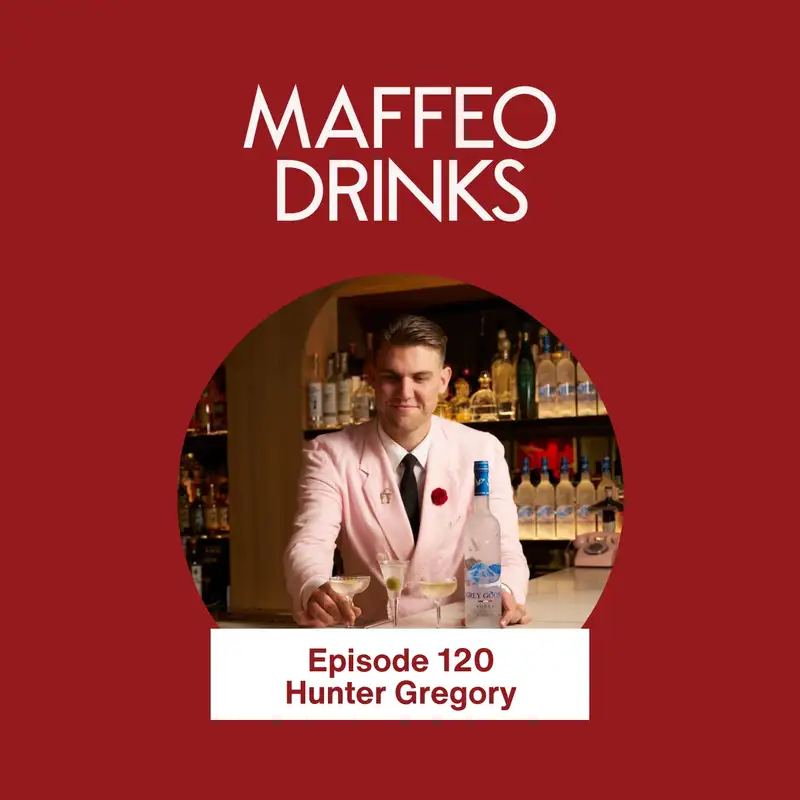
120 | Guest Shifts That Actually Work | How Maybe Sammy's Hunter Gregory Balances Technique and Experience to Scale Cocktail Culture
Also hate going to cocktail bars that are too technical focused and, you know, they sort of explain to you their entire concept and their entire drink and everything. And it's like, bro, I just wanted to twist on an Americano. Like, I don't know. Like like, I I don't know what you want from me. You know?
Hunter Gregory:Like, what are you what what are you wanting from me in this instance?
Chris Maffeo:In this episode, I welcome Hunter Gregory, the bar manager of Maybe Sammy in Sydney, Australia. We met with Hunter at the Mirror Hospitality Expo in Bratislava in May, where he was hosting a guest shift from from his bar, May Bissami, as part of the the three days expo. And what struck me was the energy he brought to the bar, and this is something that I discussed in previous episodes as well, the fact of how bars are, in my opinion, focusing too much on techniques nowadays and not much on experience. With Hunter, we talk about the the Sydney and Australian bar scene. We talk about guest shifts and their role into spreading cocktail culture, not only within the industry, but also to the regulars of that bar and to other people, and how to ensure that the guest shift is actually really working.
Chris Maffeo:This is something that Hunter calls the the pie and the cherry on the pie. I don't want to spoil more of this episode, so this is the perfect episode whether you are a bartender just starting or a seasoned bartender or a brand manager that wants to understand how to work with bars and, you know, do guest shift in a in a proper way and how altogether as an industry we can actually scale cocktail culture and and and the bar culture. Let's dive in now. I'm I'm personally very much, you know, I'm I'm you know, if you listen to other episodes, I'm always talking about target occasions. You know?
Chris Maffeo:I'm always talking about what is actually the occasion. It's not about the demographic much on who is drinking what. It's more about the time of the day, the occasion, the type of situation where I mean, I always bring the example, you know, if my wife is having an apple spritz, I may not go for a Negroni. I may go for an apple spritz just because it's easy to say make it two kind of. Two apple spritz,
Hunter Gregory:of course.
Chris Maffeo:And this is the type of situation where, you know, I always take the example. For example, I didn't drink whiskey for for quite a long time. So being an agroni drinker, the easy way in for whiskey for me was the boulevardier because I said, okay.
Hunter Gregory:Wow.
Chris Maffeo:You know, because I said, you know, I I love two out of the three. You know, I'm just switching the, you know, the hard the hard stuff.
Hunter Gregory:Of course.
Chris Maffeo:And let's play around with it because I had tried because I was introduced to the mezcal negroni back in at the NOMA, the New York few years back. Then I started drinking mezcal negroni. Then I started, you know, you know, working with whiskey brands and starting to say, you know what? You know, I'm actually gonna have and I can play with it because I can have it, Scotch whiskey, Irish whiskey, bourbon, rye, whatever. And I can play and make fun with it.
Chris Maffeo:You know? I try to bring my guests, for example, when when they visit me on that journey because I'm always, you know, I always like when they say, oh, no whiskey. You know? Like, I'm you know, they're scared of it. And I say, if you like Negroni, can I make a drink for you?
Chris Maffeo:Like, I'm I'm sure you'll like it. And maybe I'll make a smaller one. You know? But it's it's the way you bring people on that journey that I think it's missing in most places because we are missing that kind of middle ground that you were talking about at the beginning. You know, the very high end hospitality and then the pub down the road with a cold corona or a or you know, or a draft beer.
Hunter Gregory:Yeah. No, of course. Or even espresso martini on tap. So good.
Chris Maffeo:So good.
Hunter Gregory:No. I think, like, in terms of in terms of this, like, we're very lucky that we receive an audience that wants to be tested, let's say, you know, like people that want to try new things. And, you know, we're not not really a day goes by where we don't feel as if we're lucky for that as well. Every now and then there's like a, you know, a hard guest or this sort of thing. But we we feel very sort of fortunate that we have the kind of clientele that enjoys trying these sorts of things.
Hunter Gregory:But even us, we're sort of, you know, we we we could go further than where we go, but for some for some, you know, the the bottom line is that cocktail bar is a business, and those businesses need to be operating. So we need to be sort of doing something that balances between doing what we think is the the best thing or the most outrageous thing or pushing the boundaries and these sorts of things. At the same time, we need to be able to create an offering that makes people enjoy the experience. You know what I mean? So if we wanted if we wanted to put out, let's say, 12 super crazy drinks that technically are beautiful, you know, costs are great, you know, like, all of the all of the technology in the world are put together, and then all of sudden the guest doesn't like any of those 12 drinks, then we haven't done our job as hospitality professionals to sort of create that experience to other people.
Hunter Gregory:So there's a there is some sort of limitation there, well, that we feel, let's say. But, you know, you go to other places and you'll try, let's say, 10 drinks, and those 10 drinks are super crazy, but the clientele's ready for that. There's a really great example. I don't know if you've been to Bangkok and to a bar called Baras, but Baras has been doing amazing things for since they opened. And their drinks program, I would say, is quite experimental and it's quite experience sort of driven as well.
Hunter Gregory:And if that cocktail list was in Sydney, I can as I can absolutely see every single, like, a, you know, middle aged white woman being like, you've got beef broth in your drink. What do you mean you've got that? You know? It's not that they're not ready for it. They're not ready for it.
Hunter Gregory:And that's okay. But, you know, if we were to bring those people from there to here and open the same bar, I don't think it would be I hope that they're doing great, which I I think that they are. They just got, like, top four, I think, or top three for Asia's 50 best bars. But, you know, if they've been moved that bar to here, I don't think it would do as well as it is there.
Chris Maffeo:And I I mean, I I hear the between the lines of what you're saying, you know, like there's a lot of stuff with persistence and consistency now, because obviously, I mean, you need to bring those people on the journey. But then what I'm understanding is that you've got regulars, you know, the Sydney upper mid mid middle upper class kind of people and tourists. And those tourists, I'm assuming that they're probably traveling because of the 50 best bars list and, you know, like they it's kind of like a destination place, you know, when you go to Sydney, you wanna go to maybe.
Hunter Gregory:Yeah. It's it's for sure. For sure. That's the goal. That that that that's the goal to sort of create as well.
Hunter Gregory:You know? Like, that's the goal of the the legacy. You know? So, like, in a London, and you have to stop by the Connaught Bar. Like, that's the sort of thing that we, you know, are trying to achieve.
Chris Maffeo:I you pretty much achieved it, I would say. I can say you don't want to say that. I'll say I'll say that. But what I what I mean, what I'm trying to get to is the fact that, you know, there is this element of consistency and persistence with the guests, and it's kind of like a 1% per day journey of each in their palate. Of course.
Chris Maffeo:And it's like, you know, that if you want to have a gin and tonic, you may try this one and then maybe I give you a sample or whatever that is. But then, you know, the role because obviously you cannot just work with your own people. So it's it's kind of like a glue. I'm trying to put the lens of a global effort to make cocktail culture spread. And obviously, you know, things like a 50 best bars or, you know, if you make Michelin stars, you know, in in in in food and, you know, dining, they are doing that.
Chris Maffeo:But there is an element there is a kind of like self reflection reflection element element which which you you are are basically basically saying saying, on actually say, Okay, I want to be super experimental, but I also need to keep my foot on the ground to to make sure that I speak a sort of the same language that is still aspirational for these people. But at least they still get what, you know, what this is about.
Hunter Gregory:I think like in terms of in terms of this is tricky. I think that Sydney itself, know, if we were to take this sort of global approach, you know, I think it would be missed to some degree.
Chris Maffeo:No. And and I mean, like, the the now we we let's say, I I I get I get it. It's it's not a solution. I'm like, I'm throwing a question out there to to basically say, Okay, what can we do as an industry to actually make it more inclusive, but not in the, you know, inclusivity kind of approach more in, you know, in the let's talk a simple language. You know, I always bring the example.
Chris Maffeo:You know, I went I went with my wife to, you know, to some bars and then, you know, the the bartender because they know me, they started talking to me and they started assuming that my wife is at my same level on in the industry, you know? And and then it start to be you want to have, like, some c two c forward or, like, some spirits forward. Cox is like and she was looking at me like, what the hell is this guy talking about? You know?
Hunter Gregory:And then and then it
Chris Maffeo:and then it defaults on on the usual conversation that now now became a bit of a joke that is like, oh, what do you like? And then they say, she likes pina coladas. And then usually when the the bartender is kind of smart, then they start saying like, Okay, I know what I can make, you know, like we've got this one and this one.
Hunter Gregory:Yeah.
Chris Maffeo:Or I can make this one with the twist. Or if you like coconut, I can make this one and this one as whatever, you know. And then she she goes beyond her barrier and boundaries. And then she's like, you know what? That was nice, actually.
Chris Maffeo:You know? But if I had not done that role of translator in that moment, she would have probably asked for a spritz Yeah. Or a gin and tonic. Yeah. Yeah.
Hunter Gregory:I got you. Look, in terms of this sort of thing, I think it comes down to, you know, bartenders aren't educators, but at the same time, like, there's a lot of misinformation out there and a lot of people that don't really have the right, you know, let's say, knowledge based on based on cocktails per se. You know, I think that the the most important question that we always ask is or we always get asked, like, what do you recommend? You know? And it's like, well, that's, like, the most, like, upended question of all time.
Hunter Gregory:Like, what do we recommend? Like, you have to tell me a little bit more about what you drink. You know? And we get a little as bartenders, we even get a little bit frustrated because somebody would be, like, walk into a restaurant and be like, what do you recommend? And the restaurant's like, I don't know if you have any food allergies.
Hunter Gregory:I don't know if you, if you like vegetables. I don't know if you only eat meat. You know? I don't know anything about you. How can I recommend you something if I don't know any of your things?
Hunter Gregory:So, you know, that first question of being like, what do you like to drink normally? You know? And if they say a spritz or a gin and tonic, you know, then from there, you can segue across. I think, you know, we've all, let's say, learned ourselves to some degree or have been taught from somebody else about the spirits and cocktails and where we sort of started. And I still remember my first, you know, twelve months in the industry and all I was doing was like on a liquor supply store called Dan Murphy's on their on their website during my university studies, just googling different alcohols and then having a look at the cocktails and sort of fall under those sort of spirit brands or spirits in general.
Hunter Gregory:Looking at Differt's Guide, which I'm sure I'm sure everyone knows, you know, is Difford's Guide and having a look at different cocktails and different histories and, you know, reading Ben cocktail books and leveling up that way. But, you know, for the for the average consumer, that's not their passion. They don't really care about learning the different history of where the martini came from or learning that why we call a New York Sazerac or Sazerac or New Orleans Sazerac or all these different things, you know. So no one really should care. You know?
Hunter Gregory:Just like we don't care about what's going on with the finance guys, the stock take that's going on at the ASX. You know? We don't give a fuck about that. So why should they give a fuck about what we do to some degree? You know?
Hunter Gregory:So it's our sort of opportunity to sort of educate these people that are in front of us to some degree, but also to give them the experience. So if somebody loves a gin and tonic and an Aperol Spritz, there's no harm in starting with an Aperol Spritz twist or a gin and tonic twist. Then if your menu is designed well enough, you should probably have those sorts of twists already on there. So you can show them straight away something that you're doing, but in a little bit of a different way that you've already prepared before service so that you're not you know, you can sell these sorts of things. That's what the Maybe Sami menu sort of is designed around.
Hunter Gregory:You know? We have, let's say, our top 10 classic cocktails that get asked for at Maybe Sami. We create a cocktail menu that's those 10 cocktails twisted, let's say. And, you know, when somebody walks in and they ask for a margarita, we can be like, you know what? Yeah.
Hunter Gregory:We have a margarita on our menu that, you know, has taken three days to make using strawberry yogurt, punker bean, and and a whole bunch of other stuff. And, you know, like, we're gonna chuck that in the glass for you. You're gonna try it. You're gonna love it. And then you're gonna be like, what else can I try?
Hunter Gregory:You know? So if you design your drinks program a little bit a little bit better around these sorts of classics, if you're in Italy and you don't have a a spritz variant on the menu, I don't know, but I'm assuming you probably should. If you don't have a gin tonic twist in in Milan, you've probably have a gin and tonic twist. You know, people are still gonna love their classic gin and tonic twist. I've heard there's like bars with, you know, 40 different gins and eight different tonics and people are asking for specific gins and specific tonics.
Hunter Gregory:I was like, okay, that's a lot of information for a gin and tonic. But you know that same sort of love that they have for their gin and tonic, you can show them with other gin based cocktails. It just takes a little bit of a segue to get there. But I think it just comes down to spending time with guests, and it's something that at Maybe Sami, we're very fortunate to sort of be able to look at guest experience as, you know, one of the key sort of criteria of a good bar as most good bars should. But we have the opportunity with lots of staff and it's a very intimate sort of setting that there's not the volume like a pub sort of turnover.
Hunter Gregory:So we have the time to be able to take our our guests on a journey rather than just be like consumer driven, if that makes sense.
Chris Maffeo:And and what is also the what is the level not necessarily at, you know, maybe Sami, but just in just in general for your perspective as a as a person from the industry in terms of, you know, this late lately, there is a lot of focus on all these techniques. You know, you mentioned, you know, Rodeva, the, you know, all the all the sort of like the Sous vide and all the maceration and everything now. Is that you know, how much of that is kind of like inner focused in terms of, you know, like I I want to push the boundaries with my colleagues, with my team, with, you know, with the rest of the scene kind of thing. And how much of that is actually really focusing on delivering a great experience that people can actually understand?
Hunter Gregory:I think that it actually takes both sides to sort of inter interact, like, individually before you can pull it all together. Like, for instance, like, 12 cocktails on our on our new menu that's coming out. And for me as the bar manager, generally speaking, most general bar managers around the world sort of, let's say, design the menu almost by themselves. We took a slightly different approach, and there was, like, eight or nine of us that did this menu. And my cocktails that I sort of presented didn't make it onto the the new menu, let's say.
Hunter Gregory:But I focus a little bit more on, let's say, the guests sort of side, let's say. And then my head bartender is super technically driven, super crazy. He's Angeloca. He's the best. And he did, like, let's say, four or five of the drinks of the new menu.
Hunter Gregory:So he's sort of, let's say, technique focused. And for me, let's say, I'm guest experience focused, and those two sides interact separately to then come together and entwine to create an amazing bar. So I think that they you can't have a a boundary pushing drinks program without a great guest experience, in my opinion, that works that that is successful, let's say. That makes sense. So you can't you if you focus too much just on drinks, there's many, many, many examples of bars that have closed in the last eighteen months or two years that I think were maybe potentially too technique driven.
Hunter Gregory:And not necessarily just in Sydney, that could be, you know, in other parts of the world as well. I don't want to name any cities because that maybe that lends itself to different bars or something like this. But I think that there's a lot of techniques sort of driven bars that have closed down because not necessarily because they weren't focused on guest experience, but because, you know, the it was mismatched. The the location of where they were, maybe the guest, like, it should look like this, but the technique was here and the guest experience was there, you know. So they were just a little bit overarching, let's say.
Hunter Gregory:And then there's even other bars that there's even other bars that I've been to in recent times where the guest experience is incredible. I was actually at a bar last night that the guest experience was great, but the technique behind the drinks, I was like, guys, you've put, you know, $800,000 into this fit out, an amazing fit out. You've got an open kitchen that looks beautiful, but, you know, then there's this big flashing white light at the back of the venue. And it's like, you've designed your whole venue to look at this one white light. Like, why did you do this?
Hunter Gregory:And then in addition to that, they've got a drinks list that is super dominant on one, let's say, spirit. And then all the drinks aren't necessarily bad, but, you know, like, not showcasing that spirit, let's say, as much as they should be. So it was you know, you see bars that are focusing, let's say, too much on the guest experience and then not enough technique, let's say, and then other bars that are too much technique and not enough guests. And I think I think it's it's hard. They need to interact at a certain level for the demographic to sort of, accept them to some degree.
Chris Maffeo:And this is also the what what you say is very interesting because I I see this all the time, you know, I see this kind of like disconnect and I see so many kind of lost opportunities when I'm out with people that, you know, either that person wasn't ready or, you know, they may be focusing only on their inner circle, kind of like industry friends sitting at the bar, like regulars or, you know, like there's always this kind of disconnect. But ultimately, what I'm interested in in in bringing on is this, you know, how do we scale cocktail culture in a obviously sustainable way and not not from a boozy element, but on on a on a connoisseur kind of element, regardless if it's alcoholic or non alcoholic cocktails, by the way. But really trying to bring in people so that people can trust what they are, what they're having. So give give an example. I mean, I come from beer.
Chris Maffeo:You know, I I've got a I've got my take on on draft beer because I've seen I've been working in selling draft beer equipment, cleaning the pipes and everything. If I if it's a bar where I don't see draft beers rotating well enough, I'm going to go for a bottle. For a bottled beer, I'm not going to go for a draft. You know, I don't trust the clean list of the pipes of that of that bar or of that restaurant, for example. Or maybe, you know, like, if they're going a little bit too hard and they're having a more expensive kind of draft beer, I'm gonna go with the basic draft beer because that's the one I see all around, you know, in all the tables around me, you know.
Chris Maffeo:So and now obviously I'm very educated in that term, so most people probably won't get it. But at the same time, it's the same thing with cocktail, you know, like if you if you don't bring, you know, you need to have this balance of bringing people on board that are going to trust you because they know that they can trust that bar. But then there's a lot of people that have no idea if they can trust that flavor. I mean, it's not about the establishment. It's about the, you know, the the flavor and the investment that they're making because, you know, let's be frank.
Chris Maffeo:I mean, like, your cocktails aren't cheap nowadays. So if I'm if I'm going to invest, you know, $20 on on something and maybe I'm buying a round because I brought in my my non cocktail drinking friends, You know, I probably have a round that is going to be like $100 for people, you know, at me like, oh, where do you bring me? Oh, yeah. You know? And, you know, like and then I don't want to do that.
Chris Maffeo:And then all of a sudden, those five people are either not entering the venue or they're having one drink and get out as soon as possible. So it's it's this kind of effort that I'm trying to analyze in these episodes and to how do we bring in more people into the into the scene? And by making what I hear from you, like, you know, like having this kind of pockets of offering help make those choices and bring those people in because then you've got the classic guys coming in, the the small entry happy hour, you know, sipping martinis, mini martinis kind of kind of experience that I'm still gonna go back to my beer that I had. But I tried to date the mini martini. And then maybe on Saturday night when I come, I'm gonna have even a full martini because I loved it.
Chris Maffeo:But that's not the right time for me, for example. So by bringing all these people with different kind of taste profiles, different kind of needs and different kind of things, you ensure that a bar is actually thriving in the scene and really gets that balance of techniques and and experience?
Hunter Gregory:I think, like, in terms of this, if you have too many people that wants to be, let's say, at the top, let's say, all of a sudden everything down the bottom sort of falls down. I think in terms of making people a little bit more, receptive to these sorts of, trends and these sorts of things, I think it's just unfortunately, like, backbreaking work to some degree. Like, it's sort of like you you said that the you you're working at a bar and that bar has, let's say, 30 guests that sit in front of you. That's gonna take a lot. Let's say you've got 15 guests that sit in front of you.
Hunter Gregory:And those 15 guests are all sort of some of them are receptive to it, some of them aren't. And let's say one of those 15 are people that don't really drink cocktails, and, you know, the other 14 are people that like cocktails, but they like cocktails at the pub, and they've never had a reasonable espresso martini in their life. Then, you know, all of a sudden they say their favorite cocktails espresso martini. Let's say for for for speed sake that all 15 of them like espresso martinis and you make 15 espresso martinis that night and you show them all how you should how an espresso martinis should be made, let's say. Then all of a sudden those 15 people, you know, they leave.
Hunter Gregory:They tell their friends about things that have been going on, and that they had the best espresso martini of their life. And then let's say they told five people or seven people, and two of them come back to the bar. Now all of a sudden, those 15 people that left all tell two people, you've got 30 new people at your bar wanting to try your espresso martini. I think that it's just this format that is scalable to some degree in terms of it takes a community sort of driven effect to sort of impact and educate the sort of masses, let's say. Apart from, you know, let's say, other kinds of media, like, for instance, like, Drinkmasters, I think was a good example of something that is like a MasterChef, but for bartenders.
Hunter Gregory:And, like, and for the consumer, like, lot of people all of a sudden, you know, knew about, let's say, the trends of the gastronomy behind cocktails. And, you know, so those sorts of things really sparked a little bit of a little bit of fire and a little bit of curiosity with the clientele. But I think it's just sort of back breaking work person by person, and eventually, we're gonna educate the masses on how to order a a martini in a bar. You know, I think, like, even for instance, like, maybe Sami, a place where martinis are sort of dominant, you know, people still come in and say, can I get a martini? And that's all they say.
Hunter Gregory:You know, they don't say anything about it. It's like when you go to the when you go to your barber and you say, can I get a haircut? It's like, how the fuck do you want your haircut? You know? Like, use your fucking brain.
Hunter Gregory:I need a short back and sides. I like a little bit longer on the top. You know? Like, that's how you should order a martini. You should walk into a martini place.
Hunter Gregory:Can I please get a gin martini? Dry with a twist. I'd like it three to one with a with a twist and olive. You know? That should be how you order your martini.
Hunter Gregory:But people walk in and they go, can I get a martini? It's like, would you like gin or vodka? I like vodka. Perfect. Would you like it dry, dirty, because it's wet?
Hunter Gregory:I I think I like dirty. Perfect. Dirty. And then, you know, you've got all the information you need, but, you know, to educate the people to then arrive to a bar and just be like, I want a vodka martini dirty, please. That's all it's all you need to say.
Hunter Gregory:You know, it's like it rolls off the tongue. But even like for us, we're trying to sort of push towards the boundaries of trying to educate the masses in slightly different ways. You know, there's lots of media and these sorts of things. Like I said, I think a great example of trying to educate, some people would be it would be this podcast. But, you know, even on social media, for instance, Instagram, we've got a plan for a a video to sort of educate the followers of maybe Sammy on how to order their martini.
Hunter Gregory:You know. So this sort of thing is it's a playful sort of way to get people to learn something new. But to answer your question, think the scalability of teaching people about drinks and how to drink and how to drink well is first of all, you know, it's different and subjective for each guest. So that makes it a bit hard. But at the same time, like, I think it's just like person by person case.
Hunter Gregory:It's just to care for care for hospitality, I think.
Chris Maffeo:And I think it's also the, you know, this what you were saying now, the the the the kind of common effort on, you know, all sort of people working in the industry to actually do this kind of exercise, which is a bit of a of a dream and a utopia, you know, that everybody, you know, working in bars work the right way with the right people and so on because, you know, like, lot lot of people, you know, you know, may have been, you know, sold something different and then they just remember or maybe they they had the last martini, like, a year ago. And I said, shit. I don't remember if I I said dirty and my friend said dry or shit. Like, I don't remember if I like this one or that one. Exactly.
Chris Maffeo:But, you know, when you bring people on the journey with you and obviously, you know, it must happen at the right time of the night, you know, like, you know, packed bar. You know, I don't think you've got the time to actually explain an education, you know, education on Martini on a in a in a full bar. Obviously, when people want to learn, probably, you know, a recommendation could be walking the bar where it's a little bit more empty at the at the at the start and quiet, and then you can actually have a chat with, you know, with a with a with a bar staff and actually you can learn more and see what they're doing in action.
Hunter Gregory:I mean, if you think about bars that sort of like like in terms of this sort of educative sort of process, like, maybe Sammy is really great because it's only seated service. We So don't have anybody crowding the bar. We don't have people ordering at the bar at all. Everything is on a on a ticket basis. So this gives us the opportunity to sort of do what you just said in terms of explaining Martini evolution, let's say, to a guest at 11PM on a Saturday night.
Hunter Gregory:You know, that's great to be able to do. You know, obviously, not all bars are sort of like this. You know, you're crowding over the top of each other and you're looking at a cocktail menu, but even I'm, you know, definitely guilty of going to a busy bar and being like, can I just get two beers? Because I know they're gonna come out of the fridge. You're gonna pop them.
Hunter Gregory:You're gonna give them to me. I'm gonna pay my $14 or $18 or and I'm gonna be back at the dance floor having a little time again. You know? Duh. That's all I want.
Hunter Gregory:I want it to be fast. You know? Don't want it to be like I I would like a Negroni now at 11PM on a Sunday night. No. No.
Hunter Gregory:I don't want it. I don't want a Negroni at that time. You know? But in terms of this sort of thing, I think it I I think it just comes down to when you have the opportunity to share information to somebody that wants to be poor. I think that's also the most important part.
Hunter Gregory:Like, I also hate going to cocktail bars that are too technical focused and, you know, they sort of explain to you their entire concept and their entire dreams and everything. It's like, bro, I just wanted to twist on an Americano. Like, I don't know. Like like, I I I don't know what you want from me. You know?
Hunter Gregory:Like, what do you what what are you wanting from me in this instance? So you have to sort of you know, every every guest that looks into maybe Sammy, not all of them obviously are looking for the most cocktail focused idea. Some of them just want a bottle of wine, some of them just want food. You know, they're going to a 50 best cocktail bar and just ordering food, let's say. And so that's fine as well.
Hunter Gregory:I'm super stoked you guys are coming just for the food. But, you know, there's aren't the people that are wanting to know about our custom menu, about this, about that, about that, about this. You know?
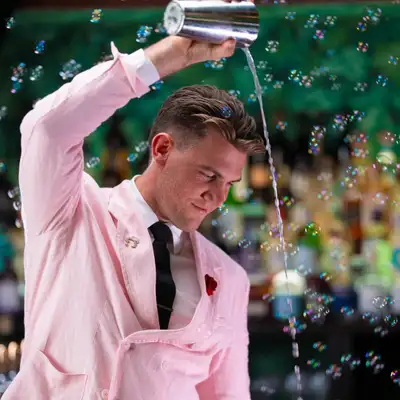
Chris Maffeo:In in this in this in terms of education, what do you think, you know, like, we met during a guest shift, you know, at in at Mirabar in Bratislava. Mean, it was a the the the closest experience to maybe Sammy that I got was, you know, the maybe Sammy takeover at Mirabar with with your with your with your pink and and bubble, you know, and bubble pistol. How do you call it?
Hunter Gregory:Pistol. Pistol. Yeah. So
Chris Maffeo:what do you think is the role of guest shift in this in this elements of, you know, like learning and spreading knowledge to around the world?
Hunter Gregory:So you said it before in terms of guest shifts seem to be a little bit, you know, brand managers, other bartenders, and industry exclusively focused, let's say. And, you know, I definitely can sometimes feel that there's potentially too many events going on, especially when you look at sort of different pockets around the world, and they're not really creating any value for for anyone really. They're sort of just bringing, two friends from a different city to another bar, and, you know, those friends from two different cities get to meet up and they get to spend 3 or 4 days together, and then they fly back and then they do an exchange where the other bar then goes to that bar. And I feel like these sorts of things are a little bit overused and something like Mirror Hospitality Expo where we met or for instance even the maybe cocktail festival that we do, a little bit more driven towards community in a different way. Like, it's not just like, hey, you're my bro or you're my friend.
Hunter Gregory:I'm gonna invite you over to my city. We're gonna hang out for four days. We're gonna party for four days, and then you're gonna fly back home and be like, Sydney is great. Building a bit of a community, for instance, we had a great fun time in Bratislava, but to showcase, you know, Slovakia even or to Bratislava, the the the the Sydney bar that, you know, maybe they've heard of, maybe they haven't heard of. The whole idea of that event for me was basically just to bring as much energy to that room as I could so that everybody in that room was having the best time possible so it was reflected well for Miro Hospitality Expert.
Hunter Gregory:Wasn't necessarily to represent maybe Sammy well because maybe Sammy sort of represents itself in some in some way, But, you know, to create an experience for the guests of the bar that night, I hope they will never forget because I I felt like it was a pretty magical evening. But to do that in collaboration to promote Mural Hospitality Expo as well, think is sort of off that. And if you think about other sort of guest shifts that are bringing people from bar to bar, and it's a really small sort of thing, or maybe let's say it's a quiet bar into another quiet bar or a big bar even into a quiet bar. Let's say someone on a 50 best list is going to somebody else's bar that's sort of completely off the radar. Like, it can sometimes be a little bit missed, the opportunity of showcasing your own bar, but you're trying to create an experience to to the guests there.
Hunter Gregory:And, you know, guest shifts are trying to create as close a theme as you can without moving the whole bar, you know, there. And I think some places are doing it really well. Some brands are doing it really well and sort of taking that opportunity to showcase to people the fun, I think. But in terms of consumer education, I don't think that that is the right attitude in terms of teaching people about that different cocktails and different things. Like, that sort of that sort of event is for people to remember whatever it is that they want to remember or maybe not remember depending on how much alcohol they've consumed.
Hunter Gregory:But that that the goal of that event is to to create, let's say, a curiosity in cocktails. Like, all of these people are inside the room. They're all drinking cocktails. What the fuck are these 75 bartenders from around the world doing in this random hotel in Bratislava? Like, what the fuck are they doing there?
Hunter Gregory:And then everyone's like, oh, this Mira hospitality expert thing is going on. It's like, oh, shit. I heard about that. What is this? You know?
Hunter Gregory:And that curiosity then sparks. And then all of a sudden, they go back to Mira hospital Mirabah at a later date, and they get to enjoy, you know, the hospitality from them. And, you know, maybe next time they're traveling out of Vataslava and they're flying to Prague, let's say they're stopping in at Almora and having a drink there, you know, because they were at they're a hospitality expert. So it's sort of this like it's a bit of a it's a bit of a game where without that fun and without that guest shift, you don't create as much curiosity, let's say. But it's sort of like it's a weird triangle, you know.
Hunter Gregory:If without the fun, you don't get that curiosity, but without the curiosity, you don't get the education. So it's sort of like, you know, if you don't have all three points of the triangle, then, you know, all of a sudden it's a bit it's a bit hard. But I think there's I think maybe Sammy might be a great example of sort of bringing those three points together. You know? It's a it's a fun bar that creates curiosity, then that curiosity makes people come back, and then they learn from us.
Hunter Gregory:And then, you know Yeah. It's sort of and then they have fun again. You know what I mean? So that triangle sort of is creating. I I agree.
Hunter Gregory:I agree.
Chris Maffeo:It's it's also the fact that, you know, if you are, if all the bars around the world, I mean, let's let's take 50 best bars like as a as a category just for for the sake of calling a group of of bars, you know, by doing these guest shifts, then each of them is kind of like for a day, for a night, educating also the the crowd of that guest bar, you know? So I'm, you know, I'm in a way like I'm if if I'm coming now, obviously, I wouldn't be my my gear because I cannot do bartending. But, you know, if from my hypothetical bar, I come to maybe Sami, then all of a sudden the people that the regulars of maybe Sami that are interested into seeing me, they see another crazy man, you know, from around the world that is doing innovative things like you guys are doing. So all of a sudden they think, okay, these guys are not alone in their craziness and in their bringing and breaking the boundaries of cocktail culture. There's a full on, you know, society of people doing that.
Chris Maffeo:So in that sense, you know, like your persistence and consistency and and your effort is complemented by a guest shift. But then if you if if you if you if, as you said, you know, if you take it as a if that guest shift is too kind of like serious and to let me talk to you about how I fermented this and, yeah, and infused and rotavapt, and I cooked it for two days and whatever. Then all of a sudden, it's like, yeah, but I just came here for a drink. You know? Like, I didn't come here for just to speak to you.
Chris Maffeo:So so this is the this is the element of and in that in that sense, I'm always stressing the fact that when I go to a guest shift, I don't see enough, for example, brand managers from companies, from spirits companies going to these venues. And I'm always saying whoever I'm working with, I said, you have to get the hell out of this office and you have to go to visit some bars because if you do it right and you take some nice photos and you can promote that on social media where it's allowed and so on, that's the way you spread cocktail culture. But if you stay in your office, you don't go to those guest shifts or those enormous opportunities to to learn and events. Then all of a sudden, you know, no ATL, no, you know, ads is ever going to scale cocktail culture because it's just going to push a message of a brand of a random brand and and not, you know, improve cocktail culture as as a whole.
Hunter Gregory:Yeah. No. Absolutely. I think I think in terms of seeing brand managers and these sorts of things in are these sorts of people in these sorts of guest shifts, There's definitely people that put different emphasis, let's say, on their showing face, let's say, you know, like guest shifts that happens, let's say, in Canberra organized by a brand. Let's say maybe Sammy's doing a guest shift in Canberra, and then you go to that guest shift and you don't meet anybody from the brand while you're there, and then you come back to Sydney and you're like, okay, well, I don't really know why I did that event, you know, like we didn't there was no networking, nobody enjoyed our drinks, like what what the hell did I do that for, you know?
Hunter Gregory:To some degree, I think, I think that generally speaking, there's a really amazing community in the in this scene, and there's a lot of people that are trying to make it better and a lot of people that are trying to make it a little bit bigger. And I think I I guess Shift is the one of the more important parts in this trend that sort of came out of somewhat somewhat nowhere. But I think to some degree as well, it's being a little bit overused, you know, bars being consistently on the road traveling to all these different cities. You know, how we we say, like, you can't have the the pie on top of the cherry sorry, the cherry on top of the pie without the pie. You know what I mean?
Hunter Gregory:So maybe Sammy's our pie. Our pie has to always be there. Pie always has to be great. And if you came to maybe Sammy for an experience of maybe Sammy, the idea is is that the pie is always fantastic. But when you do a guest shift, it's the cherry.
Hunter Gregory:You know? It's a cherry on top. So for instance, it's just a little taste of what you would get at Maybe Sammy. So it's a sort of sort of put it into perspective, like, without and then, you know, these these events also change, you know, like, like, Mira Hospitality Expo was an amazing an amazing event and an amazing sort of community that Stem and the guys from Miro put together. But in addition to that, you know, like that cherry that we did that for me for instance, me as an Australian going to Bratislava, enjoying a whole different culture with a whole bunch of Slovakians, that I've seen around the world many times to sort of and that that was that was for me, that was the cherry, but as a maybe sounding perspective as well, that was a cherry.
Hunter Gregory:So, you know, you have to have the whole pie go. You have to have to focus on the bar before you can have the the guest shifts and these sorts of things. And the worst part is when you go to a bar that you're really excited to go to, it's on the 50 best lists. You've been you've been to their guest shifts, and their guest shifts are amazing. And finally, you're in their city, and you go to their bar, and it's just like, ah, okay.
Hunter Gregory:That's on the side. You know what I mean? That happens. Like, it's it's of course, not. You don't have to tell me for sure.
Hunter Gregory:Happens. You know? And then, you know, it's even happened for for people that have come to maybe Sammy, unfortunately. You know, we've received the feedback of, like, I was really excited to come to your bar, and, you know, it's not necessarily that the bar is bad now or was bad back then, but you maybe it was just an off night, you know, who knows. But, you know, it happens to all of us.
Hunter Gregory:But creating this sort of guest shift sort of hype, you know, there's definitely value, I think, and lots of scalability and allows people from all around the world to sorry, from people allows people in your area to to experience drinks from all around the world, which is great. But as well at the same time, like, there's nothing quite like instead of trying the drinks from drink Hong, you know, for instance, like, I prefer to go to Rome, you know, and try the drinks instead. You know what I mean?
Chris Maffeo:Yeah. It's it's, you know, it's it's as as you said, I mean, it's like it's trying trying the the the cherry, so to say, and then you may be, you know, interested in in in in in the pie. Sometimes the pie
Hunter Gregory:is good. Sometimes it's maybe shit.
Chris Maffeo:That's that's a that's a fantastic way to wrap this up. I I don't want to steal more of your time. Thanks a lot for for being a guest here and for sharing your knowledge, Hunter. I hope to see you soon somewhere, maybe at Miraban next year or maybe at maybe in Australia. You never know.
Hunter Gregory:No. Thanks thanks so much for having me. Been fun. I I think I think I'll be back in Europe in October, and then hopefully there would be some more time frame later in the sorry, November. I think I'll be back.
Hunter Gregory:So then I think that there's something organized for Prague at some point next year, but it's super unconfirmed. I don't think any conversations have been too too much said, let's say. But, yeah, I'm sure we'll see each other soon, bro. Thanks so much for having me on.
Chris Maffeo:Thanks. Thanks, Senthil.
Hunter Gregory:Ciao, brother.
Chris Maffeo:That's all for today. Short analysis of this episode. You can get more of it at mafayerdrinks.com. But the first points that I want to make here are, you know, I really enjoyed the chat with, with Hunter in a, you know, a very young bartender that is actually quite seasoned for, for his age. You know, how they are using, for example, the mini martinis in the happy hour to to bring people on a journey to then enjoy more complex kind of cocktails.
Chris Maffeo:We talk about the scene, and we understand how not on not just because Sydney is an international city, we should take for granted that people have got, complex palate. You know, the majority of the people would still be not yet cocktail ready for the more complex flavors, but there is a plan and there is a journey to bring them on board and widen that that market. What I also enjoyed a lot was this example of the pie and the cherry, you know, you cannot have the pie without the cherry and the fact that guest shift in this case are the guest shift where you can get glimpse of what the experience in a bar could be, but actually you need to go and visit the bar and you need to ensure that that bar has a consistent and solid, way to deliver to the guests. We also talked about the element of, you know, balancing experience, techniques, environment, and so on. This episode is also a reminder for myself in Primis, but also for for you as a listener of the need for consistency and persistence.
Chris Maffeo:You know, he he discusses how back in the days, you know, when they opened maybe Sami, people were not ready for certain types of cocktails, but they managed to bring them on board with small, tastes, you know, like the the mini martinis as an example is a is a great way to actually bring someone in, you know, with a fantastic experience and, ensuring that then they get interested into, trying new new things. If you want to have a more thorough analysis, you can subscribe at mafeodrinks.com where you can get an epis a full episode deep dive of this episode as well as the previous ones and the future ones where we go in full analysis of what was discussed and how you can benefit, whether you are a brand owner, a brand manager, a bartender, or anybody who's interested into this beautiful drinks ecosystem. If could think of a couple of people that would benefit from this episode, please share it with them and remember that brands are built bottom up.
Creators and Guests