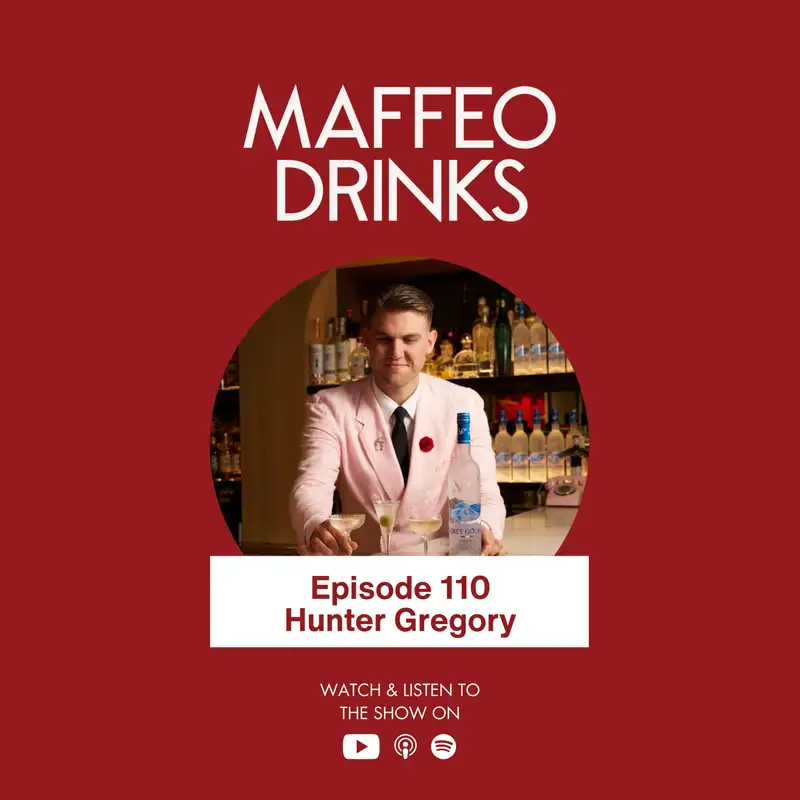
How Intimidating Menus Keep Cocktail Culture Niche (Insights from Hunter Gregory from Maybe Sammy, Sidney) | 110
Summary
In this episode of MAFFEO DRINKS, host Chris Maffeo speaks with Hunter Gregory, Bar Manager at Maybe Sammy in Sydney, Australia, about scaling cocktail culture beyond the usual suspects and making premium cocktails accessible to everyday drinkers. The conversation explores Sydney's cocktail scene positioned "10 years behind London" despite having quality bars that rival global standards, but revealing how average consumers struggle with understanding enhanced cocktail experiences just like other cities. Hunter shares the origin story of Maybe Sammy's transformation from a serious hotel-style bar to an energetic showmanship destination when founder Stefano Catino bought a bubble gun from Kmart and decided "f**k it, let's have some fun." We examine the strategic use of mini martinis during happy hour as a trust-building gateway that gradually brings guests on a cocktail journey from classics to experimental drinks like milk-washed Negroni, Americano with Vegemite macadamia milk. The discussion covers how Asian cocktail trends increasingly influence Australian bars as European bartenders migrate eastward, the philosophy of "your guests are not always right, but they're always your guests," and why the shift from serving gin and tonics at 10pm to serving complex cocktails throughout the night represents six years of earned trust. Hunter provides insights on breaking down intimidating cocktail menus, managing consumer expectations around "serious" bar environments, and understanding that people seek experiences that make them feel better rather than just drinks. Timestamps: 00:00 Introduction: Scaling Cocktail Culture to Wider Audiences 02:15 Sydney Cocktail Scene: 10 Years Behind London 06:30 Australian Drinking Culture: Amazing Bars vs Everyday Pubs 09:45 The Demographic Challenge: Experience vs Getting Drunk 13:20 Asian Influence on Australian Cocktail Trends 17:40 Maybe Sammy Origin Story: From Stuffy to Fun 21:25 The Bubble Gun Moment: Breaking Hotel Bar Barriers 24:50 Show Business Philosophy: Serious About Craft, Not Ourselves 28:10 Mini Martini Strategy: Building Trust Through Happy Hour 32:15 Guest Journey: From Classics to Experimental Over Six Years 35:40 Wrap up: Making Cocktail Culture Accessible and FunThis is Maffeo drinks.
Hunter Gregory:So at the beginning of the day, we always have had a happy hour where we sell mini martinis. And, basically, we wanted to sort of showcase to the people of Sydney that martinis aren't scary, that martinis should be enjoyed. And if they're enjoyed in small amounts, they're always cold. And if they're always cold, they're always cool.
Chris Maffeo:In this episode, I welcome Hunter Gregory, the bar manager of Maybe Sammy in Sydney, Australia. We met with Hunter at the Mirror Hospitality Expo in Bratislava in May, where he was, hosting a guest shift, from from his bar, maybe Sami, as part of the the three days expo. With Hunter, we talk about the the Sydney and Australian bar scene. We then talk about how to connect and scale cocktail culture to people that are not usually acquainted to to drinking cocktails and spirits in general. And, we talk about you know, he has great examples about for example, he talks about how they manage to bring people on board when they are visiting the bar, and they may not be keen to have certain types of cocktails.
Chris Maffeo:And how do you bring them on a journey in order to, to do that? We have an interesting discussion about how to to bring cocktail culture to a wider audience for people that may not be keen to to try and experiment cocktails, and they usually default back to the regular beer or a spritz or a gin and tonic and how to bring them on board. I don't want to spoil more of this episode, so this is the perfect episode whether you are a bartender just starting or a seasoned bartender or a brand manager that wants to understand how to work with bars and, and how altogether as an industry, we can actually scale cocktail culture and and and the bar culture. Let's dive in now. Hi, Anta.
Chris Maffeo:Welcome to the Maffeo Drinks podcast.
Hunter Gregory:Thank you. Thanks for having me. Thanks, Legends.
Chris Maffeo:So let's let's start. I mean, we met we met at, in Bratislava. Thanks to our friends, Stan and Peter at the Mirror Hospitality Expo. We started chatting there, and and, you know, you were telling me some stories. I saw you in action.
Chris Maffeo:I saw how you, you know, brought, you know, energy to the room. It was, like, insane. And I and I thought, okay. Like, I must have Hunter on the show, and, and we we must we must talk about all things spirits and and caucasus culture.
Hunter Gregory:Let's do it. Let's not, waste a second. And thank you. I don't know if I how much energy I brought. The energy was already sort of in that room.
Hunter Gregory:Everyone wanted to have some fun that evening.
Chris Maffeo:That's fantastic. So that so tell tell me, I mean, I I haven't had for quite a while, you know, people from, from Australia. So let's, let's talk a little bit about the scene, you know, in Sydney, Melbourne. How how's the how's the cocktail scene and how does it compare to other cities in, well, in Australia first and then in the region and and elsewhere?
Hunter Gregory:Well, let's let's sort of start with with Australia. Australia's drinking culture, I guess, could say is say up and down. You've got sort of the two extremes and nothing really in the middle. You've got amazing cocktail bars doing great things, and then you've sort of just got like the everyday pub and these sorts of these sorts of style of venues that people are enjoying their time at which is great. In terms of cocktail scenes, there's definitely some hot spots in every city around Australia.
Hunter Gregory:I was lucky enough to go to Adelaide and Melbourne in the last sort of six months or so, and there's definitely some amazing venues in both cities. Sydney overall, you know, has its good spots and its bad spots just like every city. But look in all honesty I think the amount of quality spots in one city is you know it's still lagging compared to somewhere like London, somewhere like potentially New York, I've never been so anybody listening to this wants to bring maybe Sami to New York, please bring me there. But, compared to these sorts of cities, you know, these big global cities, Australian capital cities are a little bit further behind.
Chris Maffeo:And and so how, how does it work in in terms of, let's say influence? What I I mean, coming from my Italian background or let's call it European background, I always see cocktail couch in cocktail culture, there's, of course, there's a big play of the Italians, obviously. But but it's a very
Hunter Gregory:Just a little bit. Just a little bit.
Chris Maffeo:But it's a very Anglo Saxon, driven culture. Now I I see that the brands are you know, the trends are usually coming, you know, New York, London, you know, Sydney as well. How does it play in kinda like influencing each other and, you know, what is what would you say it's Australian native in terms of trends and, and and what is actually brought in from abroad from other other culture working there?
Hunter Gregory:Okay. Look, I think I I think from my experience in the last eight years, I've been in hospitality for eight and a half, almost nine years. And for me, saw like the big trends. Yeah. Let's say coming from London and New York that sort of time period ago.
Hunter Gregory:But in all honesty, I think that at the moment of you see a lot of Europeans in particular moving to different parts of Asia and taking, let's say, that that old school London's New York approach and opening it sort of in Asia with the I think that there's a bit of a stronger, let's say, technique driven style of drinking in Asia where more vertebrates, more centrifuges, more more time spent creating drinks behind the scenes that they're now sort of combining those two worlds together. A lot of the trends that we're that I'm seeing, let's say, are coming from Asia. But again, if you sort of trace them back, you know, there's definitely some pioneers at the moment in in creating these trends. But I don't think that they're necessarily still in London and New York. But maybe originally they were there, but, you know, I think like even like with Simone Caparale starting from London and now in and now in Barcelona, you know, there's a really amazing team there.
Hunter Gregory:But then if you think about someone like Lorenzo Antinotti that started off in London as well and then or now he's in Hong Kong and he's been in Hong Kong for a long time, You sort of see that sort of transition that I think those those people are sort of coming out of those big cities and opening up new venues and pushing the boundaries and creating these trends in different parts of the world now. But I think for us in Australia, we're seeing a lot of influence from different parts of Asia, which has been really cool. But also our a lot of our demographic, especially maybe Sami is quite Asian focused. We have a lot of guests, especially from China. And I don't know if it's something that's attached to this list or if it's something that's attached to, you know, just at the our geography.
Hunter Gregory:You know, China is not that far away, and in all honesty, I've been to China three times in the last twelve months or so, and they're, they're pushing, they're trying to push the boundaries there as well. So, we're seeing a lot more trends from Asia than the big cities, but I think that those trends coming from Asia, some of them are definitely coming from bartenders or bar owners that are coming from Europe and, The States. I'm moving this way.
Chris Maffeo:I like it. And what what what I what I mean is in fact that there's always, you know, I'm always talking about building brands and and there's always this kind of like disconnect that I see between the big multi net, you know, the big international cities or the big international hubs like Sydney would be, you know, London, Paris, New York and so on, L. A. And then you put Asia, you know, Singapore, Hong Kong, Beijing and so on. And the rest of the world, which is kind of like I don't want to call it second tier, but you know what I mean in the sense of internationality of the of the scene.
Chris Maffeo:I mean, even even if I take Prague as an example, it's a it's an international city, but it's a it's a very local, kind of scene, you know? So very, very often I see that, for example, when I'm working with big brands and they talk about, drink strategy and, you know, kind of like hot cocktails, you know, like which cocktails are, you know, we should push and so on. There is this kind of disconnect that is a very kind of London based or New York based headquarter that see things from a totally different perspective because they may have so many bars in which those cocktails are trending. While if you take a norm normal random city, in in a nor I mean, which is probably even having, a million people in it or or or just just less. Yeah.
Chris Maffeo:You know, the the the development of the cocktail scene and the cocktail culture, it's is not that, well, it's not that developed. So we're good.
Hunter Gregory:Sorry. The dog's barking. People have been This saying is the
Chris Maffeo:this is the this is the beauty of this. No. So I was saying, you know, there is a kind of disconnect between these top end bars and top end cities, I would call it, you know, and there is a bit of a scene there while when you'd say you mentioned it in even in Sydney, you know, like the the pub down the roads and the, you know, the local where people are gonna go for a beer, you need to bring them in Yeah. The journey of drinking cocktails.
Hunter Gregory:I think I listen. I think in terms of Australia, Australia is really good at having spots that are keeping up with global trends, but the demographic here isn't ready for those trends to sort of arrive. I've always said that Sydney is probably ten years behind London. There's spots that showcase the best parts of London. You know?
Hunter Gregory:I think, like, there there's some amazing bars in Sydney per se. I think, like, Bar Sumi, which is a brand new opening in the last twelve months or so, is doing an amazing job of bringing that sort of like old school London, New York, even Japan sort of drinking style to the demographic of Sydney. But generally speaking, like if we were to do let's say an Essentia experience from Sips but at maybe Sami or even a an off brand of maybe Sami people would be leaving the experience being like I'm not drunk I don't know why I did this sort of experience to go drinking and I'm walking out as the experience drunk. It's sort of like when you eat a fine dining restaurant and you eat McDonald's on the way home. Sort of like the same sort of thing, you know, like I feel like if you go to Essentia and you're there for the experience and like for for myself, I was lucky enough to do that sort of experience.
Hunter Gregory:And, you know, we left that experience and if we had just been at that one experience, we probably wouldn't have been drunk, but we were, you know, we did sips beforehand and then we did foco after, but that's a different story. But if Australians generally speaking went to do that experience and that was their that was their experience instead of doing, you know, a pub crawl or a cocktail bar crawl, they went to just go see that part of the bar and they had nine small tastings and they left the experience not drunk. The Australian demographic would be like, I'm never going back there. I there's no reason for me to go back there. I just paid all that money for all of those cocktails and I'm leaving like still sober.
Hunter Gregory:So in these sorts of ways, we have places like I don't want to say us, but, you know, we've got caretakers cottage in in Melbourne that's doing amazing stuff. There's some amazing amazing stuff going on in Melbourne. Some sort of hotspots would be, let's say, like Gimlet as well. There's a little hotspots, let's say, in Brisbane, and there's definitely some good ones that I've been to in Adelaide of recent that are sort of trying to bring the new and current sort of trends to those cities. But I think even those cities would be even maybe not Melbourne, but probably Adelaide and Brisbane are probably even further than ten years behind.
Hunter Gregory:And I always grew up in an area that's about one hour south of Sydney CBD, and that area is like, let's say another five or seven years behind Sydney CBD. Like if we were to go there, it's just like passion fruit caprioscas and, and the worst espresso martinis of all time, which is fine. They're great drinks, but, you know, I feel like it's uphold a little bit.
Chris Maffeo:But this is, this is super interesting because this is, you know, what I'm, what I'm hearing from you is the, is the fact that actually, you know, in, in the world is very much like similar at the end of the day, you know, like you always have this kind of hubs in the city, wherever city it is, you know, no matter how forward thinking and advanced that city is in terms of trends. But then, you know, you probably go around the block and, you know, and it's still kinda like, you know, you you go you go you go with it.
Hunter Gregory:Exactly the same as it was twenty years ago. And yeah. No. Look. I think I think Australia general speaking, like, there's there's hotspots that are keeping up with the trends and, you know, setting trends and these sorts of things, and those are evident because, you know, maybe Sammy's been on the the the list for a couple of years.
Hunter Gregory:But and then, you know, Caretaker's Cottage has just beaten us for best buyer of the region, which is amazing. So there's obviously other people that are pushing the boundaries if measuring against that list, let's say, especially on a global scale. But, you know, outside of those sort of hotspots, you know, I think I could probably name maybe five or six bars in Sydney that aren't on that list, but should be, you know, still pushing the boundaries and still creating trends. But overall, we're all sort of limited by the demographic here being like, I'm not paying for something that I don't see the value for and the value for us creating an amazing experience, but the consumer not getting what they sort of want to consume, you know, is we're a bit limited there.
Chris Maffeo:And what what do you think because this is a very interesting conversation. The what do you think is the reason apart from what you said about, you know, the the the alcohol content and so on. But is there also an issue with, let's say, not speaking the same language with these people, you know, apart from the ABV angle. I wait.
Hunter Gregory:No. No. I got you. I got you. In terms of, like, I think that it just comes down to, people sort of set in their old ways, you know, like, for instance, even a paint and sip class, you know, right now has been quite a trendy, let's say date, been something that friends do together and these sorts of things.
Hunter Gregory:And ten years ago, if somebody had told me, hey, we're gonna go to a paint and sip date, I probably would have been like, I don't really want to do that. That doesn't seem like something I would want to do. So people sort of said in their old ways and then eventually they catch up, but I think like, the major sort of hubs, you know, are sort of let's say, ground zero for these trends, and then they sort of filter down depending on the city. Like we say Sydney is like a city similar to, you know, it's a global city in terms of global sort of things. Let's say Sydney compared to some other city that has a a larger conglomerate amount of people.
Hunter Gregory:Let's say that it's very very different. Even though that we're on the same level globally speaking, we have an we have a bit of a lack of, let's say, people to come through. And I think that that's the only reason that separates the bigger cities from us in terms of Sydney because there's just so much more foot traffic. There's more people to come through, more people who can go to more bars and in turn you can have more bars with a premium sort of offering because there's more people to go to there. But at the same time, the demographic, if if we had 10,000,000 people here, I don't know if the drinking culture would change as fast as, let's say, London or New York.
Chris Maffeo:And there there is that element of footfall that is probably right. You know, the you know, when you take a normal city, the sometimes there isn't too much offer for for the demand, you know, of that city. So ultimately, you know, to make cocktail culture and, you know, brands grow, we need to kind of enlarge that footfall, you know, with the we need to enlarge that demand and that that pond of, people that are going to willing to do that. Of the things that I was discussing with a with a with a previous guest, Federico, he's actually worked in, in Australia as well. We we were talking about Cool.
Hunter Gregory:As every every Italian every Italian's working in Australia almost. The working holiday be easier, then they go somewhere else.
Chris Maffeo:And, you know, we we were discussing the I mean, he's quite a lot older than you. So he was talking about how he was in the late, you know, the late nineties in London, you know, when the cocktail renaissance, was in in full swing. And he was mentioning something about the, you know, the focus on the customer experience and the energy of the room and so on together with, you know, pouring drinks. And then with the focus of today that he's he notices that there is a lot of focus on techniques. And and what I was discussing with him was like, okay, sometime when I go to bars, to this top end top end bars, I I feel the the atmosphere is a little bit too austere for me.
Chris Maffeo:No? It's a little bit too serious. And, you know, there's there's rules and there's, you know, there's the you know, I'm handed the menu with the rules of the bar and, you know, all these kind of things. And I'm I understand what he was saying. No?
Chris Maffeo:And when I whenever I see I mean, when I've seen you in action, it was a mini maybe Sami, you know, in Bratislava when I when I when I saw you there for, for a couple of hours, and when I see, you know, the the the the the Instagram videos and I see you in action, like, you know, the vibes and the energy, I see I've never been to maybe Sami, but I can see what you know, it transpires. I'll I'll come. When you invite me, I'll come.
Hunter Gregory:One day. One day. When I when I get the opportunity to invite people, I'll I'll invite you.
Chris Maffeo:You know what I mean? Like, the you know, how, you know, isn't that seriousness and that kind of, difficulty to comprehend the bar invite a serious bar environment playing a role in actually not having enough people entering the scene and entering the understanding of of a new modern cocktail culture?
Hunter Gregory:I think look, in all honesty, think that, Stefano and the boys that opened Maybe Sammy did a really amazing job of trying to break that barrier down. I'm very lucky to have worn to many cocktail bars now around the world, and there are definitely some and there's definitely hotspots where it feels a bit, let's say, stuffy. You know, the whole idea of maybe Sammy was sorted to create a hotel bar in Sydney that was rivaling the big hotel bars at the time in London and New York. The only difference was that Stefano didn't have the budget to open a hotel. He only had the budget to open a cocktail bar.
Hunter Gregory:So he decided to open a hotel bar without a hotel. So maybe Samuel was opened and operated like for four or five maybe six weeks like a five star hotel cocktail bar, you know, a bit stuffy, taking everything very seriously and these sorts of things. And then Stefano decided, he said, fuck that. I hate doing this. This is this sucks.
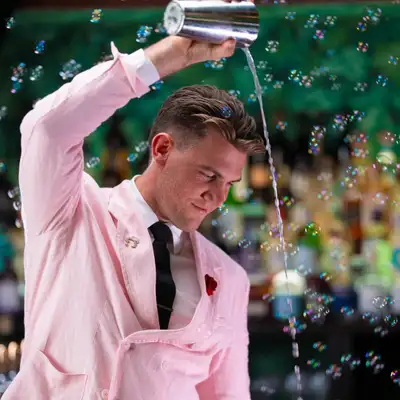
Hunter Gregory:I don't there's no soul here. There's no feeling like, let's do some fun shit, you know. Let's do it. So then, you know, the next day he went to Kmart and bought a bubble gun and then, you know, you had bartenders behind the bar being amazing. The opening team and maybe Sami was less some would say an all star cast, especially in my opinion.
Hunter Gregory:And then, you know, we have three amazing bartenders behind the bar, an amazing support team behind barbacking, and then then a fantastically well respected floor team. And then Stefano at the door and everyone, you know, making three drinks, you know, making drinks super beautifully. And then Stefano sort of felt there at the door, you know, a bit bored. She was like, fuck it. I'm gonna buy this bubble gun.
Hunter Gregory:So he bought the bubble gun and started running up and down the Barb Lane bubbles, and then all of a sudden everybody was like, well, this place isn't as stuffy as I thought, you know, so fuck it. Let's have some fun. And and, you know, so after six and a half years of that idea sort of evolving, we are where we are now. But the whole idea of it was to sort of, you know, take ourselves take take what we do really seriously, you know, the mise en place, the preparation of the drinks, everything up until what we call showtime, which is the time we sort of open the doors. And once we open the doors, you know, that's the point where we take what we do very seriously, but we don't take ourselves too seriously at the same time.
Hunter Gregory:You know, taking on that that concept of show business, you know, being sort of a combination of two words, And, you know, you come to a bar for the business of making the drinks and enjoying drinks, but then as a as an extra element, maybe Sammy offers that show. You know, that's sort of the energy that I guess you felt in the room maybe in Bratislava in terms of I'm making drinks. I'm here to showcase to you our drinks, but I don't want you to only focus on the drinks because the drink is only part of the show, you know. That requires that's the business element, not the show part, let's say.
Chris Maffeo:And this is fantastic because this is exactly what I I I didn't know the full story behind it. You know, how it started and how how it's starting, how it's going kind of thing. But it's very it's very interesting because I feel that that is exactly what many bars are missing at the moment. You know, there is that element of fantastic drinks, a fantastic experience, but you must have a kind of like an, entry point for consumers and maybe, you know, for for those peep you know, for those people that are not that much into serious cocktails, so to say, you bring them in with the action
Hunter Gregory:I think
Chris Maffeo:at some point.
Hunter Gregory:I think I think in addition to that, like, in all honesty, like, I love cocktails, and and I only really drink cocktails at sort of key spots in Sydney, but also as a wider conglomerate generally when I'm on the road traveling. I don't really drink cocktails too often in Sydney just because I'm always sort of let down. You know, you go to a local pub and, you know, all of your friends around the table are saying, let's have espresso martinis on a Saturday afternoon. You're like, well, I don't actually drink espresso martinis on a Sunday afternoon. I should say Sunday afternoon.
Hunter Gregory:And they go, let's have some around an espresso martinis and you're like, you know, I actually don't want to have a shit espresso martini and pay, you know, 20 AUD for for a shit espresso martini. I prefer to just have a beer and enjoy that sort of thing. So I mean, like, the the I feel like the thing that people are going for more so now is experiences. I feel like everyone can sort of you know make a great drink. I feel like everyone can sort of create the right vibe but the difference is how you make people feel you know so in terms of if they walk away from that experience feeling like a little bit better about themselves or a happiness in some sort of way, that from us is probably the most important thing.
Hunter Gregory:You know? Somebody might come in having the worst day possible, but when they come to maybe Sammy, they're gonna leave in a in a better state than when they arrived. Whether they're super happy or not is up to them, but we're gonna try our hardest to try and change their day in whatever way we can to, achieve that goal.
Chris Maffeo:You know? And this is this is also connected. I mean, I'm I'm pretty much similar in that respect that, for example, even if I take food, you know, I'm always arguing with my wife that, you know, when we go to a I don't know. I say, I want to have a burger. And then she says, let's go to a burger place because I know that I'm gonna get a good burger.
Chris Maffeo:And then she goes like, no, I don't feel like burger. What doesn't I don't know what we're gonna have. And then we just like, whatever, choose another spot. Then at some point, she spots the the bloody burger on the menu and she orders the burger there. No?
Chris Maffeo:And then I I went for I I don't know. Maybe maybe we go for a pizzeria that is happening to to make burgers. And then, you know, because we decided to have pizza, then she bays out from the pizza, and she says, I'll have a burger. And I said, fuck. You know, like, why the fuck didn't we go?
Chris Maffeo:Yo. You know, I wanted to go to a burger place where we would get a proper burger. Now we went to a pizzeria, which happens to make shit burgers, but great pizzas just because they want to enlarge their their offer. And and this is exactly, you know, like, how do you manage in you know, if you translate that into, cocktails, that's exactly what the issue is now that, you know, there's there's too many, let's say, pubs that are doing kinda like very basic, I don't wanna call them shitty cocktails, as I'm not a bartender. I don't wanna pick them.
Hunter Gregory:They're they're doing they're doing they're doing the classics. They're doing the classics for the, for the majority of people are not well enough that people aren't asking for their money back.
Chris Maffeo:But but That's
Hunter Gregory:what they do.
Chris Maffeo:But the issue with that is that how to bring and, you know, we're not going to save the world to the the save of cocktail culture today in in this episode, but
Hunter Gregory:We're gonna save the world with good cocktails for sure.
Chris Maffeo:For sure. Like, if there is a way to to scale that culture because those people that you that I mean, imagine you are a professional bartender and you have that take on a shitty espresso martini that you would get, you know, elsewhere. So imagine the random Yeah. Average Joe that never goes for cocktails that they that you managed to kind of, like, kidnap him and bring him to a bar and make him have a cocktail instead of a beer. Basically, that's a one once in a lifetime chance to turn that person into a potential cocktail drinker.
Hunter Gregory:I think, like, in terms of this, it's definitely hard to sort of earn trust, especially at the beginning. Like, we have a we're very fortunate at Maybe Sammy that we have a lot of, let's say, turnover of guests, and the turnover of guests that we have are generally either tourists or people that have come before and know what to expect. So we're sort of situated between three hotels. So those hotels are also let's say some of the more everyday premium sort of hotels. So we get a lot of people that are coming through Sydney to go somewhere else or to enjoy Sydney and we're basically the closest bar to them.
Hunter Gregory:And at the same time, if you sort of Google cocktail bar Sydney, maybe Sammy's generally one of the first ones to sort of pop up. There's nice reviews and people people seem to like us, which is great. But, you know, developing that that trust and breaking that that distrust that they have with every other bartender is a little bit different. It helps when, you know, your normal bartender that's making an espresso martini at the pub is wearing a t shirt and a green apron. And when you come to maybe Sami, I'm wearing a full suit with a pink blazer.
Hunter Gregory:Like, there is a little bit of a difference there. People tend to trust people that book reasonably. You know, breaks down that barrier a little bit easier. But we definitely have people that come in that are scared not not scared, but hesitant, let's say, to try cocktails or to try our cocktails and, you know, even they order, you know, a margarita, a classic margarita or classic espresso martini. But, you know, at Mibi Sami, we have the the philosophy of your guests are not always right, but they're always your guests.
Hunter Gregory:So it doesn't matter if they want a gin and tonic. They want a gin and tonic. So let's make the the best gin and tonic we possibly can make for them. And the same thing happens for our classics. The same thing happens for our cocktail program and even for our food.
Hunter Gregory:You know, people are trusting their night with us, so we need to be giving them the best experience of whatever they want. If they want a lychee martini with with gin instead of vodka and, you know, they they they want this, it's okay. We're gonna make the best lacin martini with a gin base that we possibly can. Just so they order another one and we don't have to close the doors tomorrow. But, you know, apart from that, you know, we're trying to sort of make sure that everybody is is happy and enjoying the experience that makes sense.
Chris Maffeo:And this is this is also part of the conversation I'm always having about the the fact that the majority of I wouldn't I wouldn't call it the majority, but a big chunk of people entering a bar, like, you know, they handed over a menu with a cocktail program, and they don't even know that they can order something else. You know? So a lot of lot of people that I see when I when I go I mean, I was I was that guy, you know, a few years ago. And and at some point, you know, like, it happens very often to me that I go through the menu and I say, shit. I I don't I have no idea what to order.
Chris Maffeo:You know? Like, I I'm I'm quite a classic Negroni family type of, you know, bitter flavors.
Hunter Gregory:Shop. Shop horror. Shop horror. Italian that likes Campari and Sveggie, but
Chris Maffeo:And the the issue for me is very often that, you know, there is a I noticed that there is a kind of take on that menu. You know, maybe there is a lot of, like, citrusy elements or a little bit like a, you know, like or sours. You know, like, I I had this kind of, like, hot, you know, pinpoints on the menu that I read, I was like, no. No. No.
Chris Maffeo:You know? And then often, I don't know, or I feel embarrassed, especially if I go to a cool bar, you know, I feel embarrassed to say, can I actually have a Negroni? You know? Because I don't want to, I don't know, lose my face or whatever is like, oh, fuck shit. You know?
Chris Maffeo:I thought you were like a connoisseur and now you're gonna go for a very basic Negroni kind of thing. And, you know, it's it's very you know, there there is an element in having, you know, or managing to bring people on board when sitting at the bar? You know, like, how do you make them feel comfortable? I mean, you mentioned that, you know, the the fact that, you know, they may not be always right, but they are the ones who are paying and they're and they're they're they want to have that experience. And then it's probably up to you to understand, you know, did he or she order a gin and tonic because they got sort of lost in the menu and then they just went through, oh, shit.
Chris Maffeo:Yeah. Gin and tonic. You know? Or did they actually want to have a gin and tonic?
Hunter Gregory:We we're very lucky in terms of maybe Sami is a place where we've had a lot of time to sort of refine small details, let's say. Right? So at the beginning of the day, we always have had a happy hour where we sell mini martinis. And basically we wanted to sort of showcase to the people of Sydney that martinis aren't scary, that martinis should be enjoyed. And if they're enjoyed in small amounts they're always cold and if they're always cold they're always cool basically.
Hunter Gregory:That was the whole idea, you know, I think Stefano sort of maybe had seen these mini martinis in London on a trip before maybe Sammy opened and had maybe let's say borrowed their concept, But, you know, this idea was for it was for the people. Then, you know, maybe Sammy launched and it was launched straight into this sort of list, and the demographic that started to come were sort of everyday people, but these everyday people were the kind of upper, I wanna say, like, not upper upper class, but let's say upper middle class. So these people were the kind of people that would go out two or three or four nights a week after work. They'd all be working in the CBD. And, you know, these are the kinds of people that would be enjoying martinis on a regular basis.
Hunter Gregory:So these people were, you know, trying their martini and then, you know, somebody would say to them, why don't you try the martini twist on our menu? And then all of a sudden they trust us because the martini twist on our menu is actually good. So then from there they trust us a little bit more and they say, oh, I like gins. And then they try the gimlet twists, then they try maybe a tequila gimlet. They're like, wow, those are really similar.
Hunter Gregory:So let's try some other tequila cocktails now. And it goes like that all the way through, and we've had six and a half years with the same person, let's say, to all of a sudden they're drinking milk wash Negroni Americana with Vegemite and Macadamia milk, you know. That's the crazy thing that we've gotten to where we are now. But we also will see a shift in the kinds of drinks that people will be enjoying over the course of the evening. So at the beginning we have the mini hour, then we have the cocktails, and then from let's say 10:00 till 12:30, especially in my first two years at Maybe Sammy that was vodka, soda, gin, and tonic sort of hours, you know, sort of like an Italian restaurant after aperitivo finishes, everybody's just drinking gin and tonics.
Hunter Gregory:So that was sort of what we well, what they experienced during that time frame. And now we've sort of almost finished that trend and it's sort of being like and now we're serving our cocktails from 10:00 until we close. So people haven't stopped drinking our cocktails throughout the night, which is great to see, but it doesn't really it it didn't happen overnight, let's say. It was something it was trust that we earned, you know, it was trust that trust with the people around us and it's in all honesty, like, that sort of moment of when you walk into a bar and you're trying an experience sort of cocktail and the first experience isn't all that good. You're sort of like, okay, maybe I'll just have a classic.
Hunter Gregory:I mean, drink classic cocktails around the world and beers and these sorts of things. I try and enjoy different bars, a lot of programs. And some some people are doing some really, really, really amazing things around the globe, which is great, that I've seen. But, you know, sometimes you walk into a walk into Shanghai and you've just gotten off the plane and you're like, you know what I would really love right now? I just love a gin tonic.
Hunter Gregory:Like, can I get a gin and tonic, please? You know? And that's that's okay as well.
Chris Maffeo:And it's just I I mean, I I love to hear this because it's it, I haven't really seen it around, in in in this kind of, let's say, strategic approach, you know, through the through the evening. But I'm I'm I'm personally very much, you know, I'm I'm, you know, if you listen to other episodes, I'm always talking about target occasions, you know, I'm always talking about what is actually the occasion. It's not about the demographic much on who is drinking what. It's more about the time of the day, the occasion, the type of situation where I'm in. I always bring the example.
Chris Maffeo:You know? If my wife is having an apple Spritz, I may not go for a Negroni. I may go for an apple Spritz just because it's easy to say, make it two. That's all for today. Short analysis of this episode.
Chris Maffeo:You can get more of it at maffeirodrinks.com. But the first points that I want to make here are you know, I really enjoyed the chat with, with Hunter in a, you know, a very young bartender that is actually quite seasoned for, for his age. You know, how they are using, for example, the mini martinis in the happy hour to to bring people on a journey to then enjoy more complex kind of cocktails. We talk about the scene, and we understand how not not just because Sydney is an international city, we should take for granted that people have got complex palate. You know?
Chris Maffeo:The majority of the people would still be not yet cocktail ready for the more con complex flavors, but there is a plan and there is a journey to bring them onboard and widen that, that market. If you want to have a more thorough analysis, you can subscribe at mafayodrinks.com where you can get an a full episode deep dive of this episode as well as the previous ones and the future ones where we go in full analysis of what was discussed and how you can benefit whether you are a brand owner, a brand manager, a bartender, or anybody who's interested into this beautiful drinks ecosystem. If you could think of a couple of people that would benefit from this episode, please share it with them, and remember that brands are built bottom up.
Creators and Guests