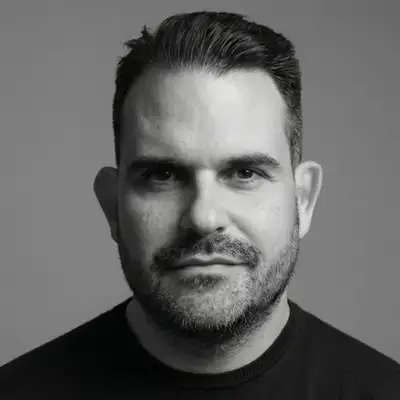

Chris Walker | Bootstrapped vs. VC Funded & The Pursue of Founder's Freedom | 100
Summary
In this episode of the Maffeo Drinks Podcast, Chris Maffeo welcomes Chris Walker, an entrepreneur known for his insights into bootstrapping and the modern startup environment (he is the Founder of Refine Labs and Passetto). His work on the Stacking Growth Podcast (Ex Revenue Vitals) inspired him to launch his podcast. They discuss common misconceptions about the need for venture capital, the importance of overcoming limiting beliefs, and the essential skills every founder should master. Chris shares his experiences and thoughts on why many businesses fail due to unnecessary funding and the mental barriers hindering entrepreneurship. The discussion also covers how to achieve personal alignment, the myth of media glorification, and the reality of building a sustainable business. Tune in for valuable lessons on creating and scaling businesses effectively. 00:00 Welcome to the Maffeo Drinks Podcast 00:09 Inspiration and Beginnings 01:11 Bootstrapping vs. Venture Capital 03:33 Overcoming Limiting Beliefs 06:45 The Reality of Entrepreneurship 1 15:14 Procrastination and Action 18:07 The Power of Self-Belief 32:49 Final Thoughts and FarewellWelcome to the Maffeo Drinks Podcast, where brands are built bottom up. I m Chris Maffeo and in each episode, me and a new guest crack how drinks go from one bottle to one case to one palette. Hit follow and leave a review to help new drinks builders find it. Now let's break it down together. Hi, Chris.
Chris Maffeo:Welcome to the Maffeo Drinks Podcast.
Chris Walker:What's up, Chris? Happy to be here.
Chris Maffeo:It's a great honor. I've been following your journey since early twenty twenty back when B2B revenue vitals used to be called the state of demand gen. You inspired me to launch the Maffeiro Drinks podcast. So I think all the listeners should be thankful to you because you are the one to be thanks for.
Chris Walker:Well, you're welcome everyone, but really it's all you. I might've been the little spark for you, but doing a 100 episodes is a massive feat of discipline and consistency and passion and a lot of other things that are clearly inside of you. And I think that celebrating that as well is good.
Chris Maffeo:Thank you, Chris. I appreciate it. I remember when I started putting all the episodes, I took inspiration from your numbering episodes. I remember when I put the zero zero one and I was thinking, why am I putting zero zero one? It doesn't make any sense.
Chris Maffeo:It's just episode one. But then I said, no, because this is the signal that I'm going to hit the hundreds and I want it to be consistent when it hits the hundreds. So that's why I'm so happy to celebrate it with you and all the listeners.
Chris Walker:I love that.
Chris Maffeo:This is gonna be a very interesting episode, but also quite different because you're not from the drinks industry as such. You have launched and bootstrapped so many companies. I want to pick your brain on, you know, advices for actual founders, which is a lot of the listeners of this podcast, but also people that want to make the jump from big corporations to launching their own brands and becoming entrepreneurs. So let's start. You've done, I mean, I call it built bottom up, you know, in my language, but basically means bootstrapping.
Chris Maffeo:What are the biggest learnings for you on bootstrapping your companies?
Chris Walker:At its highest level, I think that there's somewhere between like one in 5% of businesses today that are appropriate to raise some type of venture capital funding. However, 95% of founders do they need it, only 5% of businesses are really appropriate for it. And you have this total mismatch, which leads to a ton of businesses getting funded that don't have the market cap or the market size or any type of need for that type of funding. It leads to this level of thinking for entrepreneurs that I'll build my business when I get funding. It's like, no, actually you could build it right now.
Chris Walker:You have a thought in your brain that I need $2,000,000 in funding to get this idea off the ground. And maybe that idea was right in 2011 or 2014, but it's definitely not right now. There's also just the way that digital environment works. You don't have to raise from venture capital. You can do friends and family.
Chris Walker:You can do a lot of other creative financing things. If you want to build a product that requires some type of capital investment upfront, you can deliver some type of service as a method to cash flow and build the funding to fund your own product. So let's do an example. Okay. Let's say you're a fitness trainer, right?
Chris Walker:You want to build a digital app that like does fitness training because you think that'll be more scalable than just training eight people a day in a gym. And you're like, oh, but I don't have the $100,000 to build the app. So I guess I'll just never do it. Right. You could just build a in person training business where you have seven trainers that train your clients, that build this revenue.
Chris Walker:And all of a sudden in three months you have a $100,000 to then go and build your thing. And now you have two independent, strong businesses. I just think that people need to get out of their own way and to stop thinking it's a thoughts in your head that are like, I can't build a business without funding or I'll build my business when I have X amount of money. That's one that a lot of people do, which prevents them from just jumping. I started my business with $3,000 in the bank and $60,000 in student loan debt.
Chris Walker:Did I feel ready? No. Was I financially ready? No. Would I have chosen it for myself?
Chris Walker:No, I got pushed into it. And it was the best that ever happened to me. There's a lot of really good things that have happened in my life. So it's hard to say what is the best, but that was a real top one for me of going there when I didn't think I was ready. And to be honest with everyone, you're never gonna feel ready.
Chris Walker:For the people that are looking for that little boost of a jump, it's like, why not now? Write down the list of why not? And then actually look at if there are, are these facts that are getting in your way or are they limiting beliefs that you have? I'll just fast forward it to you. They're all limiting beliefs where your thoughts and your brain get in your way of doing what is right for you.
Chris Maffeo:I discussed it with one of my best friends, Francesco, which is a photographer now. And we're always talking about, you know, like buying all the fancy gears, you know, when you want to be, you know, you want to become a photographer and you think that you need the expensive camera and all the lightings and all the thing. And it was the same thing when I launched my podcast, to be honest, I'm still recording in my home, in my studio. I remember when I bought the first fancy mic and in the end, I was like, I would have bought the cheapest mic. There was kind of a procrastination thing.
Chris Maffeo:And then I just said, you know what? I just go and hit record. The first one would be bad. And then let's see. It's very interesting also what she's saying about taking side the kind of like ideation businesses that may fund the journey because you could launch a drinks brand by being a consultant of other things.
Chris Maffeo:Then at some point you build the drinks business, but you're building the funding without having to be there. You're speaking from a good place because back when you launched, there was the glory days of VC and easy capital, easy money in 2019 and so on.
Chris Walker:But you just
Chris Maffeo:I decided not to go for mean,
Chris Walker:yeah, if you think back to it, it was probably 2017 and then it accelerated into the crash of '21. And at that point it was cool to say you raised a $10,000,000 seed round. A lot of people still think it's cool. And when I read it now, I'm like, wow, you just dug yourself a huge fucking hole. Because you have 3X preferred returns on that.
Chris Walker:And you have, so let's say you have 300 or 500,000 ARR, right. And then you raise that valuation. You need to sell the business for $30,000,000 in order to pay your investors their preferred returns before you make a dollar. Another thing is that now that you're on the train, most likely you're gonna be on the train forever. As you keep raising more funding, that preferred return number keeps going up.
Chris Walker:I think that people have seen it for so long as the only option of how you build a business or especially businesses that require some type of capital investment upfront in terms of software development, or you're building something that requires some big machine or manufacturing or whatever. And so it becomes this thing that basically over time you create this jail for yourself and slowly give away your business. Yeah.
Chris Maffeo:It's kind of like a catch 22, you because very often it's people that want to set them free by leaving a corporate job or doing something on their own. But then they just get themselves another job with another boss because it's basically like who gave them money. They need to report into that person now. So it's kind of like a counterintuitive thing and people think they have to do it rather than exploring different options, right?
Chris Walker:Yeah. To be clear, you can bootstrap your company and own a 100% of it or majority share and still feel like you're trapped in a jail. Right. And what are you trapped in a jail then? Like maybe you don't have freedom over your time.
Chris Walker:Maybe you don't have freedom over which clients you choose because you have to keep paying the bills. Maybe you don't have freedom around where you are in the world or the people that you spend time with or all these other types of freedom that come outside of financial freedom that I've been studying a lot the past six months because money is not it. Money helps. Money can be a good thing. But what I find when I interact with a lot of people is, especially entrepreneurs, there's a lot of people, a lot of entrepreneurs that have a lot of money that aren't happy, that don't have, don't have that like struggle in there, like with their wife or husband because they pour all their energy into this business that sucks their energy.
Chris Walker:And they can't be a good partner. They don't have time. They can't take a vacation. They can't go on a date. And that's for entrepreneurs.
Chris Walker:It's also for people that work in a nine to five or work at Goldman Sachs and make $400,000 Goldman Sachs and work sixteen, eighteen hours a day. And they're on this hamster wheel doing that and their lifestyle and their expenses go up. So they have the $10,000 penthouse in Manhattan and all of a sudden like they're making $400,000 living paycheck to paycheck. I say these things cause I've done all of them, right? I'm not coming from someplace of like, look at me, how good I am.
Chris Walker:Look at all these people. No, I've lived all these different lives. And it's just generally not fulfilling.
Chris Maffeo:I think about this all the time. I remember I used to be in corporate and then at some point I saw that my salary was growing. And then I thought, I always explain it as I jumped off the train. I felt that this train was leading to a direction that I didn't want to. And then at some point I said, it's better.
Chris Maffeo:I better jump off here than, than wait for the next stop because I just build on an infrastructure of goods and physical things. And I don't want that. And then at that time my daughter was born and mother family reasons. But then sometimes you enter this vicious circle because I'm often the guy that never switched off. And I don't see my friends because I'm going on working, working, working because I love what I'm doing.
Chris Maffeo:And because I'm building something for the future. How to do it sustainably now, because sometimes we, you know, I listened to some of your latest episodes where you said you just came back from holidays and took a few weeks off. Sometimes you feel I cannot take weeks off because the world will collapse if I take three weeks off, but the world is still here, right?
Chris Walker:Yeah. I know that clarity creates speed. If clarity creates speed and speed is the actual outcome, then what creates clarity? Think about it. Alignment of what I found for myself.
Chris Walker:Alignment with myself and my purpose is what creates clarity. How do I create alignment with myself? By eliminating all of these programmed conditioned beliefs that are in me. Like I need to have some great car to be cool or I need to suffer to be successful or I'm not good enough until my business does 5,000,000 or 10,000,000 or a 100,000,000 or you name the number. It doesn't matter.
Chris Walker:And when you eliminate these beliefs and you have clarity on what you're trying to do, you realize that 80 or 90% of the shit you do doesn't matter. And you're just doing stuff to do stuff, right? I used to think that it was productive to sit in front of a laptop for twelve hours a day and just do stuff. Now I get 10 times more done by just doing three or five things a day that are the actual things that matter. It could be one phone call.
Chris Walker:Could It be putting one person in charge of something. It comes down to removing all these things that get in the way of you making the right decisions for yourself. It's really what it comes down to. But so over time, as I've been able to, and I've mentioned some of the ones that were real for me, right. I'm not good enough until my business does X.
Chris Walker:When you break it down, what I've realized is that like that a business is just one little compartment in your life, right? And you have all these different compartments in life. The box that holds all these different compartments should be effortless, not hard. When you listen to yourself and follow what you already know and you clear all these things that are getting in the way of scarcity mindsets and guilt and shame and conditioned beliefs, then you can just move fast. It literally feels effortless.
Chris Walker:And I say this from a place knowing that people that listen to this podcast are like, oh yeah, easy for you to say, bro. You've built four businesses and you have a bunch of money. It must be easy for you to say. And I can say right back to them. I was the most financially wealthy of my life in the peak of 2022 on paper.
Chris Walker:And at the same time, I was the least happy and felt the least free. The people that are thinking that that is your reaction based on conditioned programming of like, if I had $10,000,000 I'd be happy too. And let me tell you, I've been there before and it's not a guarantee that you'll be happy. There's a lot more to life than money and money matters. And I love money and I love what it can do for myself and for my family and for my friends and for my experiences.
Chris Walker:I just have a different relationship with money than most people now.
Chris Maffeo:That's a big learning there. So going back to the founders freedom, there is this element that people think they need external investment because they think they need to be in 20 markets with their products or they need to put it on that PowerPoint pitch deck presentation that my brand, my tequila is sold in 63 countries and my whiskey is sold in 15 plus countries and so on. Isn't it better to set up a business that makes 2,000,000 and maybe grow to 5,000,000 versus going from 10 to $100,000,000?
Chris Walker:I talk to people that are trying to do things like this. When it's people that are just at the beginning, right? Like trying to decide, like, what do I do? Where they're at 1,000,000 and all of a sudden they want to expand to nine markets with different products. The people that haven't made the jump yet are like, oh, I need 2,000,000 in funding or I won't be able to get into nine markets.
Chris Walker:So I won't do it right now. Or different things like that are literally just attaching a reason to rationalize that they don't feel good enough, confident enough, or have enough self worth to try it and potentially it not work out. And when it, so all the reasons that, and I found this out recently as I start to coach people with a different intention, whenever somebody is talking about something outside of them, it's literally just a mirror for what they either lack or don't believe about themselves. So, you know, I'll feel more successful when I have make $30,000 a month, right? Like, no, it's really just that you don't feel worthy or successful on your own.
Chris Walker:And you're searching for something outside of you to prove to yourself that you are. There can be examples in relationships. It's actually a big flag and I recognize it with myself. It's super powerful. When you are searching for something outside of yourself, it's a hint for you that you have something that's going on with you.
Chris Walker:So it could be money, feeling successful or impressive, worrying about what other people think, caught up in how many likes you get or how many podcast downloads you get, or how people show up to the event that you do. It just becomes a really interesting mirror. People call it self awareness. To me, it's a lot deeper than that. It's truly knowing yourself and being aware that your brain is running an operating system.
Chris Walker:Your body runs an operating system. And there's programs that run-in your brain that don't serve you. And you didn't install those programs. They get installed and conditioned into you by the news, media, school, your parents, past relationships, doesn't matter where it came from. You didn't put it there.
Chris Walker:Someone else put it there. And to realize that you have control of whether that programming runs in your body and your brain or not, I think that's super powerful. I think it's a level much higher than self awareness.
Chris Maffeo:And what about the fact that the founders feel that they have to raise this much money? I was making the example before about myself, the procrastination. So is it also about the fact that I feel I need that much money, but then probably it hides inefficiencies within my company because if I can bootstrap it with 100 k just to say a number, but then I raise 5,000,000, that gives me an allowance to try so many different things and not make choices, not make efficient and effective choices.
Chris Walker:So let's talk about the business part next, but first, let's talk about procrastination. What is procrastination on paper? It is, it is lack of action or delay of action. So it's actually not doing anything is an action. Right?
Chris Walker:So procrastination is an action. Why do we take actions? We take actions based on our emotions and how we feel. And so when doing procrastination, you're doing it because you feel a certain way and you feel a certain way because you think certain thoughts and beliefs. So really isolating in, I'm procrastinating, which is probably because you feel shame, guilt, lack of confidence, fear, scarcity, some low vibration emotion.
Chris Walker:And then thinking what is the thought that I'm thinking? And then you have the thought and then you have the circumstance of I'm trying to start a business and I need $2,000,000 right? Or I'm trying to raise $2,000,000 So then isolating the thought about what am I thinking right now that's causing the procrastination. I want to do this, but I'm scared that I won't be successful. What will people think if I fail?
Chris Walker:I'm not smart enough to do this. You could make a 100 different examples of potential thoughts. The only person that knows that is you, me and the person that's listening, right? You know, your thought says I'm not smart enough to do this. So, your emotion is like shame or something in that area.
Chris Walker:And then your action is procrastination. And then your result is I'm not smart enough for this because I didn't do anything. You just run the program over and over again. And so procrastination and lack of action becomes a huge hint. Negative emotions that you feel also are huge hints about what am I thinking or what am I doing that is driving this self doubt is something that I didn't mention in there that also plays a huge role here.
Chris Walker:On the procrastination side, use it as a hint, negative emotions use it as a hint. And you can literally go through that program that I just talked through. You have a circumstance. My business gets a new customer. I try to talk to an investor and they say they're not going to invest in me.
Chris Walker:Circumstances happen outside of you. Whatever happens then drives how you have a thought or a program that runs, which then drives how you feel, what actions you take or lack of action, the result that you get, the result is just confirmation bias to what you already thought in the beginning. And when you follow that line, you realize that what I think and what I, it's actually not what I think, it's what I believe. My beliefs create my reality. My beliefs drive how I feel, what I do and the results that I get in my life.
Chris Walker:If you can fully internalize that, then that's absolute power. It's so true. I'm living proof of that. I have totally shifted my entire life in the past five years through reprogramming my mind. On the business side, I talk a lot about how I think venture capital is unnecessary.
Chris Walker:If you just put it on paper and you have the two paths of like, raise venture capital as a founder or I bootstrap as a founder that from a financial standpoint, a freedom standpoint, a timeline, autonomy, like I could go through a list of things that bootstrapping wins in every category. And the only category it doesn't win in is if you want to build meta or, you know what I mean? Like a company like that. And honestly, are plenty of examples of companies that build billion dollar companies with no funding. We haven't lived enough of this time, which is a time where AI is dominant, you can build products super fast, digital and social have totally evolved.
Chris Walker:We haven't lived enough time for big companies to get to that level without funding. It happened. It's already happened and it will continue to happen more than it used to. I've gone through some examples on my Instagram. I'll try to reiterate here from a financial standpoint.
Chris Walker:Let's say you're the founder of a software startup and raise venture capital, the valuation doesn't matter. You raise venture capital, you sell 20% of your business. Okay. And you have a co founder. So now you and the co founder both own 40% and your investors own 20% and you go through another two rounds and all of a sudden your investors and the board own way more of the company than each of you, even with the covenants and the warrants that VC investors place.
Chris Walker:When you get that first check, you no longer own or control your business. They need to approve when you sell it. They can approve or disprove how much you get paid. Likely they can fire you whenever they decide or whenever they want. If you're not doing the right things or you're not hitting their growth expectations or the things that you put in your pitch deck or whatever.
Chris Walker:In one swoop, you've lost total autonomy. You will most likely be drive to burn money to that being for like a layman is that like your company does not make a profit. You are instructed to lose money because you had this big lump of money and they think, oh, the faster we spend the money, the faster we'll grow, which is laughable. When you follow that path, companies give you money, you give away part of your company, you waste the money based on their expectations and you slowly give away your company for nothing. It's not for nothing that would be overstated, but if you waste the money and you spend it irresponsible, yeah, you're effectively giving away your company for almost nothing.
Chris Walker:If you don't make a profit, you can't take a distribution, which is the big point that I'm trying to make here. And so, and that path, you make a salary as the CEO. Let's say it's $300,000 a year or four, let's just say 300. And then you have no additional, maybe you get a bonus if you like beat your plan. So you cap out your salary, let's say 500 ks if you crush your plan.
Chris Walker:And then you don't make any more money until you raise another money and sell secondary stock or you sell the entire company. And then if you take the bootstrap route, you can make $300,000 whenever your company can afford it, which is probably like a million, a million 2. You match the salary that you had. And then every single quarter as the company makes a profit, you can take a distribution of the profit should you want. Let's say a company is gonna do 20% profit at a million.
Chris Walker:So now there's that $200,000 additional profit distribution. Now you're already matching what you would make in venture capital. And then as your business grows, that 20% keeps growing. And then as the business grows, the value of the business keeps growing and you own a 100 of it or 50% if you have two co founders. If you just break it down from the financial rationale, excluding autonomy, control, being able to do what feel, what is right for you morally and ethically, because there will be misalignments at some point between investors and shareholder investors versus what you want to do as the business owner and the leader.
Chris Walker:I push people to think about it because I've lived the life of going the bootstrapping route and I learned a bunch of lessons. Trust me, I did not play it the best that I could have played it. I'm happy with how it worked out. It got me here and I always think that's what matters. I could have played it way better if I go back and do it again.
Chris Walker:I'm an entrepreneur, I'll play it differently and I'll get there half as, in half the amount of time and half the amount of problems and mistakes and things like that. And it just on paper works out better. And what I think is every important category for an entrepreneur.
Chris Maffeo:I've been listening to many of your podcasts on this topic. It's super interesting because it goes back to what you were saying about self beliefs, procrastination and all those things. Very often what I see in my field with drinks companies is that the founders may come from, I don't know, are lawyers or an accountant or whatever. They're not used marketing and selling alcohol beverages. So they think that they need the money to actually hire a team of people to go out there and sell.
Chris Maffeo:For example, sometimes it's also like the fact that, okay, like go out there and actually make it and learn and do more small experiments to actually understand what it takes for your product to succeed rather than having a bunch of money that you have raised. And then you still don't know what to do with that because you still have no experience. You may have some experienced people in the board that, you know, from the VC or the investors that gave you money. But ultimately, maybe they don't know how to do it from the bottom up, as I like to call it. So it's a vicious circle.
Chris Maffeo:How do you break that? You say, okay, I go the bootstrapping way and I grow at a slower pace than anticipated on the pitch deck, but it's a totally different ballgame.
Chris Walker:I mean, this, I'm trying to come up with a good analogy here, but like what people want is they want to say, okay, I have an idea and maybe I have a couple of skills experience that are somehow related to that idea, but there's these 10 other things that I don't have. And instead of figuring them out so I can be a complete entrepreneur in this space and like learning all the things that are necessary, I'm just gonna try and take the shortcut, shortcuts never work by the way, and hire 10 people and hopefully they can figure it out for me. And let me be clear. Once you have the skill and know how to hire people, then you can take that path. But as a first time entrepreneur, if you don't know how to sell and you just hope that you can find someone that can sell and give it to them, you are incredibly vulnerable.
Chris Walker:You need to understand every single part of the business and be able to evaluate people's skills, understand enough to ask curious, intelligent questions to get to the root of it, understand how to do all those things. Legal, sales, marketing, product, distribution, partnerships, finance, you name it. Like HR, you have to understand, it's not that you have to do everything because that wouldn't work. That's not a freedom concept is not, you're not going to get there with that mindset, but you need to understand all of it. It would be like trying to be the head coach of a football team and only understanding how to play quarterback.
Chris Walker:Like how are you going to coach the other 52 people on the team? How are you going to know whether they're good or not? How are you going to recruit them? That's the thing, especially with first time entrepreneurs, instead of doing the hard thing and learning all the different things about the football team or the business, let's just call it the business, they say, oh, they have a thought of like, I'm not good enough to do that. I'm not smart enough or a different thought of this isn't worth my time.
Chris Walker:And it's like, how do you expect to build a $10,000,000 business or a thriving business if you don't have enough time to learn how to sell your product?
Chris Maffeo:I've discussed this with many founders and sometimes I'm getting on discussions on LinkedIn when I'm, when I'm writing my posts now that sometimes people are saying, okay, I'm, I'm the distiller. So I'm making the product. I'm the creative part of the business. I don't know how to sell, but they expect a distributor or a sales guy to do it for them. And this is the issue.
Chris Maffeo:At least your co founder should be able to do that. And then you split responsibilities because as you said, it's not that everybody should do everything. But if you don't know, then you will just be in your echo chamber of your other distilling friends saying that's a great product and this will smash the market. And then nobody will actually bring it out the door. Sometimes it's this circle of, you know, when people do and I'm one of them in a way like that, you know, like that you like what you're doing because you you love the products and you love the industry.
Chris Maffeo:Then you need to get out of the comfort zone to actually test it and learn it so that then you can fire yourself from that role by hiring someone else.
Chris Walker:Yeah. Or know that you are a distiller or a product developer and not an entrepreneur. Like not a CEO. That also works. I think a lot of people have been sold the idea that I have to be an entrepreneur and there are many people that try to that aren't.
Chris Walker:And that person, instead of trying to build this distillery business, they're sitting in there making liquor that no one wants to buy and they don't care to sell it because that's all they want to do. They could have been the person making it at whatever brand. They've been super successful working under a company that knows how to sell it and has great distribution. They could do their art and better stuff and have a ton of enjoyment doing that and being the lead product person for a great brand. I think there's some level of self awareness too, that can be really helpful.
Chris Walker:A lot of people have been told they have to be an entrepreneur when really they would be a great CPO, CTO, or a top five or top seven executive instead of an entrepreneur of a business that goes nowhere.
Chris Maffeo:Do you think there's also something about the narrative of what we are reading? If you take drinks industry media, it's all about these guys sold for this much, this celebrity bought it for this much and a big corporate bought it for this much. So there is this tendency to think that the top 1% of who makes it is the average rather than the 1%.
Chris Walker:I stopped consuming television media in 2013 and have removed almost all media consumption in the past six months. It's all conditioning and programming, mostly about materialism. And like it is unhealthy. It's not helpful for you. And it's, they place that, right.
Chris Walker:So they tell, okay, look at this founder that built this company for, you know, fifteen years and then sold it for hundreds of millions of dollars. Look at how great they are. Right. But it didn't tell you that they raised so many different funding rounds that on paper after taxes, they actually only made $3,000,000 in their bank account. It doesn't tell you that eight years in, they got divorced because they didn't take care of their other relationships.
Chris Walker:It doesn't tell you that they had to go through this process where they had to lay off a bunch of people when they didn't really need to, because their investors needed to show profit for their PE firm. They had to do all these things that were ethically and morally misaligned with them because had to do something for their investors because they didn't have control over their business. And you're over there looking like, wow, this person made a $100,000,000. I wish I could have been them. And you don't know the whole fucking story because that's not, you never get the whole story.
Chris Walker:That is the main reason why I don't consume any of the media anymore. Because it glorifies all of the wrong things.
Chris Maffeo:This is so true. A lot of people ask me for referencing case studies. I said, can you tell me about successful brands and so on? I said, I don't wanna do that because I have full disclosure and I cannot do that because I've got NDAs Or it would be stuff that I've read online or people told me and it's their stories. It may be true or may not be true.
Chris Walker:Yeah. And I've just, this is like a little side note on sales or recruiting, but what I found is if you ever find yourself convincing someone to do something, then you should back away. All the best people that have become my business partner, all the best people that have joined my company as employees, all the best customers that we've had that are longest standing customers, all the best friendships that I've had. You don't have to convince someone about why you're gonna be their good friend or why they should join and be the employee when you're convincing, they're not the right people, that the learning. The effortless concept, right?
Chris Walker:Like all of the best things that have come to me, best customers and best people and business partners have all been effortless. And then you go out and you put a job rec out and you get 500 submissions and you interview a bunch of people and you eventually get to a person thinking, you know, this is the right way to recruit someone because I'm being smart and diligent and you hire someone that sucks.
Chris Maffeo:And this goes back to what you told me about creating demand before capturing demand. Ultimately, when you are doing it right, the right people come to you. And I'm totally with you with that. When people ask me like, can you send me a presentation or why we should work with you? I was like, you contacted me because there's so much out there of me speaking that everybody knows what I'm talking about, what I'm thinking, and what I believe to be right in the business.
Chris Maffeo:So if you want to listen to 100 episodes of my podcast, read all my LinkedIn posts, you will figure it out. I don't have to make a PowerPoint, you know, not to play cool, but just to say, if you still haven't figured it out, then
Chris Walker:probably not going to be a good fit right now. And then how much time do you save and what are the other things that you can do with that energy when you're not convincing 10 people a week about something that they don't want to be convinced about? It's just like get out of my way and my time and I can use my time for all these other things. It just becomes really powerful. Again, it's just balancing the levels of freedom.
Chris Walker:And trust me, there was times where I spent forty hours a week on sales calls, every 30, new sales call, 50 calls a week and 40 of them are unnecessary. Talking to people that are just going through the motions, not interested in buying from you, going to ask you for a deck and a proposal and then never buy anything. Are they giving you good insights about what to change? Are they creating space where you can do the right things for your business? No.
Chris Walker:Does it feel like you're being productive? Sure does. And you get caught in the trap of like, if I just do more, I'll get more.
Chris Maffeo:100%. Chris, thanks, thanks so much. I'm aware of your time. I want to wrap this up and leave some space for you to let people know how to find you and how can they learn, especially from the B2B revenue vitals that has been so beneficial for my learning journey.
Chris Walker:So you can find my podcast online. The pod is called B2B Revenue Vitals right now. It'll be the third evolution in my podcast series. So stay tuned for that. You can also find me on Instagram and LinkedIn with the handle ChrisWalker171.
Chris Walker:And yeah, look forward to it. And then if you love this episode, you have some questions, shoot me a DM on either of those platforms and I would be happy to chat.
Chris Maffeo:Fantastic. Thanks so much, Chris. I really appreciate your time.
Chris Walker:Thanks, Chris. Great episode.
Chris Maffeo:Thanks for listening to the Maffei Drinks podcast. If you enjoyed it, please hit the subscribe button. Also a small ask, please leave a review wherever you listen. Reviews make such a big impact and help other drinks builders discover the show. Feel free to contact me for feedback on LinkedIn ChrisMaffeo or on Instagram at mafiodrinks or at mafiodrinks.com.
Chris Maffeo:And remember that brands are built bottom up.
Creators and Guests