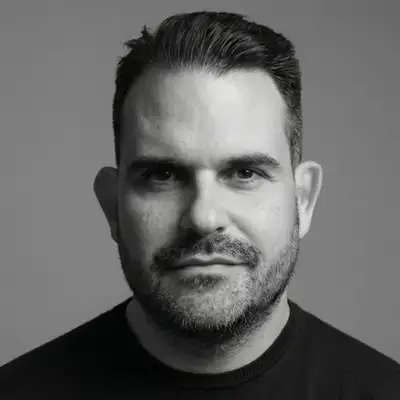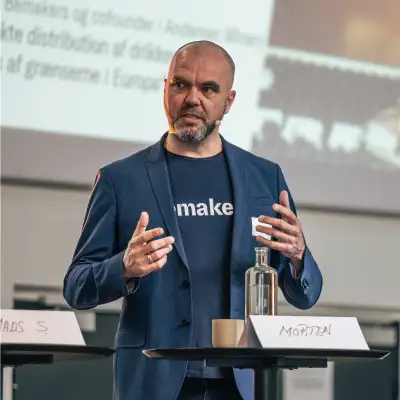
Morten Stengaard | Building a Premium Fruit Wine Category | Andersen Winery | 070
Summary
In episode 070, I chat with Morten Stengaard, Co-founder of Andersen Winery. We discuss the intricacies of creating a new category in the beverage industry, focusing on premium fruit wines. Morten shares insights on category vs. brand building, the importance of positioning, and the role of premium pricing. We explore market strategies ranging from fine dining establishments to off-trade venues, highlighting the nuances of consumer education and creating demand. Morten emphasizes the significance of seasonality and portfolio approach in keeping products relevant and appealing to customers. Time Stamps 00:00 Introduction 01:02 Meet Morten Stengaard: Co-Founder of Andersen Winery 02:47 Building a New Beverage Category 08:14 Positioning Premium Fruit Wines 10:20 Targeting Specific Drinking Occasions 14:37 Expanding to Off-Trade Markets 26:44 Seasonality and Portfolio Approach 31:46 Conclusion About The Host: Chris Maffeo About The Guest: Morten StengaardWelcome to the Maffeo Drinks Podcast, I m your host Chris Maffeo. In episode 70 I chat with Morten Stengert, co founder of Andersson Winery. We discuss the intricacies of creating a new category in the beverage industry, focusing on premium fruit wines. Morton shares insights on category versus brand building, the importance of positioning and the role of premium pricing. We explore market strategies ranging from fine dining establishments to off trade venues, highlighting the nuances of consumer education and creating demand.
Chris Maffeo:Morten emphasizes the significance of seasonality and portfolio approach in keeping products relevant and appealing to customers. A small ask that means a lot to me. If you enjoy this podcast take the time to leave a review on Spotify or Apple Podcasts. You will find a detailed transcription of this episode on mafayodrins.com where it gets pre released twenty four hours before other platforms. Hi, Molten.
Chris Maffeo:How are doing?
Morten Stengaard:Hey, Chris. I'm good. How are you?
Chris Maffeo:Good. Good. Good. All, sort of sunny in Prague. So it's, it's fine We are on the, one of the longest days of the year now, like up in The Nordics where you are.
Morten Stengaard:Yeah. Here it's actually cloudy. So, you know, it's a long and light day, but, but with lots of clouds. Anyway, the it's the summer as we as we know it.
Chris Maffeo:So fantastic. It's great to have you, and it was nice to meet you, you know, over over LinkedIn together with Maria and have a a few chat and and realize that, you know, there's there's more and more like minded people in this drinks ecosystem. So it's it's great to have you here.
Morten Stengaard:Thank you. And likewise, great to be here.
Chris Maffeo:So, Morten, like, give us a short intro of what you do. So just to get everybody on board on why you're here and what are we going to talk about during this couple of episodes.
Morten Stengaard:Yeah. Sure. A pleasure. So my name is Morten Stengard. I'm the cofounder and CEO of Beemakers, a distribution beverage distribution platform.
Morten Stengaard:And then previously, I cofounded a Danish sparkling fruit wine company called Annasen Winery, where I'm also now still cofounder and and chairman.
Chris Maffeo:Fantastic. So that, that was a quick one. Like I'm used to Italians giving an intro about themselves, so I'm impressed.
Morten Stengaard:Thank you. So
Chris Maffeo:fantastic. So it's a, it's, it's a shame. I haven't managed to get to know Andersson Winery when I used to live in Copenhagen, you know, otherwise I would have enjoyed some of your some of your wines.
Morten Stengaard:Yeah. Yeah. Yeah. But it's never too late, Chris.
Chris Maffeo:We could
Morten Stengaard:ship the bottles over to you in Prague.
Chris Maffeo:Please. I would I would love to. I would love to. Let's focus on the on the first part of the of the conversation. So you as a founder of a of a drinks brand, so in this case, a a wine brand, and then we will dive more in the second part of the episode.
Chris Maffeo:We will we will dive into be makers because that builds a nice bridge into helping brands to go to market in different export markets. Let let me start. I I will skip the usual question about does it start with the liquid or the brand? Because I I want to dive into with you in a in into another topic that I really love, which is building your own category. Because I mean, like here, we're talking about something that not many people will know outside of the Nordic countries and, you know, it's a very new category.
Chris Maffeo:Also for me was like very, very, very new. I started to get to know it, like from my, you know, Nordic friends. But how do you build the category before the brand, so to say, and I mean, would you agree first of all, like that, you know, you should first build the category and then the brand, or are you more onto, you know, brand building first and then category?
Morten Stengaard:Well, that's a really good question. So so the way I think about it is that you need to identify the category that you wanna play in. It's easier to start at thinking, okay, is there a specific need or an opportunity that just hasn't been realized yet? And for Arnarson Winery, my sparkling fruit wine brand, I mean, we saw an opportunity in fruit wine. And fruit wine, as you probably know, Chris, is usually perceived as low quality.
Morten Stengaard:No one has really built a premium high quality fruit wine brand. You could say the premium fruit wine category really didn't exist when we started building. And it was always considered low quality compared to grapevines. And similarly, another thing we have, we have a ready supply of high quality fruits and berries in The Nordics. Grapes don't work that well here in The Nordics.
Morten Stengaard:We don't have enough sun, but we have a ready supply of berries, of fruits, so apples, black currant, rhubarb, which is actually a vegetable and so on, and that you can easily in principle ferment and make great products out of. So here you basically have a region where grape vines is less easy to do. There are some wineries here in Denmark also doing grape vines and doing good ones, particularly white wines. But the grapes are usually difficult to grow because of the weather. But we have a ready supply, as I said, of other sorts of berries and so on.
Morten Stengaard:And when you combine that with the fact that grape wines have been produced all over the world for centuries, so the methodology is well developed. We have a mitto tartar Chanel, when you do carvass, when you do champagnes and so on. But no one has really used that on fruits and berries. But when you think about it, it's an easy thing to do. You have a proven methodology.
Morten Stengaard:You have raw materials that are different. And when you combine the two, you should be able to build something that's unique, something that's new, and something that's of high quality. That's basically how I think about category building. You need to combine things to build something new. And one more thing maybe worth mentioning is that the Nordic kitchen, I mean, it's famous.
Morten Stengaard:We have Norma, we have Geranium, we have some of the world's best restaurants and most innovative new restaurants. And it just felt natural to build something on the drink side or on the beverage side also out of naughty raw materials. Wow. So, you know, so to come back to your question, I think very much of category building as something that comes before the brand building in order for you to establish your position as a brand as the next step, if that makes sense.
Chris Maffeo:Wow. There's a there's a lot of interesting information and, I mean, and insights there because, I mean, I I the fact that, you know, you are taking something that is very local, you know, and the fact that, you know, obviously it's natural to think about fruits and berries in a climate where grapes are not really working, let's say, like if we if we take it as a as a standard now, like, course, there are some nice Nordic wineries doing wine, you know, grape wine, but then if you take all the fruits and and rhubarb as a as a vegetable like that that you have there, it's very interesting to create to manage to create something local that that is missing in the in the scene. And also, like, I love the fact that, you know, you're mentioning and we will dive deeper into the food accompaniments because like, you know, with the new Nordic cuisine manifesto and the new Nordic trends and so on, that there was probably like a lack of something local because then, you know, like you have all these super nice ingredients from the food side of things, and then you will drinking like a white wine from France or Italy, which doesn't really make sense.
Chris Maffeo:If you think broadly about, you know, what Nordic cuisine manifestos mentions and stands for It's very interesting. And you meant you mentioned another point that, like, how to override the the the perception of low quality into creating something that probably automatically people would think of, okay. Like, I know a a fruit juice, you know, I know a fruit concentrate or a centrifugate, but, you know, I don't know anything about wine. So then, you know, there is a bit of work to be done in into that. How did you position your brand to manage to work on the premiumness of the the premium aspect of your wines?
Morten Stengaard:So, as I said, the fruit wines are generally perceived as low quality. With low quality obviously comes low price. So what we did to circumvent that was to try to position it next to a traditional or next to a champagne, a standard champagne. So price wise, we wanted to not to compete with the Carvas and the Prosegos and the Sect from Germany, which are generally lower priced in The Nordics than the champagne. So we wanted to compete with the champagnes and we decided deliberately to price our products as a standard champagne.
Morten Stengaard:So in Germany, in France, etcetera, they are priced at around €30 per bottle. So obviously, with a high price comes high expectation for quality and for the balance in the wine and so on, And that's then what we worked on meeting. But I think it's important, especially when you're building a new category that you think hard about, you know, how do we wanna position? Is it a low priced product that's supposed to be available in retail? Then you're competing usually at some other price levels compared to if you're going into bars and to wine shops, bottle shops.
Morten Stengaard:Here in The Nordics, then you can usually position it higher price wise. So the first thing to think about there was basically price, and when you have that ironed out, then it's all about having consumers and your potential customers try the products because no one, as in absolutely no one, would go out and buy a sparkling black currant wine if they have at €30, if they haven't tried it or if they haven't somewhat experienced it before. That's then where the top restaurants, for example, come into the picture. I mean, if you can position the product, if you get it into some great restaurants and so on, then obviously that helped. But the first thing was really to change the perception of fruit wine from being low quality, low price to high quality, high price.
Chris Maffeo:Being a new category, what did you think about the drinking occasion? Like, did you did you have a specific drinking occasion in mind that you were catering? Because, I mean, you're mentioning the top restaurants there in Copenhagen and Denmark to start from. Was that also the vehicle to say, okay, this is how you consume the products?
Morten Stengaard:Yeah. Yeah. Good question. So what we did was we tried to involve some of the better restaurants, Michelin star restaurants in the process. First, we were producing sparkling dry wines, for example, based on apple, and they they were supposed to compete directly with champagne.
Morten Stengaard:So, you know, you could have it when you come into the restaurant, you have a a drink, a champagne, or you could have a sparkling apple wine from Arnottson Winery. That was the starting point and what we started doing, and we started visiting restaurants, booking meetings with the restaurants, have them taste the product, and that works in some restaurants, but we also quickly saw that a lot of the restaurants were looking for a low elk or no elk sparkling. So if they have a group of people, four, six people coming in and one is not drinking alcohol, and then suddenly they need something without alcohol or with no alcohol to to that person, Everyone else is getting a glass of champagne, but they needed something, an alternative. So we started working on a low alk product based on apple, but with lots of fruitiness, some more sweetness to basically balance the acidity and so on. So to produce an interesting alternative to a champagne with the small fine bubbles as you know it from champagnes and carvass and so on, but with only 2% alcohol.
Morten Stengaard:Wow. So basically catering to that exact situation where someone is not drinking alcohol, but he, she still wants to go to a restaurant and have an awesome experience. So there was a clear need in the restaurants to to have something with low or no alcohol that they could serve to their customers. Another great angle in, so we're doing sparkling dessert wines based on black currant, red currant, cherries, etcetera. And here, the way in was basically to introduce something for the dessert that was light and uplifting with lots of bubbles, great acidity, but also with the sweetness that that is necessary for matching it with the dessert.
Morten Stengaard:And what we learned from working with the sommeliers in in the restaurants is that you need lots of acidity if you want to add lots of sweetness to a wine for it to be balanced. And that's usually the challenge with grapes wine that if you add too much sweetness in the dosage, in the sparkling wine, then you don't have enough acidity for it to be balanced. But when you're working with the berries out of the Nordics, you have like an insane amount of acidity. So you can add add a lot more sugar in the dosage and produce wines that are perfectly balanced but with lots of sweetness so that they can easily work with even the very sweet dessert. And this was something to come back to your question about the occasion.
Morten Stengaard:This was something that the restaurants really didn't have before and where they could easily see that they could take something that was light with bubbles and so on and add it to a dessert, and then instead of using the the wine or whatever they would come up with, they could now have something that was Nordic, something that was refreshing and sparkling.
Chris Maffeo:Wow. Wow. That is super interesting. And and what role did it play? Like, having consumption occasions also, let's say, for off trade?
Chris Maffeo:This is like what what I love about what you said is the is the clear occasion augmenting per SKU, know, like, you know, different kind of wines for different kind of occasions. So one or catering, you know, like the aperitif moment or the starting of the the evening and some others on the end of the evening. And also I love the fact that you were targeting like a clear problem of a clear customer. No? Like, so it's it's very interesting because some people would say, okay, it's too niche, you know, but then I'm a big fan of bringing the niche at scale because you know, when you multiply all the people with that specific problem, then you're pretty straightforward into the, okay, like I automatically think of that wine for that solution.
Chris Maffeo:No? Yeah. So how, how did you bring that to an off trade context? Or one, one of the things that I'm often talking about is what I call the bottom up trade. No.
Chris Maffeo:So like, you know, there is that element of on trade, but then sometimes we tend to forget the bottle shops and, you know, like the stuff that you mentioned earlier on into a home consumption kind of kind of occasion.
Morten Stengaard:Yeah. That's really important, especially in a market like the Danish one where we are headquartered or located. I mean, there's hundreds of smaller wine shops here in Denmark, and that's where consumers often buy their wines and spirits and so on. So you have the retailers of course, but you have all these hundreds of wine shops and it's super important to be in those when you are a premium brand like Anniston Winery. And then the trick is really to educate the people owning the wine shop and the people in the shop about how to use this wine.
Morten Stengaard:And we use a lot of social media, of course, as everyone else, but then we make sure to show how you can pair our wines with food. So for example, take our sparkling black currant, which is a sweet dessert wine, lots of acidity, but made for desserts. And then we prepare recipes on our website and in our social media and in small brochures that we can give out to the wine shop so that they can give it out to their customers together with the bottle of wine so that a consumer clearly knows that this sparkling blackcurrant, as an example, can be used with a chocolate cake, for example. And then as soon as you say, you know, imagine using this with a chocolate cake, then then most consumers start thinking about, ah, okay. Yeah.
Morten Stengaard:I'm actually having, you know, guests coming over. It would be nice to make a nice chocolate cake or something with vanilla and so on, and then you can easily pair it with a fruit wine like a black currant or red currant or cherry or raspberry or whatever. It's very important when you build a category and when you build it, say almost like the first brand in a category that you think hard about how to position it to not only the sommeliers or the bartenders if if you're working with beer, but also in off trade and especially how the off trade segment can position it to their consumers or to their buyers. Because ultimately, when you think about a a sparkling wine or sparkling fruit wine, no one really opens and drinks a bottle of sparkling fruit wine by themselves. I mean, it's very rare.
Morten Stengaard:So it's always for some occasion where they're sharing it with friends, they are, you know, inviting people over to their home and have a drink as a starter, as a dessert, what have you, but then you need to make sure that you make the buyer shine when he or she is having visitors over, then he needs to know how to position it, how to use it together with food or as part of a drink. And then it's super important that they know the story, not just about the bottle, but also, you know, why is this? I mean, we always say that we produce world class sparkling fruit wines out of the the Nordic, and we spend a lot of time on explaining why these are world class, as we say, you know, how it's using local fruits and berries only. Everything is grown in Denmark. We even on the backside of the bottle have the coordinates of each field that the vegetables or the fruits and berries were grown on so that you can zoom in and in your Google Maps you can see, okay, it was exactly this field here in Denmark that it was grown, you know.
Morten Stengaard:All these little things just makes it much more interesting for the customer and much more easy to succeed with the product.
Chris Maffeo:Wow. Wow. Very interesting. What I like about what I'm hearing is that, you know, there is this element that you think about with consumer because, like, if we go back to this, you know, fine dining scene, let's say that in Copenhagen, probably it's one of the highest concentration of like fine dining or innovative fine dining, I would say. But then of course, like there would be more people than in other countries probably, but still it's quite limited because you you need to get a table for a soul.
Chris Maffeo:Like, that's probably like a long line, you know, so you need to be able to afford it, but you also need to be able to manage to get a table there. But that would be your perfect arena to get the liquid on lips because then it would be okay, a glass versus a bottle. And then brings to the other problem, which is, as you mentioned, you know, nobody's going to easily buy that €30 bottle of fruit wine because it could be perceived as a big of a risk. No? So you when you communicate that, then I like what you mentioned about, you know, like giving some ammunitions to that shopper or drinker because they have to be rewarded for that leap of faith that, you know, they gave you.
Chris Maffeo:No? And then it's like, you know, okay, we want to give some support to this local winery. So now, like, I also want to look good in front of my friends, you know, over and I want to be able to answer in a short and simple manner. So the questions that people may have because I can imagine the scene of, you know, everybody grabbing this bottle and trying to go into the back label and and understanding more. And that is the key part of your building demand now because that those are the key people that then will become advocate because if you have 10 people over for that chocolate cake on a birthday, then they may become 10 people that actually may go and buy in other store or next time they, they finally go to a nice restaurant and they say, oh, actually, you know, it, it fits perfectly because on Tuesday night, I'm actually going to Geranium or to Norma or whatever.
Chris Maffeo:And, you know, and I'm gonna look for that. Why? So that creates the nice loop of iteration, building the demand and converting the demand at the same time, because then that those people may actually act as ambassador to the, you know, to the waiter and the owner of that restaurant, because they may ask about Andersson winery and maybe you're not stocked there yet. But all of a sudden then, you know, they will think, okay, there was this consumer that actually asked for this wine. Let me check what it is.
Chris Maffeo:You
Morten Stengaard:know? Absolutely.
Chris Maffeo:It's very nice because it builds on something that I always talk about, which is this continuous iteration. I used to think selectively about, you know, hunting and farming when going to find bars and restaurants to sell products. But then I realized that it's a circle of hunting, farming together, you know, building demand, converting demand, but that conversion brings back to building and then it goes to sustaining and then it's a loop. It's a virtuous circle if you do it the right way. No?
Morten Stengaard:Yeah. Good point.
Chris Maffeo:So how did you manage to bring the, let's say the, the second layer into the game? No. Because then if you look at fine dining, then there's the home consumption, which is, you know, certain kind of people in that spectrum. And then you want to maximize, I would assume, the possibility of liquid on lips into a wider level of of outlets that may not be fine dining because otherwise then a lot of the people will get cut out from the liquid on lips part. No?
Morten Stengaard:Yeah. Absolutely. That's an important point. The way we used to or used to go into entree was starting with the fine dining, the Michelin star restaurants, and we still serve those and work with those, and that's an important part of our story. But the volume is clearly in in the restaurants, you could say, in the sense that they are they are exactly as you say, Chris.
Morten Stengaard:They are the restaurants where people come and they would come again and again and again. And they are also often the restaurants where they have wine menu, whether you get four dishes and then you get a wine for each dish, and if you can then get your, say, sparkling fruit wine in as the wine that's used with the dessert, Then you have, you know, first of all, you drive volume, but you also ensure that a lot of people try your wine in the perfect setting with the perfect food pairing, which is obviously, you know, enormously important that here there's actually chefs and sommelier that have paired it perfectly with something. It could be a chocolate cake. It could be a different dessert. It could also be one of the drier wines that they've been used for for a starter or or even for meatballs.
Morten Stengaard:But there's some professionals here that have actually made great effort to serve the wine in the perfect setting. And that's so important because then when you have a fairly wide portfolio as we have at Arnarson, we have twelve, fifteen different wines, then there's a high likelihood that the consumers have a good time and enjoy the wine and that they'll then go out and want to try one of the other wines or try the same wine again in a different setting. So the high end Michelin restaurants serve basically as a as an entry point and for building trust because if the wine is at geranium, for example, most other sommeliers wouldn't hesitate to also try it if you call them and say, hey. It's Morten here from Amazon Winery. You know, would you like to try our wine?
Morten Stengaard:We are served that. Boom. Boom. Boom. Boom.
Morten Stengaard:Boom. Oh, yeah. Okay. That sounds interesting. You know?
Morten Stengaard:I'll find time for you. Okay. Thank you. So it's also a door opener for all the other restaurants. And clearly, the Michelin segment in general, they are the restaurants are usually curious.
Morten Stengaard:So if you come with something that's of interest to them and can help them serve their customer, then they're usually quite open to try out new things. At least that's what we have experienced. And then when you go to the restaurants with a broader appeal, then it's important to have those references to help open the door. And then that's where you you find a greater volume because you're absolutely right. I mean, you don't come to Geranium or or the Michelin star restaurants every day or most of us don't.
Morten Stengaard:And so it's important to be where the people are because that they can then serve as ambassadors to to their friends and so on and tell about who they had with the wines.
Chris Maffeo:Yeah. Because I was thinking that when you were talking that the Michelin star or the top restaurants, they play a big role in the, let's say, in the light buyers now because they they will have a lot of selection. You know, it's very rare that places they don't really have regulars now in to an to an extent, you know, like there's a lot of rotation of light buyers that managed to get disabled. They find it that they they have it, then they may go back to it. But you know, how often will they go back to that place now?
Chris Maffeo:So you need to make an impression because that's your chance to make the first impression with them, which happens to everybody anyway. But then, like, you want to have a a scaled distribution, you know, and, let's say penetration in the trade so that then if they go, you know, maybe they went to to that geranium like once in their lifetime, then they liked it. And then you you want them to know where to find it in a boutique wine shop or into a more regular neighborhood restaurant that, you know, they may go on a random Thursday night to replicate that in a more relaxed setup, you know, that would be, you know, a different kind of meal.
Morten Stengaard:Exactly.
Chris Maffeo:And building on this, because you mentioned about the the the pairing, you know, which of course is the the the key thing in this kind of like fine dining restaurants. So do you have a specific SKU, a specific wine that acts, let's say, as a foot in the door into these venues? Or do you have a more kind of like a portfolio approach that, you know, you go and and have a wider selection of all the range of wines to supply different needs?
Morten Stengaard:So we use more of a portfolio approach. It's almost like we have divided the wines into a spring collection, if you will, and a fall collection. Some of the wines work better in fall when it's getting darker, then you would have a tendency to drink some of the dark berry wines and so on. Whereas when it comes to spring, then the rhubarb, for example, it's a rose style wine. It's perfect for spring, summer is coming, and it's perfect on the terrace and so on.
Morten Stengaard:So we've tried to actually divide it into two different collections, which is inspired from the fashion industry and probably not something you see very much in the in the drinks industry. But I can highly recommend it that you think about seasonality also because it gives you a good reason for coming back to your customers. Say, hey, Chris. How is it going in your great restaurant? You know, we have our fall wines coming out in in a month's time.
Morten Stengaard:I would like to visit. Oh, okay. Sounds great. You know, come by. Then there's something new to talk about, and there's something new that the sommelier can use for their upcoming mind menu.
Morten Stengaard:And you have a much higher likelihood then for for staying relevant if you can come with something where you've already thought about, okay, this here will actually work great for a fall menu where you're usually using this and this and that. That has been an important vehicle for us to continue to stay relevant with the restaurants.
Chris Maffeo:That's very interesting because you naturally think about it this way now because usually there is no focus on seasonality. So I really love to think about this way because it's in line with that trend of being relevant to that particular scene now, because it's all about, you know, like the new Nordic cuisine. It's all about, you know, like getting what you manage to get, you know, in the different seasons and, you know, trying to limit how much you have to rely on imported food from overseas. Like it makes it very complimentary to the food scene, which is a very important for me in terms of target occasion, drinking occasion. You know, because when, when you have historical categories, then they all go back to the historical usage of that product.
Chris Maffeo:But then when you have a new category, there is no history to play with. You know, there is no traditional Danish meal that goes with sparkling fruit wine because in the history you don't actually have it. So it's, you need to create that. And I love that.
Morten Stengaard:Yeah. And just to, to add to that, I think many brands can benefit from thinking about how they can create even some small batches. So if you're doing different spirits, can you somehow create a small batch that would work well for fall or for spring? And again, to give you a reason to to get back to your customers and show them something new because no one really enjoys that you're coming back with the same thing. They know it already.
Morten Stengaard:They want something new. They wanna see that you are constantly developing and coming up with a new exciting product. So any beverage brand, I think, can benefit from working this way. And it doesn't have to be a whole new product that'll be there for the next twenty years. It can just be a one off small batch thing you do, and then it never comes back.
Morten Stengaard:But you have something that can serve on a menu somewhere in the world, and then it never comes back again. Or maybe it comes back eight years after because you decide that, hey, now let's take it up again. And that whole innovative thinking and constantly thinking about how you can make new products, that's really one of the things that have benefited us in Arnosten Winery and allowed us to stay relevant for the customer.
Chris Maffeo:You know, it's also this element of, you know, you are targeting people that are naturally inclined to try different things because, you know, like they cannot marry one brand because, you know, the their brand is their restaurant. And it's, you know, it's like if you went to fine dining and you always found cod, you know, like, even if the chef loves it, you know, like, they cannot always have the same food. And at the same time, they also cannot have always the same wine. You need to create this relevance while building the presence into the venue so that you can actually rotate. Then of course it creates a lot of complexity, I would assume.
Chris Maffeo:But at the same time, you know, even if you do, especially if you do this small batches, then you create this aura, the kind of like formal effect that helps in creating the demand. So let me ask you another question, you know, because what, what I see and what I hear is that, you know, there is a lot of legwork to manage this. No, it's very tailored to hand picking outlets that will be relevant, you know, like it's not an irregular category as we discussed, which leads to the other hats that you have with be makers, you know, were the challenges of in distribution in, in actually finding the right partner to approach these guys? That's all for today. Remember that this is a two part episode seventy and seventy one.
Chris Maffeo:Feel free to listen to both. One last thing, if you enjoy this podcast, please leave a review, share it with friends and remember that brands are built bottom up.
Creators and Guests