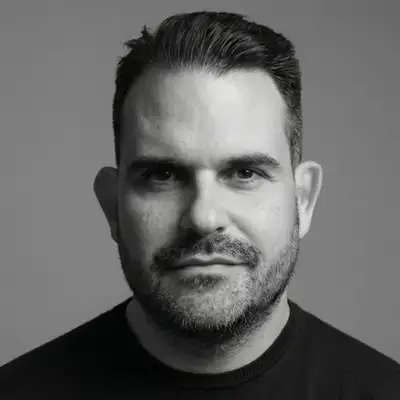
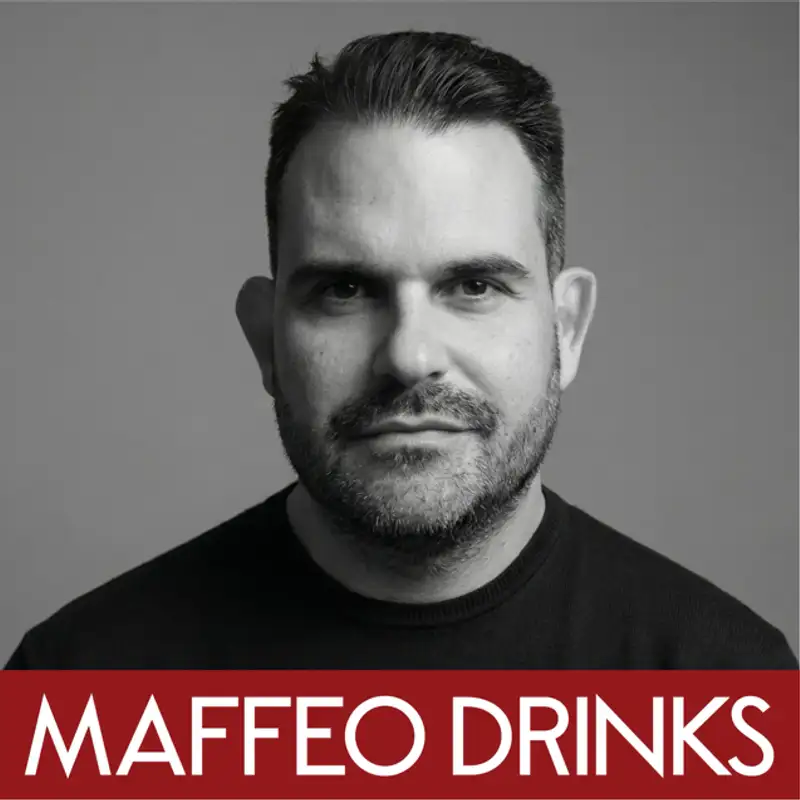
Felice Capasso | The Power of Liquid-driven Messaging | Sesto Senso Spirits Academy | 068
Summary
In episode 68 of the Maffeo Drinks Podcast, host Chris Maffeo talks to Felice Capasso, Diageo WorldClass winner of Norway 2024 and WSET 2 &3 Spirits Educator. They explore compelling storytelling and strategies for brand building in a crowded market. The discussion covers the importance of having a clear message in packaging, brand advocacy training, and maintaining consistency across all marketplace touchpoints. Felice shares his insights from both the brand side and bartender’s perspective, emphasizing the need for clear and expressive communication in the spirits industry. The episode touches on balancing brand identity with creative freedom, offering examples of successful brand strategies and the importance of education within the industry. 00:00 Introduction to Episode 68 00:51 Meeting Felice Capasso 02:38 Felice's Journey and Background 05:04 Industry Insights and Brand Building 08:38 The Role of Expressiveness in Spirits 15:28 Managing Consumer Expectations 21:48 Brand Brainwash in the Spirits Industry 22:49 The Importance of Blind Tastings 24:24 Understanding Market Positioning 27:01 Explaining Product Characteristics 29:22 Creating Clear Brand Identities 35:27 Recruiting New Consumers 41:10 Distillation Myths and Realities 44:43 Conclusion and Final Thoughts About The Host: Chris Maffeo About The Guest: Felice CapassoWelcome to the Maffeo Drinks podcast. I'm your host, Chris Maffeo. In episode 68, I speak to Felice Capasso, the agile world class winner of Norway 2024 and WSCT two and three spirits educator. We dive into the power of effective storytelling and strategies for successful brand building in a crowded market. The episode also covers how to have a clear message in packaging, brand advocacy training, and in all of the touch points in the marketplace.
Chris Maffeo:I hope you will enjoy our chat. One small ask that means a lot to me. If you enjoy this podcast, take the time to leave a review on Spotify or Apple Podcasts. You will also find a detailed transcript of the episode on mafjordrinks.com, where it gets pre released twenty four hours before other platforms.
Chris Maffeo:Ciao Felice, welcome to the Muffer Drinks podcast. How are you doing?
Felice Capasso:Ciao, Chris. Very good. Very good. Thank you for having me. How are you?
Chris Maffeo:I'm good. I'm good. And it's a great honor to have you because we've been following each other for I don't know a couple of years on Instagram and LinkedIn. I was watching and listening to your videos. And then finally, at the Mirror Hospitality Expo, we saw that we were both on the speakers list.
Chris Maffeo:And then we actually realized that where my family comes from. So the mafayor that gives the name to the podcast is actually coming from the same region as you. So we felt even more of a connection, not only Italian, but even from a 50 kilometers radius from where our origins are.
Felice Capasso:It's a small world, man. It's a small world. But you need to know that the only reason I started making videos years ago was that so one day I could meet you. That was the only reason why I started making videos. When I started making videos, was like, I'm going to make a lot of Instagram videos.
Felice Capasso:I'm going to make them educational. I'm going to make them about spirits. So one day I can meet this guy. I
Chris Maffeo:love it. You're a funny guy. You're a funny guy. But now let's dive in because you have a very interesting profile because you are the world class winner of Norway of 2024. So that was just announced a couple of weeks ago and I didn't know that you were even participating and I saw the photos and there was a great surprise.
Felice Capasso:And somebody kidnapped me and then I found myself in the middle of the competition all of a sudden I was like, okay, then I'm going perform.
Chris Maffeo:And you are I mean, tell us what you do, but you have a bartender background. And it's it gives a lot of nice interesting perspectives of, you know, for our listeners, because you're not from the brand side, but you are more from behind the bar and behind the desk, to say.
Felice Capasso:Yeah, so basically, I've been working from both sides. Actually, I've been working with brands as well. I was working with a Norwegian brand as a global BA for three and a half years. I also come from a bar background and I'm also a spirits educator. Now I have a school in Oslo where I teach WSET courses, spirits courses.
Felice Capasso:It's an interesting background because it gave me the opportunity to look at this industry from different perspectives, from the perspective of a bartender who has to talk to brands and write deals in order to create a menu and organize events and so on and so forth. But also, it gave me the opportunity to work with brands directly, gave me the opportunity to look at this industry from a different perspective, which is the perspective of a brand. Right? And that's where you learn about budget things and distribution and a million other things.
Chris Maffeo:This is like an interesting one that we were discussing. I remember we went to an after party with Alex Oziel, he is the founder of Nove di Dane, Vermont. And we sneaked in this after party on bar convent two years ago. And then it was like full of bartenders. And then they were like industry people from the brand side of things.
Chris Maffeo:Then we looked at each other and we said, these kind of parties are the parties in which you realise that the drinks industry and the hospitality industry are not exactly the same industry, you know, they are part of the same ecosystem. But they are actually two separate, very distinct industries that have in common, the glass, the bottle, the bar, you know, and they try to speak to each other. So it our role and I, know, my role as well, and your role is exactly to be able to translate the messages. And like it's the same language, but it's different dialects, know, and it's different lengths and you often misunderstand each other, you know, like I see a brand ambassador or brand manager going to speak to a bartender and they have no idea what each other is talking about, even though they are speaking about exactly the same bottle and exactly the same cocktail.
Felice Capasso:Yeah, so I have a theory about that. Would you like to hear it?
Chris Maffeo:Absolutely.
Felice Capasso:I started developing this theory some years ago and I think that pretty much sums up the situation we are in at the moment, especially when it comes to the approach some brands have. So I was talking to a very high profile bartender, Italian from the South, and we were talking about the fact that many brand representatives, they all sound the same. Whenever they go and approach new clients, whenever they go into a tasting a bar, for example, they all sound like a Wikipedia page, pretty much. He was talking about the fact that recently, especially some big spirits companies have been hiring people who used to sell chocolates and tires two weeks ago and now they're selling spirits for big brands. And my theory about this, that's definitely a negative.
Felice Capasso:There are some positives about this as well. But my theory is that this is happening because in the end of the day, if you think about it, in order to be, for example, a lawyer, I don't want to compare ourselves to lawyers, of course. But that's just for the sake of the argument. If you compare our industry or a bartender or a sales rep to a lawyer, for example, or a doctor, not everybody can become a lawyer because you need to go through several exams, you need to pass these exams, and then you need to practise and then you can become a lawyer on your own. Now, anybody can become a sales rep.
Felice Capasso:Anybody can become a bartender, right? So this is definitely positive because it gives our industry a larger space to play with because more people can enter our world and therefore even more talents as well. But the negative side of it is definitely that by having a much more broader reach, then you also end up having people who are not supposed to be doing that, people who don't want to do that. And that's what happened with our industry. There are good people, there are bad people.
Felice Capasso:Think the main issue is that there is a general lack of overarching rules. There should be a much more strict policy when hiring people in our industry.
Chris Maffeo:Let's start with my usual opening question that now all the listeners are waiting for it, which is: Does it start with the brand or with the liquid? What's your take on that one?
Felice Capasso:Yes. So my take is it starts with an idea. That's what it starts with. Now, the idea could be in the form of a liquid or it could be in the form of a value, which is what I like personally. What am I bringing to the industry?
Felice Capasso:And to be honest with you, there could be many different ideas. I mean, the idea could be making money, which I have nothing against. Many people start brands just for the sake of making money. And to be honest with you, I have absolutely nothing against profit and making money as long as things are done in a certain way. That doesn't mean that things have to be done my way.
Felice Capasso:Think things have to be done with a work ethic. That's also about how you communicate the brand. If we analyze the spirits industry now, I think there are a couple of interesting scenarios. So if you look at the example of Tankerai, yeah, Tanker Eye Gin, which for me is one of the best gin ever made, by the way, they didn't really need to make a new gin. They didn't really need to create Tanker Eye 10.
Felice Capasso:I mean, did they really need to? They were already selling millions of bottles, distribution all over the world, very strong brand awareness. But they did it. They did it because they noticed that the market changed, that there were many more competitors that were coming to play on the same field. To be honest with you, I think they also done it because why not?
Felice Capasso:I mean, the point I'm trying to make is this. I've met so many producers who just do things for the fun of it. You know, here is a thing that many people don't know about distillers or many distillers. And I worked in a distillery. That's where I learned what I'm about to say.
Felice Capasso:Distilling can be very boring. That's something that people don't think about. Because when you work in a distillery, it doesn't matter. Whenever you're producing, let's say a gin, right? Once you find the recipe for that gin and then afterwards, it's pretty much all about waiting the botanicals, putting them in the still diluting the neutral spirits, putting it in a still distilling.
Felice Capasso:And it's pretty much always the same things. So I think because of that, many distillers try to escape the routine and create weird stuff. I mean, I've tried Scotch whiskies aged in ex mezcal barrels, which to me doesn't make much sense. I didn't appreciate the liquid very much, but I understand it from the distillers perspective, because the fun part is the creative part. That's the fun side for them.
Felice Capasso:So I'm not surprised when I see weird liquids. Definitely not for me, but I understand that side as well. So just to answer again to your question, I think it starts with an idea.
Chris Maffeo:So there are different scenarios. So one is the let's say, let's call it the Tanqueray kind of scenario. What is the other kind of scenario? Because now you got me interested.
Felice Capasso:So the other scenario is, for example, what I just told you now, you know, why would the Scotch whisky brand launch a single malt which has been aged in X Mezcal casks? It might sound exciting. It might look exciting. But then you go and assess the liquid and it becomes very confusing. So I'm going to tell you something else very interesting.
Felice Capasso:So in WSET, we have a term, alright, which is a it's basically a quality criteria. Right? It's one of the criteria's, quality criteria's which we use to be able to assess the quality of a spirit objectively. This criteria, which is my favourite by the way, is expressiveness. So an expressive spirit is a spirit that is a good ambassador of the category it represents.
Felice Capasso:Now, the category of the spirit is managed by traditional practices and the laws that govern that category. It's not about what Felice says or Chris says or that distiller says. It's about the laws and traditional practices. Alright. Which means that when I assess a single malt, that single malt needs to speak to me about either a production process or it needs to tell me something that the distiller was doing in the distillery when he was producing this spirit.
Felice Capasso:You know, it needs to speak to me. And I find some products to be a little bit confusing.
Chris Maffeo:So if I'm paraphrasing, guess this is like, is this from a WSET level three?
Felice Capasso:No, it's just WSET in general.
Chris Maffeo:Now when I when I did the level two, like, I didn't remember the expressiveness. But, but I liked it. I liked the term. So if I'm understanding correctly, so it has to represent the category. So in that sense, it must be boring, because it shouldn't go crazy.
Chris Maffeo:Because if a single mode goes crazy, it scores low on expressiveness of that single malt category or did I understand wrong?
Felice Capasso:Not necessarily. So one thing that is very important is that this needs to be put within the context of a specific category. Now, for example, single malt scotch, it doesn't have to be boring because that's another thing that many people often don't think about. Right? So when you're making a whisky, there are about a thousand different choices that you have, you know, from the level of esterification you want in your fermentation batch, from the type of barley you choose, peat or not peat, how much peat, you know, how strong are we going to make this fermentation batch, what's the distillation strength going to be?
Felice Capasso:So the distillation strength for the ones who don't know is pretty much the ABV at which the fresh distilled spirit comes out of the condenser. And the distillation strength that ABV will affect the aromatic intensity of a spirit or at least is one of the factors that will affect the aromatic intensity. And that's only up until distillation. Then think about maturation, which makes up, you know, about 70 to 80% of the final flavour profile of the whisky, right? Which type of casks am I using?
Felice Capasso:Which type of fill are they? How many am I using? So there are about really, there are many different choices that a distiller can make not to make a boring liquid, you know, so it doesn't necessarily need to be boring. Also, just bear in mind one thing, at least that's the way I see it. Right?
Felice Capasso:I tend to enjoy, now forget the educator side, as a consumer, I tend to enjoy liquids which are expressive and liquids which speak to me. And that could be with an ex mezcal cask, ex whatever cask, I don't care as long as the liquid speaks something to me. So I don't think necessarily just choosing to be within the limits is boring, if you know what I mean.
Chris Maffeo:Okay. No, no, no, hear what you're saying. Now, that's super interesting. I mean, I will talk to you for hours. I hope this episode doesn't last seven hours, but maybe we will split it in 10 episodes because this is very
Felice Capasso:I'll try and give you shorter answers.
Chris Maffeo:Very, very, very interesting. So I mean, like one of one of the things like when I still remember when we when we met in Bratislava, we started talking was one of one of the guest shifts. And so, you know, the liquid should drive the communication on brands. And we almost hugged each other. You said something really, really important now, but let's articulate on that one because I want to make that conversation public now, like on what we were talking about.
Chris Maffeo:So what did you mean when it clicked with you?
Felice Capasso:Yeah. So what I meant is I love it when I go to the shop and I buy a bottle of whatever spirits and then I can turn the bottle, read the label and pretty much read what I'm about to taste. What I'm talking about here is creating expectations for people, you know, so they know what to expect. Many brands, there are exceptions, all right? But many brands within the spirits industry have chosen the romantic route, is our spirit was crafted on the mountains of X place with all these romantic
Chris Maffeo:clouds and the sun are shaping and the terrain and the soil and the terroir and blah, blah, blah.
Felice Capasso:Yeah, that's right. And the unicorn tears and the star powder, all these words that mean everything and nothing because in the end of the day, they're not telling me anything about the liquid.
Chris Maffeo:We were discussing this with Georgie Bell on one of the previous episodes now that we were talking about when they say, you know, okay, I can taste oak, you know, you know, what does oak mean? I mean, have you ever leaked an oak tree? I never, you know, had a bite of an oak tree, you know, I have no idea what it's supposed to taste. Sometimes I feel that we make it too difficult, which is one point. And then the other point like is about expectations, you know, because I give you this example now, like there's a lot of brand like I mean, we know Aperol Spritzes, you know, like the they created the category, you know, and there's a lot of brands that are trying to tap into the Spritz category.
Chris Maffeo:And I've worked with some of them as well. And for me, the key thing is that how do you manage expectations, if you want to substitute up at all in that drink, because it has a very distinctive taste. And you know, you may like it, you may not like it, you may like the sweetness coming out of it, you may be too sugary for you or whatever. But you need to manage that expectation. Because if you just substitute the liquid, you are going to take, you know, put people off because then if I, if I change it with something that is out, but this is much better because there is less sugar, okay, but you have to explain it to the consumer because if the waiter is saying we don't have apple, we have Philly cheese, bitter, whatever, then I want to know what it is.
Chris Maffeo:So you have to be able to say this is much more bitter, there is less sugar, it's going to be a slightly different experience for you. But I think you're going to enjoy it. And if you like, I don't know, Campari or if you'd like an Amaro, you name it, you know, like you may like that kind of profile. But then if you just switch the cards, you know, then basically people and this happened to me with many brands I work with, like, know, they explained it to me as this is the new whatever. And then I tasted and I was like, what the hell is this?
Chris Maffeo:Know, like, but I love that product, but you shouldn't have sold it to me that way.
Felice Capasso:Yeah, think many brands now that's super interesting, I mean, I think many brands are going for, at least from my experience, going the surprise effect. But what they don't understand is that this market is overcrowded. Again, the example of Ferrico going to the spirits shop. Yes. So if in front of me I have two bottles, all right?
Felice Capasso:And one of them gives me some expectations on the taste profile. Look, actually, this happened recently, two weeks ago. I came back from a trip. I stopped at the duty free of the airport because I'm studying wine as well now. So I wanted to buy a bottle of Chardonnay from South Africa just to taste the profile and analyse it and enjoy it as well eventually.
Felice Capasso:And then there were several bottles. All right. And there was one bottle that caught my eye. I flicked the label and I read on this bottle. It was something like: Our Chardonnay is expressive of what Chardonnay is supposed to be with aromas of lemon and green apple.
Felice Capasso:Our fermentation uses wild and cultured yeast. So here you can expect aromas of banana X, Y and Z. We also mature it in casks for X amount of time. This is going to make the texture a bit more creamy and soft and blah blah blah blah blah. So pretty much it was telling me how the liquid tastes like.
Felice Capasso:And, you know, I was reading it and I was like, oh man, that's exactly what I was looking for. And guess what? I bought the bottle. There were other bottles standing right in front of me, which didn't do the same thing. So I was like, you know what?
Felice Capasso:Because people want the safer option. If people know what they're going to taste, they will buy it.
Chris Maffeo:Yeah. And you know, and to your previous point, know, like it has to reflect because otherwise it becomes a bit of a chicken and egg on, you know, liquid versus what's written because sometimes a marketeer likes certain things, and maybe work for another company before. And then he's thinking that the liquid tastes like certain things, but actually, was a previous liquid that he worked for, rather than what's in actually in the bottle. There is a disconnection from it. But to your point, I would make, for example, WSET or whatever certification a mandatory thing for people entering the industry.
Chris Maffeo:You know, I came from beer, you know, you see the WSET there, behind me, you know, the wine and spirits on level two. And I came from beer. And when I reinvented myself, as you know, when I opened my company, and I launched my company, the first thing I said is like, I want to work on brands outside of beer, you know, I want to work with spirits. And I did an ID the WSET level two on where wines first and then on spirits. And that has given me some information.
Chris Maffeo:And sometimes when I'm talking to people that have worked twenty years in the spirits industry, they have no idea what I'm talking about. Yeah, because they never had that kind of education. They had a brand brainwash kind of education. My brand is the best choice. You shouldn't drink any other.
Chris Maffeo:You know, it's like you you get married 18 and you have never talked to any any other person from the from the other sex. Then you divorce and then it's like, okay, what are how am I supposed to speak to men or to women? Because he also brings another point with many companies that don't want their employees to drink other brands. And then all of a sudden, like, how am I supposed to fight that competitor if I have no idea how it tastes like? Because I can only buy it on my free time and hide that bottle in the cabinet because I don't want my boss to see me drinking it.
Felice Capasso:Yeah, 100%. I couldn't agree more. And I actually have witnessed this with my own eyes. I'll tell you a story briefly. So I was doing a tasting for a whiskey brand again, American whiskey brand for the executives of this big brand who came to visit.
Felice Capasso:And I was like, so these guys, they know their products, they've tasted their products. So there is nothing more I can do for them. So how can I surprise them? How can I stand out? So I was thinking and in the end, I came to the conclusion that the only way to surprise them and to bring them value was to have a blind tasting with their brands and some competitor brands.
Felice Capasso:Hold on now. This wasn't a blind tasting where I'll go like, okay, pick your brands. Obviously, you want to make your guests comfortable. It wasn't anything like that. It was more about.
Felice Capasso:So the way I approached it, I was like, okay, so pick sample number two. What's the aromatic intensity of sample number two? Can you smell it from here, from here, from here, blah, blah, blah, blah. They were like, okay, so it's high. Great.
Felice Capasso:Pronounced. Yeah. Then pick sample number three. What's the aromatic intensity of sample number three? And pretty much, you know, then what's the texture of sample number two compared to sample number four?
Felice Capasso:So pretty much that was my approach, you know, to understand the liquids without telling them what the liquids were. And in the end, were like, oh, my God, was this helpful? I've never done anything like this. I was like, yeah, I know. Know.
Felice Capasso:And again, this should also be mandatory to taste other liquids because you need to understand where you're at in the market or as a liquid, you need to understand where you stand, what kind of texture does your liquid have compared to your 10 competitors? What kind of aromas speak out compared to your competitors? And once you have that, I believe you can make your messaging stronger Because you can be more precise, you know, the texture of your liquid could be smoother and more mouth filling and slightly thicker compared to a skin which also has a thick texture, but is a little rougher. So, you know, then you can make your messaging more precise. I find this to be very interesting.
Chris Maffeo:Like I remember when I was working for Pilsner Uruk as a brand, know, the Czech pour is like it's a very thick foam, you know, it's a very high. A lot of people are like, Oh, what the hell is this? You know, like, imagine like Britain and so on. And for me, it's like you don't fight that objection about foam by saying, Oh, but this is the Czech way of doing foam. You know, this is the original way it should be about foam, not like like the shit you drink in Britain, you know, it's not about that.
Chris Maffeo:It's like it's about explaining, you know, like the level of, you know, happiness and you know, the foam allows, you know, like the sweetness of it. I was using in my training, I invented this like just randomly, you know, I was using the Parma ham as an example, like the salt, you know, when we say prosciutto dolce, know, it's wheat prosciutto, you know, it doesn't mean that there's sugar in it. It means that there's no salt, you know, because in the fat, the salt doesn't permeate the fat, it just enters the meat. So if you remove the fat from the meat of the ham, you you get a very salty experience. If you leave the thick lie lay of fat, you get this kind of sweet feeling because it's a contrasting on the saltiness.
Chris Maffeo:So it's not actual sweetness. And that's exactly the same with the hoppiness of Pincer Roquel with, with the foam because hops don't enter the foam, you know, but if you explain it this way, first of all, it's sticky, because you will remember it. And secondly, you're not going, you know, headbutt on your customer like that, that guy that is very funny on Instagram that says like, don't fuck it up, you've been doing it wrong all your life, you know, you know, if you do it in a funny way, then it's fine. But then explain people and bring them on your side, or at least say, Okay, I'll still never drink with with foam. But at least now they're educated and they know what what it is about.
Chris Maffeo:You mentioned like many, many interesting points. What I'm interesting to know, like one of the points that I that I make is always to, you know, not trying to appeal everyone, you know, for a brand. Focus on what I call a target occasion. So whether you want to go for a specific cocktail or for a specific time of the day or for a specific taste profile, you know, do you agree with that kind of approach? Or you know, how would you recommend to a brand, you know, to be specific enough because a lot of people say like, you shouldn't be too prescriptive.
Chris Maffeo:But then at the same time, you need to be somehow prescriptive. What's your take on this?
Felice Capasso:Yeah. So I believe you should have an identity, a clear identity. All right. And you build your liquids based on that identity. The communication you have should resonate with that identity.
Felice Capasso:The events you have should resonate with that identity. You make sure you have your identity. Then let people choose. Of course, have your event, I don't know, an aperitivo brand, have your aperitivo event with snacks and bubbles and blah, blah, blah. But then people will choose in the end of the day.
Felice Capasso:The market will choose how to use your product and freedom is great. I think the issue is when there is a lack of identity, as you said, you know, brands are trying to be everything everywhere. I'm not in a position to judge because I don't own a spirits brand. I think it's always easy to talk without knowing nuances of us. But that said, it's like you, Chris, right?
Felice Capasso:You have your identity, right? You live in Prague. Yes, you're Italian, you have an Italian accent, you dress well, you put your jacket on. That's your identity. Yes.
Felice Capasso:And then, you know, you showcase this identity and your accent and your way and your thoughts and your ideas. And then it's up to people if they want to invite you for dinner, for lunch, or they don't want to invite you at all.
Chris Maffeo:That's very true. That brings me to another point, which is how can we make brands more accessible in terms of languaging? Like many, many times like whiskey brands, rum brands, know, they're very intimidating. It's like the wine shelf that you mentioned before, you know, like, I have no idea what to look for, how it's supposed to taste, you know, then I just go on price on name on the bottle on, I think this could be interesting and so on. And there is this element that, you know, is totally lacking, because then, you know, you scare people off now.
Chris Maffeo:And then all of a sudden people say, Oh, people don't drink whiskey, or people don't drink rum or whatever. Know, the reason why for me, at least like empirically, there's more people drinking rum than drinking whiskey is because rum is first of all, it's sweeter. But it's also like more approachable than whiskey. You know, has created this connotation that is only for a few is like cognac. It's like it's expensive is only for a few people only if you understand it and so on.
Chris Maffeo:While rum is having all these big parties on the lower end of the market, so to say. Those categories that are trending are probably categories that manage to speak the language of the masses versus other brands and other categories. They are keeping it a little bit more an elitist kind of approach?
Felice Capasso:It's a complicated question, which requires a complicated answer. So first of all, I don't think that spirits should be made like spirits communication should be made more accessible. I think it should be made more clear. I think one of the issues right now in the spirits industry is that some brands try to be way too accessible. And they do that by mentioning, as I said earlier, words which say everything and nothing.
Felice Capasso:Terroir of say, what does terroir tell me? Honestly, now that you mentioned terroir on your label, right? That mention an aromatic profile that I can find in your liquid? Mention the kind of finish, mention the texture, mention anything else that I can find in these liquids? Then they can make it more clear.
Felice Capasso:I can choose more wisely when I'm buying products. That said, you brought up rum now. I think rum is a little more complicated. The rum industry is very varied and there are some countries as an educator, Chris, you need to understand I always relate my arguments to the laws regarding spirits production and regulations. So I have to mention this, that in rum, there are certain countries which have very strict tight rules and some other countries which have very little.
Felice Capasso:And in the countries where they have very little rules or even no rules in some cases, they tend to do everything and everywhere. And that perhaps could reflect into their communication and in the way they do events and so on, which then this argument can be extended into the type of reach they have. I, as a professional, as I said earlier, I'm looking for a brand who can give me expectations. I'm looking for a brand with a clear identity and I'm looking for a brand that keeps the promise it has made on the label. Now that said, this industry is not made of Felice only.
Felice Capasso:I understand there are consumers, there are people who drink and they got nothing to do with this industry. They just want to drink for fun. Completely understandable, completely fine with that. But that said, I just want to say this: it wouldn't hurt to be more clear, you know, and make the communication more about the liquids. And to be honest with you, Chris, it's absolutely fine if there is a certain category of spirits which is more appreciated by the elite and a certain category of spirits which is appreciated by people like me and you.
Felice Capasso:It's absolutely fine.
Chris Maffeo:I thought we were part of the elite, Felicia, what's wrong?
Felice Capasso:We were. Then we met in Bratislava, everything changed. It's fine to have an identity, you know, it shouldn't be everything for everybody.
Chris Maffeo:I agree. To your previous point, I mean, what I was referring to is also like the fact that, you know, there is a lot of languaging used from a distiller perspective. So it's about okay, I've used 17 botanicals, I've used this oak, I've used this thing. And then all of a sudden, like, know, if people know what that means, they know. But then what always say, like, I don't care how many botanicals have you put in this gin, I want to know, what am I supposed to taste?
Chris Maffeo:100 You know, because if you mentioned 2,037, however they are, I want to know what am I supposed to taste like am I supposed to say taste, you know, like a lemon zest or citrus or pepper or basil or rosemary or whatever the hell like, know, it's it's the prominent botanical of that spirit. And then I can relate to it in a little bit better way because otherwise, Jenny just like, okay, then I choose between I I remember, you know, like, when my my my father was still with us, you know, he was telling me like, you know, what is this thing with these hops? This is like with five hops and this is with seven hops. So I buy this one because it's better. As I know that that doesn't mean anything, you know, like it's not about how many hops is not the horsepower in the Lamborghini, you know, like, it's just like it's a different kind of thing.
Chris Maffeo:But, you know, I feel and I and don't get me wrong, I don't want to make it more accessible in the wrong sense. But I want to make it as you said, rightfully clear to manage expectation and I I know what I'm buying and I buy bangs for bucks kind of thing now. But on this one, I'm a big fan of like bridging categories with taste profile now because I don't like I don't like to live with the categories that I've been assigned. There's usually like the people that come in as I'm a rum drinker, know, I want to drink rum, I want to drink gin, I want to drink whiskey. But then there's also people that are not into categories, they may think of something, but they go more of from a taste perspective.
Chris Maffeo:I like sweet, I like pina colada, I like Negroni, I like this is how I explain myself. For example, when they want to surprise me, then as I usually drink Negroni and then automatically they think, okay, that he likes the balance of red vermouth and bitter. You know, it's more on the bittersweet than on the sour sweet kind of thing. So I don't like the citrus. I don't like those kind of flavors.
Chris Maffeo:And then I tend to drink certain things, but I feel that there should be more kind of like education done on this front to recruit people into categories they're not used to? What's your experience as a bartender first and then as an educator?
Felice Capasso:I think here I need to answer to you as an educator first and then as a bartender, because that's when I sort of developed this thought. So based on my experience, which is actually quite interesting, if you go and analyse the nuances of it, I see that many producers whenever they're trying to make let's say Chris is not a whisky drinker, he doesn't like single malt. And me, Felici as a producer is trying to create a whisky that could make Chris happy. Now there are two options to go about this. One option is to do again, so what does Chris like?
Felice Capasso:He likes rum. Great. So let's take our whisky and age it in x bourbon casks for ten years and then the last one, two years we age it in x rum casks. The other way to do this, which I think what should be done and what is being done now by many great producers, is to create lighter styles of that spirit. Lighter in aromatic intensity, lighter in flavours, still expressive but not so slap on face kind of brands.
Felice Capasso:Imagine when you smell peated whisky, for example, like a heavily peated whisky, like 200 parts per million of peat, right? These whiskies, you can smell them from your feet, literally from the ground if you put the glass on the ground. I think the way it should be done is to create lighter styles of the same spirits, you know, so you keep the DNA, you maintain the DNA of what you do. And you can also recruit people who are not so used to drink whisky perhaps. And that's something that many big brands I can name you, for example, if you take Glamorangi 10.
Felice Capasso:Yes? Now, Glamorangi, which by the way is a whisky which is very suitable for whisky drinkers and beginners. The reason why it's suitable for whisky drinkers, it's because it's relatively lighter style of whisky. All right. If Felice, who is a whisky drinker, wants to have a whisky at 03:00 in the afternoon, 02:00 in the afternoon at twelve before lunch, I can still have that whiskey because it doesn't kill me.
Felice Capasso:Not in terms of ABV, but in terms of aromatic profile. It doesn't kill my palate before lunch. It's light. It's elegant. It's great.
Felice Capasso:On the other hand, the same whisky is great for beginners because it doesn't for the same reasons. It doesn't kill your palate. So you can start to understand our category. The reason why glimorange is lighter in style, where there are several reasons. But one of the reasons and it's purposely made like this, you know, because in fact, if you go people just Google glemorangi pot steel and you will see a picture of a pot steel copper with a very tall swan's neck.
Felice Capasso:That tall neck allows for much more reflux. Reflux is pretty much nothing else than an interaction that takes place during the steel between components with a high boiling point and components with a lower boiling point. And pretty much this interaction allows only for the most volatile components, which are typically these lighter components, you know, all your orange aromas, zesty, fruity floral to go up and to go into the condenser. So pretty much they're creating purposely a lighter style of spirit, which I think is fantastic. Another example of this can be singleton, for example, which is also relatively lighter in style, but also very suitable for whiskey drinkers.
Felice Capasso:Mean, drink it myself.
Chris Maffeo:And if I understand correctly from my old knowledge of distillation, so can we say that basically, it's, it's a pot steel distillation that is, is taking some elements from the column steel kind of distillation, in that sense. So it's like more on a kind of like vodka way of having a very tall column so that you know, like you make the heavy components much less pronounced, you know, like they basically you don't allow the heavy taste profile to go through this one neck in that sense. And then you know, like you make it a little bit lighter compared to a very small, you know, like a low swan neck that, you know, then you will have a much richer, fuller kind of body.
Felice Capasso:Actually, let's break a myth right now. Big, big time myth that column steels only produce neutral or light style spirits and pot steels only produce character full spirits. While it is true that many producers use column steels to produce lighter style spirits and pot steels to produce character full spirits, In reality, you could use a short column with fewer plates to create a very characterful spirits. Are you familiar with Agricole rum from Martinique?
Chris Maffeo:Yes. Now
Felice Capasso:Martinique has an AOC, an appellation de rigine controle, which clearly states
Chris Maffeo:I watched your video on that one. So I know it.
Felice Capasso:Right. So which clearly states that these rums must be distilled in column. Now, does anybody want to dare to say that these agrico rums are light or neutral? They're very characterful and they're distilled in column. Blanchard maniac is in many cases distilled.
Chris Maffeo:Absolutely, yeah.
Felice Capasso:It's about how you manage the distillation in the end of the day.
Chris Maffeo:This is another great point because this is another of as you rightfully called it myth, you know that automatically when people hear column still, they see the devil now when it's a flavorful kind of category, without thinking that it can be like a lower column, like with fewer plates, as you said, know, like rather than pot still is good, column still is bad.
Felice Capasso:Again, it comes down to education. I'm going to say something else now, if I may, just for forty seconds. I think there is a big misunderstanding. Right? And this within our industry when it comes to consumers and because many consumers, for example, they go and visit a distillery, right?
Felice Capasso:They learn the practices they have in place for that distillery, the production process and the way they do things. And they believe that these things that they learned are to be applied to the whole category.
Chris Maffeo:Absolutely, that's true.
Felice Capasso:Right? So instead of understanding that great, that's the way they do things, I'll give you a very quick example. In Scotland, the three most commonly known type of whiskies are single malt, blended and grain whisky. Grain whisky is typically distilled in column steels. However, you could by law make grain whisky in pot as well, as long as you don't use 100% malted barley and still call it grain whisky.
Felice Capasso:However, typically grain whisky is made in columns. Malt whisky must be distilled in pot. Now, me consumer who goes to visit a distillery in Scotland, and this is just as an example, and that's where I learned that a column steel is used to produce a grain whisky. And I know from my experience that a grain whisky is slightly lighter in style because it's distilled to a higher distillation strength and a malt whisky is distilled in pot. That's why it's more characterful.
Felice Capasso:Then it's pretty much, you know, the problem comes when I, as a consumer, who has just witnessed and learned these things, go out, go and visit production facility somewhere else in the world and then apply the same things there. Because pretty much in my mind now, column stills only create light or neutral spirits, pot stills only create characterful, oilier, more mouth filling kind of spirits. Need to understand that laws and traditional practices change by category and by style within that category.
Chris Maffeo:That's all for today. Remember that this is
Chris Maffeo:a two part episode sixty eight
Chris Maffeo:and sixty nine, so feel free to listen to both. One last thing, if you enjoy this podcast, please leave a review, share it with friends, and remember that brands are built bottom up.
Creators and Guests