Food & Drink Photography: How to start a career Bottom-up | Part 1/2 with Francesco Sapienza (New York City, USA) | 044
Summary
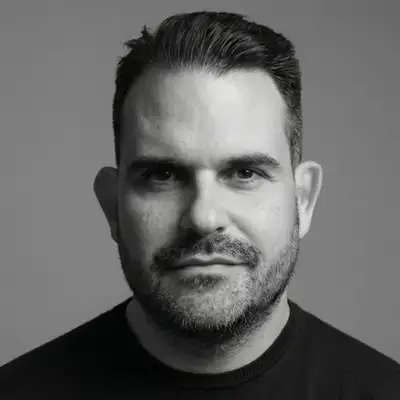
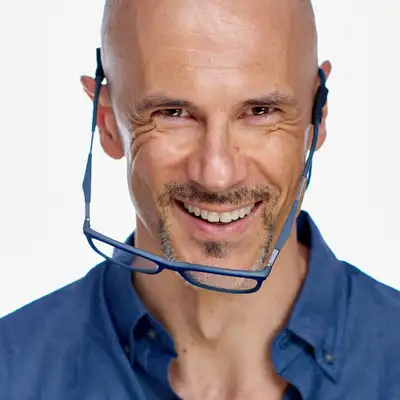
In Episodes 044 I had the pleasure to chat with one of my best friends, Francesco Sapienza. He is a NYC-based Food & Drink Photographer. An Engineer by trade, he left a successful career in Stockholm, Sweden to pursue his dream in NYC. We spoke about how to best work with the different players in the hospitality ecosystem. I hope you will enjoy our chat. Time Stamps 0:00 Intro 2:09 About The Guest 3:57 Choosing a Niche 9:36 Choosing Your Target Customers 11:45 Photographer-Brand Communications 15:00 When The Customer Doesn't Know What They Need 20:00 Creating Demand As A Photographer 25:36 Outro About the Host: Chris Maffeo About the Guest: Francesco SapienzaWelcome to the Maffeo Drinks Podcast, I m your host Chris Maffeo. In episode 44 I had the pleasure to chat with one of my best friends, Francesco Sapienza, he is a New York based food and drink photographer. An engineer by trade, he left a successful career in Stockholm, Sweden to pursue his dream in New York City. We spoke about how to best work with the different players in the hospitality ecosystem. I hope you will enjoy our chat.
Chris Maffeo:Hi, and welcome to the Maffeiro Drinks Podcast. Today, we have the pleasure to welcome Francesco Zavienza from Francesco Zavienza Photography from New York. We are meeting here in Naples. We happen to be here at the same time, so we took the chance to do a video podcast. We don't know yet if we're going to publish the video or the audio,
Francesco Sapienza:Or none of them.
Chris Maffeo:Or none of them. But I hope you will enjoy it. Francesco, welcome.
Francesco Sapienza:Thank you. Good to see you.
Chris Maffeo:Good to see you.
Francesco Sapienza:I've known you for quite a few years.
Chris Maffeo:Yes. So we are longtime friends from Helsinki and Stockholm. Then I moved to Prague almost at the same time. You moved to New York. Yeah.
Chris Maffeo:We haven't met since 2019.
Francesco Sapienza:2019.
Chris Maffeo:So it's been a pleasure to meet you yesterday and have finally Napoli and Aperitivo together. So the reason why I I wanted to welcome Francesco to the podcast is because we are working in the same ecosystem of the drinks, the food and drinks world and hospitality sector, but from a very different perspective. And we talk every day on the phone when Francesco is having his stroll to to his office, and I'm somewhere either in the office or in my home office, and we always keep each other up to date and we challenge each other on our business. And and we found out and we discovered that actually what we do is very similar. In a bottom up way, we are selling to the same customers, which is bars and restaurant owners and chefs or head bartenders and so on.
Chris Maffeo:So Francesco, tell us about you.
Francesco Sapienza:Well, short shortly, I'm an electrical engineer, and I just quit my job one day and decided to become a photographer and fought my family and all my friends who said, no. Don't do it. And what's what was it? 2006? So that's a long time.
Francesco Sapienza:I have a long business experience from my engineering career, and I transitioned into photography slowly. I didn't want to become a starting artist at 35 years of age. When I fell in love with photography, was just portraiture. That's what I wanted to do. When I moved to New York, I realized there was a very strong restaurant scene and food scene, and I happened to to take some gigs because I didn't I didn't have many clients when I moved to New York.
Francesco Sapienza:And then one thing led to the other, and I found myself becoming a professional food photographer, and that's now 90% of my business.
Chris Maffeo:That was very bottom up.
Francesco Sapienza:Very, very, very, very, very bottom up. I knew what I wanted to become. I didn't know exactly what what genre of photography I wanted to to deal with. I didn't even know that you could choose. I thought the photographer is a photographer.
Francesco Sapienza:But, no, specialization is is key, and especially in a in a market like New York. You cannot have three hats or two hats. You you just you have to stick to one hat or people won't remember you. Even if you're great at finding different genres of photography, you still need to be labeled as the expert in food photography or portrait photography, whatever that is.
Chris Maffeo:Well, so let me
Francesco Sapienza:me jump in because this
Chris Maffeo:the photographer is not a generic photographer. Reminds me of what I'm always talking about the target occasion and target outlets and being targeted and and the famous niching down. So, like, choose your own niche and be famous and own that niche and become the category king or king of your niche or your niche of one or however we want to call it. So, how did you choose your niche?
Francesco Sapienza:True story or just the story for the public? Both. As I said, I was in love with Portraiture, but I got an offer for a huge gig in food. It was a very big project. I was very excited about a big project, you know, not just the money, but also the the experience of of dealing with different types of people.
Francesco Sapienza:And it was about photographing 500 products for a very famous brand. And I realized that, oh, this can be fun. Products maybe not as fun as food in an editorial context, but that that was fun. And then right after that, I was somehow recommended to a very big publishing company, Rizzoli International, so in in The US, and they signed me a a book, my first book about food photography.
Chris Maffeo:So Which, I mean, you started pretty pretty big with your first one.
Francesco Sapienza:Yeah. Some stars aligned and it happened and it went very, very well. And I realized that, oh, this is this is fun. I I I could do this, so why not? And I I had not niche down at all at that at that time.
Francesco Sapienza:I was still still pursuing the the portraiture venue, but the food geeks were coming in, and that was super exciting because I was working. At end of the day, yeah. I mean, you moved to New York, you wanna work. Otherwise, you're not gonna survive.
Chris Maffeo:Otherwise, you're in LA. Or Miami.
Chris Maffeo:And for those who don't know, like, the book was Italy. Yeah,
Francesco Sapienza:the book was very, very big and I was
Chris Maffeo:I have a signed copy.
Francesco Sapienza:Crazy excited. Yeah, I remember that. So, that's how it started. And then after that, I went I started sending my book to different companies. And that was maybe more I I wouldn't say cold calling or or cold emailing different companies, but I'm I'm pretty shy.
Francesco Sapienza:It's very hard for me to kind of sell what I do, but I figure, okay. I can send the book, you know, and you just need an address and a name. So I sent the book out, and people were not responding. They were not even thanking me for the book. I'm like, what is this?
Francesco Sapienza:So I started calling people. I like, hey. Did you get my book? And I got in touch with The New York Times. The person that got the book at that time, she said, yes.
Francesco Sapienza:I got the book. Thank you so much. Yeah. Of course. I would like to work with you.
Francesco Sapienza:And I'm like, really? So And that that was like the the door to the restaurant scene, which I had not explored a lot because I was going for the big brands, the advertising stuff. I never thought that there could be such a strong market for food photography within the restaurant scene. And we're talking more than ten years ago, so social media were not exactly what they are today. So restaurants were not really interested in in in social media photography at all.
Francesco Sapienza:But I got in touch. I met so many restaurants because I was doing all the reviews for The New York Times. So the critic would go there, eat, and then they would tell The New York Times, okay, I want you to take photos of these dishes because they were the dishes that the food critic had had eaten at the restaurant.
Chris Maffeo:Okay.
Francesco Sapienza:And we would come at several times. And, of course, they didn't they wouldn't know that the food critic was coming because, you know, you're not allowed to be prepared. But for me, it was just coming in and booking a shoot with the restaurant and taking the shots of the of those foods that would go into the review of And the so that way I met so many people in the restaurant world, I kind of fell in love with that world. And many of them ended up hiring me afterwards after they had worked with me for that hour and a half that I was there. So that was great way of connecting with people.
Francesco Sapienza:That wasn't even intended to be that way. I just wanted to do a gig for The New York Times, but I ended up meeting so many people and many of them became clients down So the that was very interesting, very, very bottom up. I mean, started by working with me and seeing how I worked without even paying me because I was paid by The New York Times to just take the photos of the food. And so the restaurant could have a firsthand experience of what it was like to work with me, which was great for me. And once you have the personal connection, it's so much easier, you know, even to knock on the door and say, Hey, do you need a photographer?
Francesco Sapienza:Rather than cold emailing or cold calling people they've never met.
Chris Maffeo:Yeah. Which reminds me of of what the industry calls the liquid on lips. So the, you know, the free sampling. So you are trying the the drinks brand. In this case, you know, somebody offered it to you.
Chris Maffeo:So they bought you an expensive whiskey or a nice gin or a nice drink. And then afterwards, you actually say, oh, actually, I like it. I want to buy a bottle now because I tried it. It was actually even free. Or you can pay for it and so on.
Chris Maffeo:But how so let me think from my experience and trying to relate to what you do. Let's say, in a way, you you picked your city, which is New York Part of my philosophy, at least, is, like, it's own that city before moving on to the next one. So be famous in For sure. In your city. You've got what?
Chris Maffeo:Thousands of restaurants and bars in New York City. Yeah. I mean, if you take the greater Oh, sure. New York metropolitan So how how do you choose I mean, that's not your cake in a way, because I I would assume that your cake is much smaller than Yeah. All those thousands of, you know, kebab shops and
Chris Maffeo:Yeah.
Francesco Sapienza:Of course.
Chris Maffeo:Corner pizza, you know, New York pizza, How bite do you choose your city? How like, how do you choose your target customers?
Francesco Sapienza:There's a lot of customers, they come through word-of-mouth because I've worked with somebody or they find me online. But then there are customers I try and go after in a way, and I look at their aesthetics and look at what they do online in terms of campaigns, in terms of what kind of visuals they post, and and I look at the brand. I like to work with with brands that inspire me. And in case of restaurants, you know, it's also places where I've been. And maybe I happen to go eat at the restaurant and I like the decor.
Francesco Sapienza:I like the way that the staff works. I like the hospitality that they offer you. And then maybe I realize, oh, this could be a nice client because I'm really like liking the experience of being there. And since I also want to offer an experience of hospitality, if I can say so, with my services, I'm happy when I can find a brand that I can resonate with. So I would say that by looking at what they do already now and if I have firsthand experience with their services, then of course that helps as well.
Francesco Sapienza:The pool is huge still. Even if you just restrict yourself to the brands that you might be interested in for for one reason or or another.
Chris Maffeo:Wow. And let let us, let's say, dive into the restaurants and bar world. Our listeners are from the drinks ecosystem and the black hole of hospitality, you know? It's the how to work with bars, you know? Because from a bar perspective, there's bartenders, bar managers, owners, you know, there's many players within the ecosystem that are making decisions.
Chris Maffeo:In restaurants as well, I mean, are some restaurants that are owned by a chain, by a big group, by is like more of a mom and pop, one in the kitchen, one at the table.
Chris Maffeo:Yeah.
Chris Maffeo:So you mentioned the brand that that's the most visible thing that you can find online. But then ultimately, it's a people's business now. So what role does the person play? And first question. And the second question is, who is the actual decision maker in your world?
Francesco Sapienza:That changes depending on the business. There's definitely the businesses that have everything in house, meaning that their communication is made in house. So they have their marketing department, in which case I would deal directly with with them. Other brands have agencies that do their marketing, their communication, PR, everything, in which case they will be the interface with me. So sometimes I get contacted by agencies.
Francesco Sapienza:It could be PR agencies or social media agencies or just ad agencies that work with the restaurant as a client and they find me or recommended to work with me through referrals. And then, so that's my interface. In other cases, smaller places, it might be the restaurant owner, it might be the restaurant manager. So it depends on how they structure their communication because I'm part of the communication. I mean, my images are just a piece of of the entire puzzle because the way they communicate for this their their message and everything, I'm a piece that needs to fit there.
Francesco Sapienza:And ultimately, I am solving a problem for them. I'm creating images that they use to talk about something, to communicate a message. So they don't hire me. Of course, they hire me because they like the photos, but it's not that they wanna hang the photos on the wall. I'm solving an actual problem by giving them, by delivering them photos, which is help them communicate what they stand for.
Chris Maffeo:So can I say that basically you are almost like an ingredients of Yeah, their
Francesco Sapienza:yeah? Definitely, definitely. If you're cooking and one of the ingredients is not good enough, that's going affect the final result.
Chris Maffeo:So they're not they're not cooking to eat the meal by themselves. They they cook the meal for for their customers. And so that your followers are a tool to help them sell more advertise or get more footfall in or Yeah. Definitely.
Francesco Sapienza:And reinforce their brand and be more recognized for what they want to stand for. Ultimately, that's what the brand
Chris Maffeo:is about. And what I'm thinking is that I'm having this kind of conversation with many industry players that from a bar perspective, a bartender or a bar manager is an expert. He or she knows what they want, so in terms of brands and so on. But I feel that sometimes that's a little bit overestimated because, you know, not always they know what they want. They may think they know what they want, so they may think they need 15 gins on their back bar, but maybe they actually need four.
Chris Maffeo:So by reading the menu online or going there and asking for the menu and seeing that this bar has got 15 gins, you may think, okay, this is a gin bar, so I'm going to sell them the sixteenth. While actually, like, it would be much better to redirect them and say, actually, you don't need 15, you will need four, and let me be one of the four. And that is actually something in which they are professionals because they are bartenders, so they know brands and gins and spirits. But they are not photographers, so they are not professionals in your field. So you are selling them a service that is actually not in their, let's say, capabilities.
Chris Maffeo:You mean
Francesco Sapienza:they're not always able to judge the quality?
Chris Maffeo:Yeah, don't know exactly what they need. So they know they need a photo, Yeah. But they don't know exactly how that works. That happens. How much does that cost?
Chris Maffeo:What can I what can they use that photo for? If it's a good photo or a bad photo? If if a photo by an iPhone from an influencer is enough or if they actually need a professional. So how how do you navigate that?
Francesco Sapienza:I would I would say that's one of the ways that I normally use to kind of filter and get a sense for the client and if I really want to work with them, how organized they are and if they know what they need and why if they're on top of things from up here. I mean, their communication is clear and then I was talking about before that piece of the puzzle that I am. So I just have to to just match match what their expectations are and everything's pretty defined.
Chris Maffeo:Mhmm.
Francesco Sapienza:As opposed to clients who, as you said, they just know that they need photos, professional photos, but they don't know what kind of photos, they don't know how to use them. And in that case, I almost feel like it's a waste of their resources to hire somebody and spend money on professional photography when you don't really know what they're trying to communicate and you so maybe it's bad business on my end, but I try and talk to them and make sure that that they know why they ask for some photos and tell it.
Chris Maffeo:Absolutely.
Francesco Sapienza:Guys, are you are you really sure that you need this? Because this to me, from what I'm hearing, doesn't make a lot of sense. Or I'm not hearing anything, so I don't even know where to go. Because if your message is not clear, how am I supposed to direct the photos? Even if I take responsibility for deciding what to shoot, I mean, it's wide open.
Francesco Sapienza:You could go any direction. I need to have information from you. And if that information is lacking, then in many cases, I say, yes, of course, I'll do the photoshoot, but I think you might want to direct your efforts in a different way and first realize what you want to communicate and then hire me and I think it's gonna be more successful. And then that also brings to clients who having a client who know who knows what they want, of course, creates business in the future as well because then it becomes so much easier to work with them. I I start to know the brand, they know me, they know that they can just say, I want this feeling and then I need five photos, you figure out the shot list and I can do that.
Francesco Sapienza:But if it's not clear where we're going, it becomes very, very hard for me. So those clients who know where they want to go, those are great clients. Everything becomes so much easier and their effort has a return immediately because it's part of harmonized, concerted effort, photos, language, tone, and everything. And, of course, that brings result as opposed to, yeah, let's just have a nice photo of a cheesecake and then post it there and hope that that's gonna sell more.
Chris Maffeo:It reminds me of when restaurants are buying the best equipment in the kitchen and then they're lacking a chef or best brands and best back bar in a bar and then they're lacking a professional team, but then they say, oh, but look at my back bar, you know, I've got the best products here, you're lacking skills. But how do you create demand for let's say, to avoid the wrong kind of customers to contact you in the first place? Because, you know, are you doing some communication from your end that helps that guidance so that actually they may want to contact you and then they read, I don't know, a blog or a website or your social media? And then they actually say, actually, this is not the right person for me because You make them realize that they actually didn't know exactly what they wanted. Or actually the other way around is like people that have been skeptical and they were taking photos by themselves and then they realize like, wow, actually I need a guy like them like him.
Francesco Sapienza:Yes. Where where do we start? I would say that I I try and and and be a source of information for restaurant owners, restaurant managers, or in general brands in the food business by writing a blog. I have a blog where I where I talk about photography, and most of the stuff is not really technical because my clients, they don't want to become photographers. Some may benefit from knowing a little bit more about food photography, and so on a on a certain level, very low level, you can kind of guide them through basic stuff.
Francesco Sapienza:But at the end of the day, I know that many of them don't even have experience of working with professional food photographers, and I would like to help them and make things a little bit more clear so they know what we are expecting, we as professional photographers, from them, and so that they realize a little bit better what they need. And also going back to the question about their messaging, they realize that maybe they don't know certain things, should figure those out first before coming to us. I'm trying to help them, my clients, to understand how it works in professional food photography. So things, for example, usage rights. Most people don't know what they are, and they're not supposed to know if they're restaurant owners.
Francesco Sapienza:I mean, yeah, to some extent they might need to know, but it's not their core business. So I think it's important that they are informed about what they're buying in terms of service. So am I buying photos that I can use on a billboard in Times Square or am I buying photos that I can use on social media on a Facebook page? It makes a huge difference. So if you can understand a little bit better what it means to buy a service from professional photographer, then, of course, it's gonna be easier for you to navigate the world of professional food photography and even choose a photographer.
Francesco Sapienza:It doesn't have to be me.
Chris Maffeo:Yeah.
Francesco Sapienza:So I I like to help that way, and I require certain things depending on the shoots that we're going to do. One thing that I normally require for social media shoots, for example, is that they take care of their shot list. It needs to be crystal clear what we're doing. And if that's not in place, I'm not gonna shoot because you're wasting your money and time. I'm wasting my time.
Chris Maffeo:The two main takeaways from me are, you know, the fact that you're actually helping also your competitors. Yeah, Because for you're helping restaurants understand how to deal with photographers in general. Professional photographers. Professional photographers first, and then they may choose you over them. But And then the second thing is that you are helping them, let's say, buy the right car.
Chris Maffeo:You avoid that they buy a Ferrari if they live in a pedestrian area and vice versa.
Francesco Sapienza:You should work as my communication manager.
Chris Maffeo:You should? Yeah. That's I'll send you an invoice. But
Francesco Sapienza:that's that's that's that's correct. I enjoy helping them because at the end of the day, I'm helping myself in a way because the people who listen to me will learn stuff that will help them work with me or another one, but also know that they they know about this stuff in a way because I've talked about it. And if they can remember me because I taught them something that they have never understood, that's fantastic.
Chris Maffeo:Yeah. And also, it's a positive circle in a way because, I mean, you are actually helping them not get robbed or spoiled by competitors. And not because they are cheating, but just like because they are selling them a product that they actually didn't need because, you know, like a restaurant owned by, I don't know, husband and wife, it's useless that they say, Oh, it costs this much, but you can actually use it on a billboard in Times Square because they're never going to afford a billboard So in Times actually, they just need, I don't know, social media rights. And vice versa, you are redirecting them in a positive way so that they don't feel that they don't need a photographer because it's felt almost like a lawyer, like a very professional that they actually can avoid using
Francesco Sapienza:Yeah. That's correct.
Chris Maffeo:In in in that sense.
Francesco Sapienza:Oh, so the question was, yeah, how you build demand
Chris Maffeo:Yes.
Francesco Sapienza:In a way. Yes. And so I was trying to answer that question the information that I try and put out about professional food photography and how that can help by helping them realize what they need and by making me the person who's telling them, of course, reinforces my brand and reinforces the fact that I'm there to help them no matter if they pay me or not. Yeah, absolutely. Because even that information is free.
Francesco Sapienza:Absolutely. And I think that helps everybody at the end of the day.
Chris Maffeo:That's all for today. Remember that this is a two part episode, forty four and forty five. If you enjoyed it, please rate it, comment and share it with friends, and come back next week for more insight about building brands from the bottom up.
Creators and Guests