Traditional to Modern Occasions | How they evolve and What Consumers Need | Part 1/2 with Paul Hletko of FEW Spirits and Goza Tequila (Chicago, IL, USA) | 022
Summary
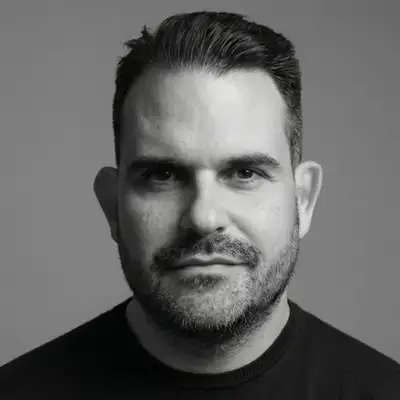
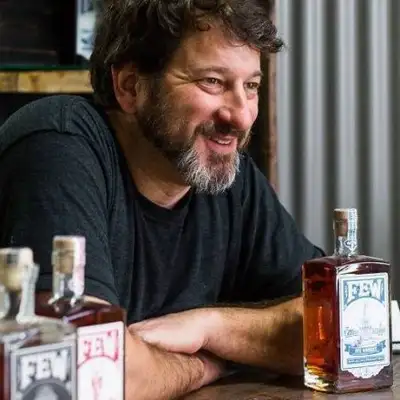
In this episode, Chris Maffeo talks with Paul Hletko, Founder of FEW Spirits and CEO of Goza Tequila. He is one of the founding fathers of the Craft Spirits Revolution, founding FEW in 2010, and has a unique perspective on the evolution of the drinks ecosystem over the past 13 years. He is the Former President of the American Craft Spirits Association. We hope you enjoy our chat. We discussed: From 0 to 1 bottle • What's Your Target Occasion? • Evolution of Identity over Time • Home Turf Advantage From 1 bottle to 1 case • New Consumption Adaption • Traditional Vs Modern Occasions About the Host: Chris Maffeo About the Guest: Paul HletkoHi, and welcome to the Maffeo Drinks Podcast. I'm Chris Maffeiro, founder of Maffeo Drinks, where we provide a non nonsense approach to building drinks brands from the bottom up. I will be your host, and in each episode I will interview a drinks builder from the drinks and hospitality ecosystem. In episode twenty two and twenty three, I had the pleasure of interviewing Paul Letko. He is the founder and distiller of few spirits and CEO of Goza Tequila.
Chris Maffeo:He is the former president of the American Craft Spirits Association. He has played a key role in the revival of small batch spirits in The US and brings an incredible experience to the podcast. I hope you will enjoy our chat. Remember that this is a two part episode. So if you liked it, feel free to listen to both part one and two of our chat.
Chris Maffeo:Hi Paul, how are doing?
Paul Hletko:Hey, how are you doing? Doing good, Chris. Happy to be on today. Very excited to be here.
Chris Maffeo:Nice, nice. Thanks for making the time. This is a real honor for me to have you. And for our listeners, I mean, Paul and I met well, like a couple of years ago on the hype of Clubhouse when we were all sitting at home.
Paul Hletko:Yeah. Clubhouse was fun until it wasn't.
Chris Maffeo:Exactly. But I mean, we have to be thankful because that's how we met, no? So Yeah.
Paul Hletko:No, there's there's a lot of really good stuff happening on Clubhouse for a long time. It was a really exciting place because you could really have access and talk to some really cool people all over the world. But it was just a little too wild west.
Chris Maffeo:I still remember when you, I was just listening in one of your rooms and then all of a sudden you asked me a question. Was like, oh, like, you know, I need to answer now. Like it was my very first intervention in a room, so it was really fun. Thanks for that. And then that's how I got into the world of spirits.
Chris Maffeo:I was coming from beer, you were asking me questions about beer and about Europe and then here we are like a couple of years after.
Paul Hletko:No, it's always a fascinating thing. Like, even like you talk about beer and spirits, like the differences between beer and spirits in The US and the differences between beer and spirits in Chechia and the difference in beer and spirits in all these different markets. I think it's one of the really cool things about this beverage alcohol business is how wide and diverse it is that there's all these nuances that from an outsider's perspective might not seem like they're a big deal. But to those of us who are in the trenches, the differences between beer and spirits are mountains. It's these major blocks that you just don't understand unless you're in it.
Chris Maffeo:Yeah, yeah, yeah. That's right. Speaking about this, after working in many, many countries, I come to the conclusion that I agree with you that there's a lot of differences, but for let's say 50 to 80% of the trade, it's basically the same stuff in the sense that, I mean, you're still marketing your product to customers. Do you feel that way or do you feel it's actually a much more different? I think
Paul Hletko:there's a lot more differences than that. I mean, but it depends on how you're looking at it. Like if you're looking at it from a overall general business proposition of buy low, sell high kind of thing, then yeah, they're very similar. But when you get down into the heat of the battle, they are very, very different because people are going to purchase for different reasons. You have different purchasers often.
Paul Hletko:And I don't mean like the people who are drinking, much more mean like the buyer at the retailer. The retailer has a different buyer for beer than they do for spirits very frequently. So just those simple little blocking and tackling of, Oh, well, I'm selling beer, so I talk to Chris. If you're selling spirits, you got to talk to Paul. You know, these are huge differences that you don't really necessarily understand.
Paul Hletko:You know, the difference in the trade pattern of spirits have shelf life and beer doesn't. Refrigerated trucks, refrigerated storage, kegs, keg inventory, tracking kegs, and even just things like the cost of shipping. Like it costs a hell of a lot more to ship a pallet or a container of beer than it does for spirits on a unit basis. It may cost the same amount of euros or dollars to move that container, but the value of the product inside that container is very different for beer and for spirits.
Chris Maffeo:Absolutely.
Paul Hletko:And so I think these things all have huge effects on the nature of the business, maybe not so much on the brand building part of it and so on, but in your operations side, they're very different.
Chris Maffeo:Yes, that's true. That's true. Building on what you're saying, one thing that I talk a lot on LinkedIn and on here is the focus on the target occasion. You buy it for different reasons, for different consumer. There's different needs from perspective.
Chris Maffeo:And even diving deep into the spirits world, which is more your area. Is there, you know, a target occasion that you focus on? I mean, that it's important to focus on in your experience. I don't how you built your your brand.
Paul Hletko:I don't think there is a single occasion in the beverage alcohol space. I think that's why it's really cool and exciting that different brands fit different occasions. And that's not that any one occasion is good or bad, it's just they're different. So we were talking about Jagermeister earlier. Jagermeister has a very defined consumption occasion, at least in America.
Paul Hletko:I think there's a different occasion in Germany and I think there's different occasions in certain markets across Europe. But here in The US, the occasion for drinking Jaeger is very well established and you know exactly when you're going be drinking Jaeger. You're not drinking Jaeger when you get it first thing in the morning, You're not drinking Jaeger. I mean you can, I'm not judging anybody, but that's not your prime Jaeger occasion. You drink Jaeger during the shot occasion.
Paul Hletko:You're not drinking Jaeger to sit there and nose it to go, yes, slight background notes of peat moss. No, you're drinking jaguar to, you know, we're having a good time and you're going to take that down. And that's a different occasion than say, for example, pour of few spirits bourbon. That's going to be a different occasion. And so I think that, you know, understanding your brand and understanding what its occasion is, is super important That if I try to sell few spirits bourbon as a shot occasion product, I'm going to lose because few spirits bourbon is not a shot occasion product.
Paul Hletko:Same way as if I'm trying to sell Jaeger as a high end connoisseurs whiskey, you're gonna lose that bout because that's not what the Jaeger product is.
Chris Maffeo:And
Paul Hletko:so I think it's really basic business 101 of who's your customer and understand what they want. And also at the same time, that in particular in spirits, but also basically every business or basically every CPG business, you have multiple customers. Then yes, the person that you most need is the person that is drinking the beverage in our little world here. But to get to that consumer, you have to convince a distributor and you have to convince a retailer to stock it. So you've got three different consumers that you have to understand what they want and what they need.
Paul Hletko:Because your distributor buys for a different reason than the drinker. Your retailer buys for a different reason than your drinker. And your drinker buys for a different reason than either the retailer or distributor. They've got all different goals. Certainly if you can convince the consumer to drink your product, all your other problems are going to fall into place.
Paul Hletko:If it's Poland and it's Poland, it's Poland, your distributors are going get behind you real quick. And if it's Poland and Poland, the retailers are going get you behind real quick.
Chris Maffeo:That's the old bottom up thing, no?
Paul Hletko:Right. But before you can get to the drinkers to drink it, you got to get through distributors and retailers. So brands are built bottom up. I wholly agree with you, but you also have to be able to go top down.
Chris Maffeo:Absolutely.
Paul Hletko:That you have to have a full three sixty on how are you going to get to market? What's your route to market? How are you going to communicate to a distributor what your value add is? How do you then communicate to the retailer what your value add is? And then how do you communicate to the drinker?
Paul Hletko:Oh, I drink few spirits when I, I drink Goza tequila when I, This is what I want and that's how you get to build your brand bottom up.
Chris Maffeo:Yeah, no, no, absolutely. It came very bottom up like that last line in my post and then people started mentioning it and I kept on going. But let's dive into this part. Mean, when you started FU, you were one of the first guys that started craft spirits renaissance, right?
Paul Hletko:Yeah, always get nervous saying that we were one of the first, I would say we were early is better. You were early. We were early and like when we started or when few started, there were maybe 30 people across The United States making whiskey from scratch like we do. Now there's a lot more. Like when we started, it was a very different business at that time because there wasn't the competition level that there is now.
Paul Hletko:And so you talk about building a brand bottom up. It was a very compelling message when we started because people wanted what we offered and there weren't very many places they could get it. So if you were a whiskey drinker who wanted to drink small batch craft whiskey, there's maybe 30 brands on the market. So it was pretty easy. If you're a distributor or a retailer, you want to offer craft whiskey.
Paul Hletko:There weren't many brands. So like if you look at the world today, it's very different than it was eleven years ago because eleven years ago, I actually had a three strike role for distributors. No matter who you were, the first time you called me asking to distribute my products, I said, no, Call me in six months. And then six months later, if they would call me then, I would say, No, sorry, not interested. Call me in three months.
Paul Hletko:Now when three months later go by, now they call back and like, okay, now let's talk because you actually want my product and you understand what we're doing and you're not just going to put this in a book and offer it up for sale. This is actually, you know, I'm actually a brand that you want and I'm solving a problem for you. So that was, you know, it's a different world today because now distributors, they have all the craft whiskey they need. They don't need more craft whiskey brands. So what problem are you solving for them?
Chris Maffeo:Yes.
Paul Hletko:You know, have you built your brand bottom up that their retailers are calling, that customers are going into retailers asking for the product, which then causes the retailer to contact the distributor saying, Hey, do you carry this? Yes. If you don't have that now, you're probably in just a little bit of trouble, at least And in the
Chris Maffeo:what would you recommend and how, let's say how you've done it? Have you started from your home turf? I mean, like from Chicago or you just went directly straight into the big states where the money is?
Paul Hletko:Partially, we were with few. We were partially lucky because Illinois is a major state. This is one of the bigger markets in particular, the gin market. We used to sell gin at few and gin consumption in Chicago is higher than the national average. We had some advantages being here, but we also had the advantage of being early so that we were able to expand much quicker than we would say, for example, today, because distributors didn't have access to what we offer.
Paul Hletko:But fundamentally, I think it's just always comes back to understanding what your brand is and understanding who your customer is. You know, why does your customer drink your product? Why do they want to purchase it? What problem are you solving for your customer? And, you know, if you think you are solving an intoxication problem for your drinker, you are not.
Paul Hletko:That is never the problem that an alcohol beverage brand solves. We don't solve that problem because if you need to get if all you want to do is drink alcohol, you can already do that. I don't have a problem getting drunk if I want to get drunk.
Chris Maffeo:Yes. Yes.
Paul Hletko:I can go by any number of hundreds of brands, most of which are gonna cost a hell of a lot less than the brands that I actually offer for sale. So I am not solving an intoxication problem for my customer. What I am solving is an experiential problem for my customer that they want to have a certain kind of experience. And that's understanding who your customer is, what's the occasion for your drink, how do you fit in? And again, you circle back to Jaeger.
Paul Hletko:Well, I drink Jaeger when I'm wanting to party and I wanna kick the party off right and I wanna do this and I wanna do a dare shot. Hey, I dare you to do a shot of that. That's my occasion for drinking Jaeger and that's a different occasion than it is for a martini. Like you don't drink a martini that way. So if I'm a gin brand, I'm not looking at the shot occasion.
Paul Hletko:I'm probably looking at the elevated cocktail occasion because no one does. Even though there's a few years ago, there's a big movement to make warm gin shots a trend, it never took off. So if you're trying to market to a shot occasion, gin is probably not your right product.
Chris Maffeo:Yes.
Paul Hletko:Customers don't want to do gin for the shot occasion. They want to do Jaeger. They want to do Malort. They want to do schnapps. They want to do tequila shots.
Paul Hletko:And you can, you know, if you look at the shot occasion, you can look at different things, right? So on one occasion, you've got your tequila shot occasion. On the other hand, you've got your Jaeger shot occasion. This is why your customers are drinking. Solve the problem and tell them why and when they want to drink your product.
Paul Hletko:And they will, they just, people need to understand it. And I think that's one of the challenges with a lot of categories is that consumers don't know when to drink the category. When do I go drink Mastia outside of Greece? In Greece, again, totally different thing. In Greece, you could pick a different product for
Chris Maffeo:I mean, could be whatever, like an Amaro or
Paul Hletko:Right. An Amaro outside of Italy. Americans don't generally understand when to drink an Amaro. It's coming. The market's definitely coming, don't get me wrong.
Paul Hletko:But we don't have an Amaro culture in The United States the same way Italy does.
Chris Maffeo:We just,
Paul Hletko:we don't like, when do you drink vermouth? Americans don't know when to drink vermouth outside of a martini or a Manhattan. Yeah. We don't go, you know, Americans don't go drinking glasses of vermouth.
Chris Maffeo:This is a very interesting point that you bring because I'm a big fan of history. I read a lot of books about that and I love how the drinks industry is actually very connected to history, right? So because, I mean, it's rooted into culture and habits and especially, I mean, a place like The US, I mean, with a lot of immigrants coming in and bringing their own booze or habits, so to say, you know, I feel that there is always like a traditional occasion that that's where the drink starts from. Taking Amaro as an example, it would be an Italian restaurant or an Italian meal. You know, you go to some Italians and they would have their bottle and after dinner they would take it out and, you know, offer it to you or you would go to a restaurant or a pizzeria or whatever.
Chris Maffeo:Same thing with tequila, mezcal, you know, all the agave spirits. It would be the same. Originally, it starts from Mexican cuisine and then it becomes like a 5th Avenue skyscraper rooftop kind of occasion. Right? But I feel that many brands try to skip that first part of the tradition and they just go into the fancy and sexy part of the brand building.
Chris Maffeo:But then they are basically missing out on a big chunk of regular users that they could grab that they have totally skipped just because out of perception, they feel they are kind of like a more mainstream kind of occasions mainly. So what's your take on that?
Paul Hletko:I think it just kind of depends. And I think, again, like every brand, there's an opportunity for the brand to own its space. So we'll talk about tequila, right? So historically tequila in The United States was absolutely dominated by Jose Cuervo. That continues to be true.
Paul Hletko:I mean, Cuervo remains a massive brand, but Cuervo now has at least the perception, I'm not saying it's not a great brand or great juice, but Quervo has the perception of being much more of a shot occasion, inexpensive, I'm just crushing margaritas. That's the perception of Quervo. And so that's the occasion for that brand. Yes, they have a higher element and, you know, just give me some leeway here. No, I understand.
Paul Hletko:But you also now have huge categories in much more premium tequila. And I'm talking about brands like Espolon and Goza Tequila brands that, yeah, I got to put a plug in somewhere.
Chris Maffeo:Absolutely.
Paul Hletko:You're talking about these kind of like mid to higher end tequilas in the, you know, like €30 to say $60.70 euro category. And then you've also got really good market in the really high end tequilas as well. And these are all gonna have different occasions, right? So you take like a brand like Espolano Goza and that's a great shot. Yes, you can do shots of it.
Paul Hletko:You could also put it in your margarita. You could drink it neat. Like there's a bunch of stuff you can do with it. On the lower end, you're probably not drinking your lower end tequilas neat. You're doing shots, you're doing cocktails.
Paul Hletko:You could elevate that up a little bit in that kind of middle 30 to $50.60 Euro area. Once you go above that, you're probably not talking as much cocktails. You're probably much more talking about Nate and Rox and understanding what's the drinking occasion for this brand. What is the occasion for drinking a tequila Ocho and Yejo? Drinking tequila Ocho and Yejo, you're probably not doing that with shots with your buddy after work.
Paul Hletko:You're probably doing that, Hey, congratulations on our promotion. Congratulations on your new kid. Congratulations on the wedding. Whereas happy hour after work, Hey, have a shot at Corvo. Where does your brand fit in and what problem does it solve for your consumer?
Paul Hletko:Is it intoxication? Is it experiential? Do I know when and how to do it? Another kind of counter example there would be cachaca. Obviously a huge category in Brazil, but it struggles outside of Brazil, not because of the quality, but frankly, I think that in The United States, one of the reasons cachaca is not a much larger category is because nobody knows how to say it.
Paul Hletko:And you don't want to look like a jerk in front of the boy or girl you're trying to impress and take any risk of the bartender going, Oh, you mean kashasa? Instead of, Oh, can I get that Kachaca? What's a Kachaca? Oh, Kachaca? Now you look like a jerk and now, Oh, I can't drink that.
Paul Hletko:You're not gonna take any risk there. Taipurina? Can I get the Taipurana? I how don't to say that. So that's the real thing.
Paul Hletko:Like you're understanding when that you're talking about Amaro. Like when do I drink Amaro? Personally, I love Amaro, but I'll drink it after dinner, which is I think one of the, obviously the classic serves, But I know when to drink it, Americans don't.
Chris Maffeo:Yeah. Talking about that, like in terms of like to give examples to the listeners about target occasion, because sometimes like people ask me and that they're not really clear about what I mean is that to give a real example of your experience. I mean, if you take one of your whiskeys, how did you place that into the, your target occasion? Was it more of a, of a sipping thing? Was it more like in cocktails or were you not clear?
Chris Maffeo:Were you leaving it open? How did you play when you, when you first built build the brand?
Paul Hletko:Think we started, we were trying to go we were trying to be a little bit of a jack of all trades. I think in some ways we kind of still do. We're never going to be your low cost and we're never going to be your high cost. We're coming in kind of in the middle and so we offer an occasion where you are looking for something that is better. Maybe you're not looking to completely be a baller and you're not splashing and making it rain.
Paul Hletko:You're just having something that's really meaningful and you're trying to have an experience while you're drinking it. It's a storytelling, like when you drink a few spirits, you pour the drink or you order the drink and there's a story that goes around it that you are sharing with your companions. You know, we talk about few spirits as being the whiskey you share with your friends and family. You're not doing shots of few, you can cocktail with it, you can drink it neat, rock, whatever you wanna do, but we are looking for something that's gonna be a little bit more elevated. We're not your daily drinker, but we're also not the whiskey you pull out for your parents fiftieth wedding anniversary either.
Paul Hletko:You know, we're a approachable luxury spirit that costs more than your average whiskey, but is not your special occasion.
Chris Maffeo:Yeah.
Paul Hletko:And I think that's really kind of where we were always trying to go was we've always tried to position you as a social whiskey. Okay. You drink it with your friends. Your occasion is, that's your occasion is social. You've got other whiskeys where it's be more of like a whiskey tasting.
Paul Hletko:You've got other whiskeys that might be your whiskey cigar combo. You've got other whiskeys where you break it out when you wanna show your friends how expensive and how much whiskey you can afford to buy. That's not our occasion for few spirits.
Chris Maffeo:Did you bring it out to the trade and making it clear when you were selling it to bars or?
Paul Hletko:I think we've tried to do that, but I think partially a lot of it is the unsent or the unsaid messaging that you can encircle your brand with. Like it's one thing to shout messaging, it's another one to deliver an environment around it that automatically informs the consumer, oh, now I understand. And so, like, if you look at a bottle of few spirits, look that way right here. I've got a bottle of gin here. Nice.
Paul Hletko:You guys can't see it on the podcast, but trust me, I'm holding a bottle of gin. You know, it looks good. It feels good. When you pick it up, it's heavy. The glass bottle itself weighs two pounds.
Paul Hletko:So it's got some heft to it and it weighs and it looks elegant and it feels elegant. And that has a different look and feel than say, for example, Goza Tequila, which looks a lot more like a party. If you're looking at these two brands, even aside from different categories, you automatically understand at least some aspects of a different occasion.
Chris Maffeo:Yeah, that's true.
Paul Hletko:Or if you look like a bottle of Ocho tequila, elegant, this is going to be a different occasion than this.
Chris Maffeo:And then it goes on, yeah, that's true.
Paul Hletko:And that's okay. Like every product has its space in the market. And one of the challenges of being the entrepreneur in the space is truly understanding what your brand is and then designing your brand to make sure that you're offering the brand that you're trying to offer. That if you're trying to offer a shot occasion, don't put it in $150 bottle. If you're trying to offer a celebration occasion, don't put it in a $9 bottle.
Chris Maffeo:Yeah, and I love what you're saying. I mean, goes back to really being clear on your message first as an entrepreneur, as a founder, as a builder, and then passing it on to your team, know, the core team, and then passing it on to the third parties because most of the work is being done by third parties in selling. They need to be able to explain that. And I feel also that there's a is a lot of these were words that I misuse like premium and premiumization and feel premium and so on. You know, it means everything and nothing at the same time.
Chris Maffeo:But when you showed me those bottles and sorry for you guys that cannot really see it, I may show a photo of that. But you can see already from the packaging, the packaging is already conveying a message. But then also when you explain it, you can give a sense and people get it.
Paul Hletko:And people understand, like you can yell it. Like I could yell to you that few spirits is the whiskey you share with your friends and family. That message is almost assuredly gonna go in one ear and then right out the other one because we're all absolutely inundated with marketing messages all day long. Me as a consumer, there's a zero chance that I could actually listen to or comprehend even 1% of the marketing messages that I get on the daily. There's a zero chance.
Paul Hletko:So you have to be able to convey all of these things physically and with stuff that is always going to travel with the bottles, such as say for example, the bottle itself. Yes. If you have to shout it, people don't get it. And if I tell you that goes as a premium tequila, you just say, yeah, blah, blah, blah, blah. That's just a message in the wind.
Paul Hletko:But if I give you a product that looks premium and it feels premium, and when I pick it up, I understand that, Oh, this feels good. And it feels like it's got some authority. Now I know that it's a premium product, not because he told me it's premium, but because I see it for myself. If you give me a product that's in a plastic bottle with a cheap paper label on it, oh, okay, now I understand what this brand is. Maybe I'm making jungle juice tonight and so I need to dump a handle of this into the trash can so I can have the jungle juice at the frat party, but maybe I'm not gonna serve that at my wedding.
Chris Maffeo:You're one of the few people that built the liquid of the product. There's a lot of brands out there that are actually outsourcing the liquids and you play the role not only from a founder and marketing perspective but also from an actual R and D and, you know, like building the liquid. And I feel that very often, and I'd like to hear your view, that is overplayed. The founder create and the distiller creates a liquid that is unapproachable to the average Joe kind of thing. It's created in the echo chamber of other distillers and other friends and circles.
Chris Maffeo:It's just like, okay, we get it. And then there is too much effort on the liquid and not much on the commercial proposition, the price in the packaging and what you said. What's your take on that?
Paul Hletko:I mean, I think it's a little bit of both. Like, I think it's pretty easy to have an echo chamber product that you develop. But again, it's really circling back to what problem are you solving for the customer and how big is that category? It's like, if you want to have like a super esoteric whiskey and certainly few is no stranger to doing very esoteric whiskeys, That's great, you know, and I love it and it's fun and it's exciting and there's some echo chamber to it, but you get really cool feedback from a small group of people, but that's not say a 100,000 case brand. So again, like what's your drinking occasion?
Paul Hletko:Who are you selling it to? Are you selling it into a very, very small market where your drinking occasion is, I'm going to sit, I'm going to pour a half a shot of this and we're gonna analyze it and talk about it for a half hour at all the different flavor notes we get. That's an awesome category and that's an awesome drinking occasion. It's not a 100,000 case brand. You know, maybe that's a thousand case brand.
Paul Hletko:That's okay. But understand who your customer is, and then maybe don't take that product to the mass market retailer because it's not going to work there. Maybe you take that esoteric product to the small little bottle shop that focuses only on these kinds of products, and they'll do a great job with it, they'll sell three, four cases a month of it, but that's three, four cases more than you would sell at a grocery store.
Chris Maffeo:Yeah.
Paul Hletko:Yeah, am kind of specifically thinking of empirical spirits out of Denmark. It's amazing stuff, but it's a little bit of a smaller market. It's a different drinking occasion than shots of tequila. That's awesome. And there's room in the market, but understanding who your customer is and what the drinking occasion is, is super important.
Chris Maffeo:Yeah. And also managing expectations of yourself and your team and your investors or whoever, because that's the game as well. For example, in the few examples, I mean, you've got quite a wide portfolio. I mean, you have the, let's say the hero product that you started from, and then you extended the range kind of thing.
Paul Hletko:We extend the range, when we start off with our hero products and the hero products continue to be probably 85% to 90% of our sales. And that's exactly how we want it. We extend the range primarily with limited time offerings so that you have a continued reason to talk. And you're not just the old news. Oh yeah, I've had few bourbon before.
Paul Hletko:Well, here's our new product from Fu. Oh, now let's talk about that. Oh, by the way, you need to get more Fu Bourbon.
Chris Maffeo:And that's a great thing because I mean, you can go wider in distribution with a hero product and then keep the small treats kind of brand for more influential outlets and a smaller group of people. Let's say the echo chamber of like, you know, I didn't mean it in a bad way.
Paul Hletko:But you can You can float float balloons outside too, right? So you want to talk about the echo chamber while we do products like our collaboration with the band Black Girl Motorcycle Club. This gets us out of the echo chamber, right? Moves us into a music fan. You know, all these, you know, fans of this rock band now have a reason to consider Few Spirits.
Paul Hletko:Oh, what's the drinking occasion? Now I know that Few Spirits works with My Heroes Black Girl Motorcycle Club. I better check that out. Now I've changed the drinking occasion and I've reached a customer like, oh, what problem am I solving? I'm solving a fun problem.
Paul Hletko:I'm solving an entertainment problem. I'm solving, I'm gonna show this off to my friends because I got the bottle of Black Roval Motorcycle Club whiskey. I got the bottle of Alice in Chains whiskey and you don't. These are the problems you're solving and understand why and what you're doing, as well as what's the scope of the market.
Chris Maffeo:I love that. I love that.
Paul Hletko:And you can keep on growing. Like, for net in The US was small or it was teeny tiny twenty years ago and it's still small, but it's growing rapidly. And you know, The US is now a pretty decent market for fernet branca, but Americans still don't know when to drink it. And no, it's not fernet and Coke like in Argentina, but you know, we get it.
Chris Maffeo:Yeah, was impressive when I found out how Fernet Branca was drinking in Argentina and it's the biggest brand there. Probably most Argentinians think it's from there. They don't even know that it's Italian. It's a huge category there. But it goes back to the original occasion and then how it develops into the Fernet and Coke.
Chris Maffeo:It's a typical example of cocktail that was built bottom up.
Paul Hletko:Right. But even Jaeger, like the drinking occasion for Jaeger in Germany is very different, at least to my mind, than the drinking occasion in The United States. Absolutely. You can probably say that better than I can, but in The United States, it's purely a shot occasion for Jaeger.
Chris Maffeo:Yeah.
Paul Hletko:And they've tried to change that with cocktailing with Jaeger and, you know, they try to market it, but people haven't bought it.
Chris Maffeo:Yeah. You can always try to extend it, but then the core occasion will always be a shot and, you know, a party set up. Remember that this is a two part episode. So if you liked it, free to listen to both part one and two of our chat. That's all for today.
Chris Maffeo:I hope you gained valuable insights. If you liked it, please rate it and share it with friends. Hit the follow button to never miss one. Don't forget that brands are built bottom up.
Creators and Guests